
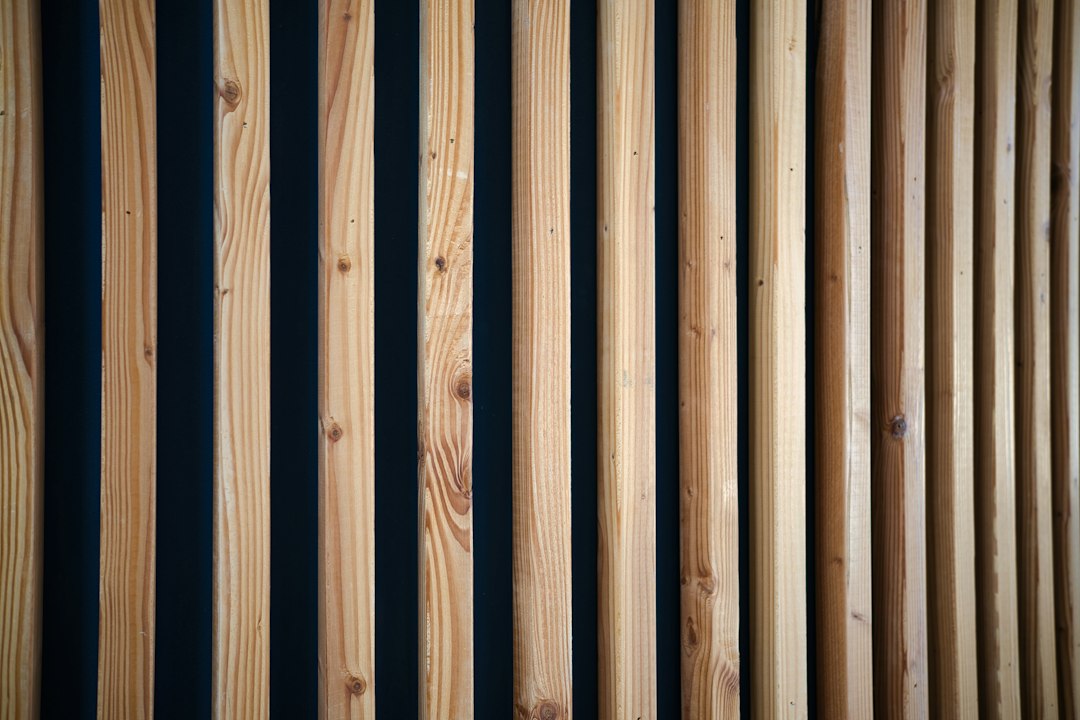
PVC wall panels are lightweight, interlocking boards made from polyvinyl chloride, used to clad walls and sometimes ceilings without wet trades. They are popular in Singapore renovations because they go up quickly, resist water and need little maintenance. They are also frequently misunderstood: treated as a waterproofing solution, fixed over walls that are already damp, or installed in places where their fire behaviour should have been considered.
This article looks at PVC wall panels from a building-performance perspective. It covers how the material behaves in a humid tropical interior, what the fire code says about wall linings, which substrates and fixing methods are suitable, and where the panels are a good choice and where they are not. It is guidance, not a product comparison, so there are no brands or prices.
What PVC wall panels are made of
Most PVC wall panels are either hollow extruded profiles, with internal ribs that give stiffness at low weight, or solid or foamed sheets with a printed or laminated decorative face. The decorative layer may imitate timber, stone, marble or plain colours, and some panels carry a protective lacquer or film over the print.
PVC itself is a thermoplastic. It does not absorb water in the way timber, gypsum or MDF do, which is why it is used in wet and humid areas. It is, however, sensitive to heat and ultraviolet light: it expands noticeably with temperature, can soften near heat sources, and lower-grade formulations may yellow or become brittle when exposed to strong sunlight over time.
Panel thickness, rib spacing and the quality of the joint profile vary considerably between products. Thin hollow panels can dent under a knock and may show the line of every support behind them; thicker and foamed panels are more robust.
How PVC wall panels behave in humid tropical interiors
Singapore’s high and fairly constant humidity is the main reason homeowners consider PVC. The panels themselves will not rot, swell or support mould growth on their surface in the way porous materials can. They wipe clean, and they are a sensible lining in service areas, utility rooms and some bathroom zones.
The weakness lies not in the panel but in what is behind it. A PVC lining is effectively a vapour-tight skin. If it is fixed over a wall that is damp from a plumbing leak, rising moisture or failed external waterproofing, the moisture has nowhere to go. Mould can then grow unseen on the substrate and battens, and the problem is hidden until odour or staining appears at the joints. Our guides to damp walls and mould on walls explain how to diagnose the source first.
Thermal movement is the other tropical consideration. Panels on walls that receive direct sun through glazing, or near cooking appliances, expand and contract more than those in shaded rooms. Installers need to leave expansion gaps at edges and trims, as the manufacturer specifies, or the panels may bow.
Fire performance and the SCDF Fire Code
PVC has a high chlorine content, which tends to make it reluctant to sustain flame on its own compared with many other plastics. That is not the same as being non-combustible. In a developed fire PVC will burn, and it produces dense smoke and corrosive gases, including hydrogen chloride. Smoke, not flame, is often what endangers occupants trying to escape.
In Singapore, the SCDF Fire Code controls the surface spread of flame of wall and ceiling linings according to location. Classes are defined by reference to BS 476 Parts 6 and 7, with Class 0 the highest. Exit staircases and exit passageways require non-combustible or Class 0 finishes. Other circulation spaces and rooms have their own minimum classes, with relaxations in some sprinkler-protected buildings and limited allowances for small areas.
The practical consequences are straightforward. Do not use decorative PVC lining in exit staircases, escape corridors or common lobbies unless the product’s test evidence and the Fire Code clearly allow it. For commercial fit-outs, ask for the manufacturer’s BS 476 Part 6 and Part 7 test reports and check them against the required class with your Qualified Person or fire consultant. Inside a private dwelling the controls are fewer, but keeping PVC away from cooker hoods and heat sources remains sensible.
Substrates and fixing methods
PVC wall panels are not structural and rely entirely on the wall behind them. The substrate must be sound, dry and reasonably flat. There are three common fixing approaches:
- Battens. Panels are clipped or fixed to a framework of battens. Battens allow the lining to bridge uneven walls and leave a ventilated cavity, but in humid areas they should be of a moisture-resistant material such as PVC, aluminium or treated timber.
- Adhesive. Panels are bonded directly to a flat, clean, dry wall using an adhesive compatible with PVC. This gives a slimmer build-up but leaves no cavity and demands a flat substrate.
- Proprietary clip systems. Some panels use hidden clips on dedicated rails, simplifying replacement of individual boards.
Concrete, blockwork and plastered walls are generally suitable once moisture has been ruled out. Fixing into hollow drywall partitions requires fixings that suit the board and, for heavier panels or shelves mounted through the lining, locating studs. If a wall is cracked or moving, cladding it hides the symptom without addressing the cause; have it assessed by a structural consultancy before it disappears behind a lining.
Where PVC panels work well and where they do not
PVC lining suits service and storage rooms, laundry areas, ceilings in covered outdoor spaces sheltered from direct sun, rental units where durability and easy cleaning matter, and quick refreshes of tired walls that are structurally and hygrothermally sound.
It is less suitable as a feature wall in a high-end living space, where the joints and printed finish may look cheaper than real materials; near heat sources; in escape routes; and as a cover-up for a damp or cracked wall. It is also not a substitute for waterproofing. In bathrooms, the waterproof membrane beneath tiles or other finishes does the protective work, and a panel lining must not be relied on to keep water out of the structure.
For comparable lining options, see our guides to WPC wall panels and wooden wall panels, which behave quite differently in the same climate.
Maintenance and lifespan
PVC panels need little more than wiping with a mild detergent. Avoid abrasive pads and strong solvents, which can damage the printed face. Check joints and edge trims periodically, particularly in wet areas, for gaps where water could reach the cavity.
Lifespan depends on product quality, exposure and installation. Panels in a shaded, dry-backed wall can last many years; panels in sunlight or over a moisture problem degrade sooner. When removing panels at the end of their life, inspect the substrate carefully, since any long-standing moisture issue will be revealed then.
Frequently asked questions
Are PVC wall panels waterproof?
The panels themselves do not absorb water, but a panel lining is not a waterproofing system. Water can pass through joints and around edges into the cavity. In bathrooms and wet areas, a proper waterproof membrane must protect the structure behind any finish.
Are PVC wall panels fire-resistant?
PVC tends not to sustain flame easily, but it is combustible and produces dense, corrosive smoke in a fire. Where the SCDF Fire Code sets a surface spread of flame class for walls, the specific product must have test evidence showing it meets that class.
Can PVC wall panels be installed over damp walls?
They should not be. Covering a damp wall traps moisture and allows hidden mould growth. Identify and fix the source of dampness, let the wall dry, and only then consider cladding it.
Do PVC wall panels need battens?
Not always. Panels can be bonded directly to flat, dry, sound walls, but battens are preferable on uneven walls and where a ventilated cavity is useful. In humid areas, choose moisture-resistant battens.
Can I use PVC panels in a condominium common corridor?
Common corridors and lobbies are escape routes subject to Fire Code requirements and management corporation rules. Decorative PVC lining should not be used there unless the product’s fire test evidence meets the required class and the management corporation approves.
Related reading
- Space Saving Furniture: A Designer’s Guide for Small Homes
- Loft Design: Layouts, Structure and Rules in Singapore
- Hair Salon Decoration and Layout: A Services-First Guide
- Space Saving Dining Table Ideas for Compact Homes
Dealing with damp, cracked or moving walls before you clad them? Talk to our consultancy or get in touch.


