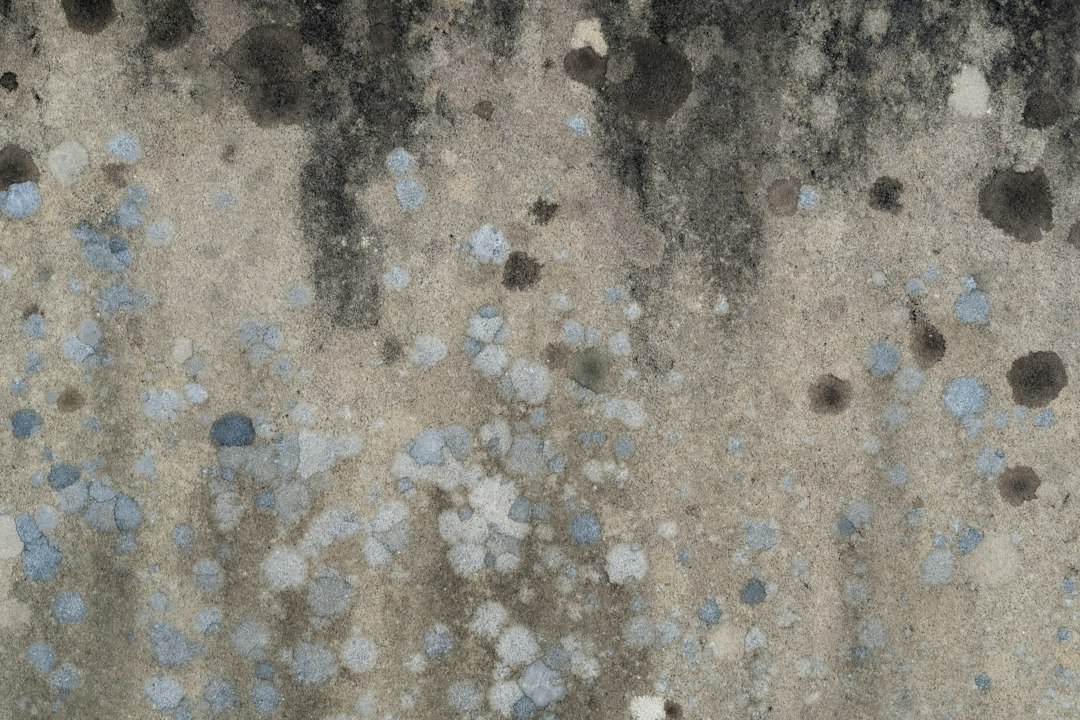
Mould on walls is one of the most common complaints in Singapore homes. It appears as grey, green or black spotting behind wardrobes, in bathroom corners, along ceilings beneath leaking slabs and around air-conditioned bedrooms. Wiping it away is easy. Keeping it away depends entirely on finding and removing the moisture that lets it grow.
This article approaches mould the way an engineer approaches any defect: understand the cause, test to confirm it, fix the source, and only then treat the surface. It also covers when mould is a sign of a building problem that needs professional attention.
Why mould on walls appears in the first place
Mould spores are present in almost all indoor and outdoor air. They settle on every surface, and they germinate only when that surface stays damp for long enough. Paint, plaster, wallpaper paste, dust and the paper face of plasterboard all provide enough organic material for growth. Temperature is rarely a limiting factor indoors in Singapore. The deciding factor is moisture.
Relative humidity in Singapore is high all year, typically averaging in the low to mid 80s per cent and frequently rising above 90 per cent in the early morning or during rain. In those conditions, any surface that is slightly cooler than the surrounding air, or that receives a little extra water from a leak, can stay damp enough for mould. That is why the same flat can be mould-free in one room and badly affected in another.
The four usual moisture sources
Condensation and poor ventilation
When humid air meets a surface cooler than its dew point, water condenses on it. In Singapore this happens in bathrooms after showers, in kitchens, and on walls and ceilings in rooms where air-conditioning cools one side of a wall while warm, humid air reaches the other. Wardrobes and beds pushed tight against walls trap still air behind them, so the wall surface never dries. Rooms kept closed for long periods, such as storerooms or a bedroom while a family is away, are classic locations.
Leaks from above or alongside
Mould that appears in a defined patch on a ceiling, often with staining or bubbling paint, usually points to water coming through the slab from a bathroom, balcony or roof above. Our guides to ceiling leaks and inter-floor leaks explain how these are traced. A vertical patch on a wall next to a bathroom often means failed waterproofing at the shower area or a leaking concealed pipe.
Rain penetration through external walls
Cracked render, open joints around window frames, failed sealants, blocked weepholes and poorly detailed parapets let driving rain into the wall. Mould on the inside face of an external wall after heavy rain, especially below windows, is a sign of this.
Trapped construction or flood moisture
New plaster and screeds hold a great deal of water. Painting or wallpapering too early, or not drying out properly after a flood or burst pipe, can lead to mould weeks later.
Diagnosing the source before you clean
Before treating mould on walls, look at the pattern rather than reaching for a spray. Mould that is spread thinly across a cool wall or ceiling, worst in corners and behind furniture, suggests condensation. A distinct patch with a tide mark suggests a leak. Mould that worsens after rain and sits on an external wall suggests penetration. These patterns overlap, so a few simple tests help:
- Foil test — tape a square of aluminium foil or cling film tightly to the wall for a day or two. Moisture on the room side points to condensation; moisture under the foil points to water coming from within the wall.
- Moisture meter readings — taken in a grid, they show whether the dampness is local and growing towards a source or uniform. Readings on salty or foil-backed surfaces can mislead, so treat them as relative.
- Humidity logging — a simple hygrometer in the room over a week shows whether the air itself is the problem.
- Weather and use correlation — note whether the patch gets worse after rain, after showers upstairs, or when the air-conditioning is on.
Where the cause is a concealed leak or rain penetration, thermal imaging, ponding tests on the floor above and pipe pressure tests are the next steps, and these are usually carried out by a professional.
Cleaning mould safely and effectively
For small areas on hard, painted surfaces, mould can be cleaned by the occupant. Wear gloves and a well-fitting mask, ventilate the room, and avoid dry brushing that sends spores into the air. Clean with a detergent solution, wipe with a damp disposable cloth, and dry the surface thoroughly. A fungicidal wash after cleaning helps prevent immediate regrowth.
Bleach removes the colour from mould on non-porous surfaces such as tiles and sealant, but it is less effective on porous plaster and plasterboard, where growth extends below the surface. Never mix bleach with other cleaners, particularly those containing ammonia or acids. Heavily affected plasterboard, wallpaper, carpet and soft furnishings are often better removed and replaced than cleaned. Large areas, mould in air-conditioning ducts or fan-coil units, or occupants with asthma or respiratory sensitivity, are good reasons to use professionals.
Fixing mould on walls for good
Lasting fixes match the source. For condensation, improve ventilation and air movement: use bathroom exhaust fans and leave them running after showers, open windows when the air outside is drier, pull furniture a short distance off external and cold walls, and avoid drying laundry indoors in closed rooms. Air-conditioning dehumidifies the air while it runs, but rooms that are cooled then left shut and humid can cycle in and out of condensation. A dehumidifier in a problem room is a reasonable measure.
In air-conditioned rooms, beware of vinyl wallpaper or impermeable paint on external walls. In a hot, humid climate, moisture drives inward from outside toward the cooler room, and an impermeable inner finish can trap it in the wall, where mould grows behind the wallpaper unseen. A vapour-open finish on these walls is usually the better choice; our guide to interior painting in Singapore covers paint selection.
For leaks, repair the waterproofing, pipework or roof first, allow the structure to dry, then repair finishes. For rain penetration, fix cracks, sealants, flashings and window perimeters. Anti-fungal paint is a useful final layer, but on its own it only delays the return of mould if the wall is still wet.
When mould points to a bigger problem
Mould is sometimes the first visible sign of something more serious. Persistent mould on a ceiling with brown staining, bulging paint or white deposits may indicate water moving through a concrete slab, which over time can reach the reinforcement. Mould with cracking in the wall may indicate movement or water entry through a structural crack. Mould and soft timber at skirting, door frames or built-in carpentry may indicate rot or insect damage. Our article on wall dampness explains the wider family of moisture problems and how they are diagnosed.
Frequently asked questions
Why does mould keep coming back on my wall after I clean it?
Because the moisture that allowed it to grow is still there. Cleaning removes visible growth but not the cause. Recurring mould almost always means condensation, a leak or rain penetration is keeping the surface damp, and it will return until that source is fixed and the wall has dried.
Is black mould on walls dangerous?
Many types of mould are dark in colour, and colour alone does not identify the species. Any mould growth indoors can aggravate allergies and asthma, so it should be cleaned promptly and its cause addressed. People with respiratory conditions or weakened immunity should avoid cleaning large areas themselves.
Does anti-mould paint solve the problem?
Anti-fungal paint slows regrowth on a surface that is generally dry but occasionally humid. It does not stop mould on a wall that is persistently wet from a leak or condensation. Fix the moisture source first, then use anti-fungal paint as a final protective layer.
Why is there mould on the ceiling of my HDB bathroom or bedroom?
In bathrooms it is usually condensation combined with poor ventilation. On a bedroom or living room ceiling, a defined patch with staining is more likely to be water coming from the flat above, often through failed bathroom waterproofing. Inter-floor leaks in HDB flats follow HDB’s established process for investigation and repair.
Should I remove wallpaper with mould behind it?
Yes, in most cases. Mould behind wallpaper indicates moisture is trapped in the wall, often because the paper or its vinyl face is preventing the wall from drying. Remove the wallpaper, clean and dry the wall, deal with the moisture source, and consider a breathable finish instead.
Does vinegar kill mould on walls?
White vinegar can kill some common moulds on hard, non-porous surfaces and is a milder alternative to bleach, but it does not reach growth that has penetrated deep into plaster or plasterboard. Apply it undiluted, leave it for an hour, then wipe and dry thoroughly. Never mix vinegar with bleach, and remember that cleaning only lasts if the moisture source is fixed.
What humidity level prevents mould growth indoors?
Keeping indoor relative humidity below about 60 per cent, and ideally between 40 and 60 per cent, greatly reduces the risk of mould growth. In Singapore, outdoor humidity is often above 80 per cent, so rooms kept closed without air-conditioning or ventilation quickly exceed that level. A simple hygrometer shows whether a room needs better ventilation, regular air-conditioning or a dehumidifier.
How quickly does mould grow after a leak?
Mould can start growing on damp materials within about 24 to 48 hours after a leak or flood, and in Singapore’s warm, humid conditions it may become visible within days. Drying wet materials quickly is therefore the most important first step. Wet plasterboard, carpet and wallpaper that cannot be dried within a day or two are often better removed than kept.
How much does professional mould removal cost in Singapore?
Professional mould removal in Singapore typically costs from a few hundred dollars for a single room to more for whole-home treatments, air-conditioning cleaning or removal of affected plasterboard and carpentry. Price depends on the area, how deep the growth goes and what must be replaced. Make sure the quote includes finding the moisture source, otherwise the mould is likely to return.
Related reading
- Attic Conversion in Singapore: Structure, Rules and Layout
- Timber Staircases: Structure, Problems and Renovation
- Floating Staircases: How Cantilevered Treads Really Work
- Spiral Staircases: Design, Space Planning and Structure
Mould keeps returning and you cannot find the source? Talk to our consultancy or get in touch for an independent diagnosis.