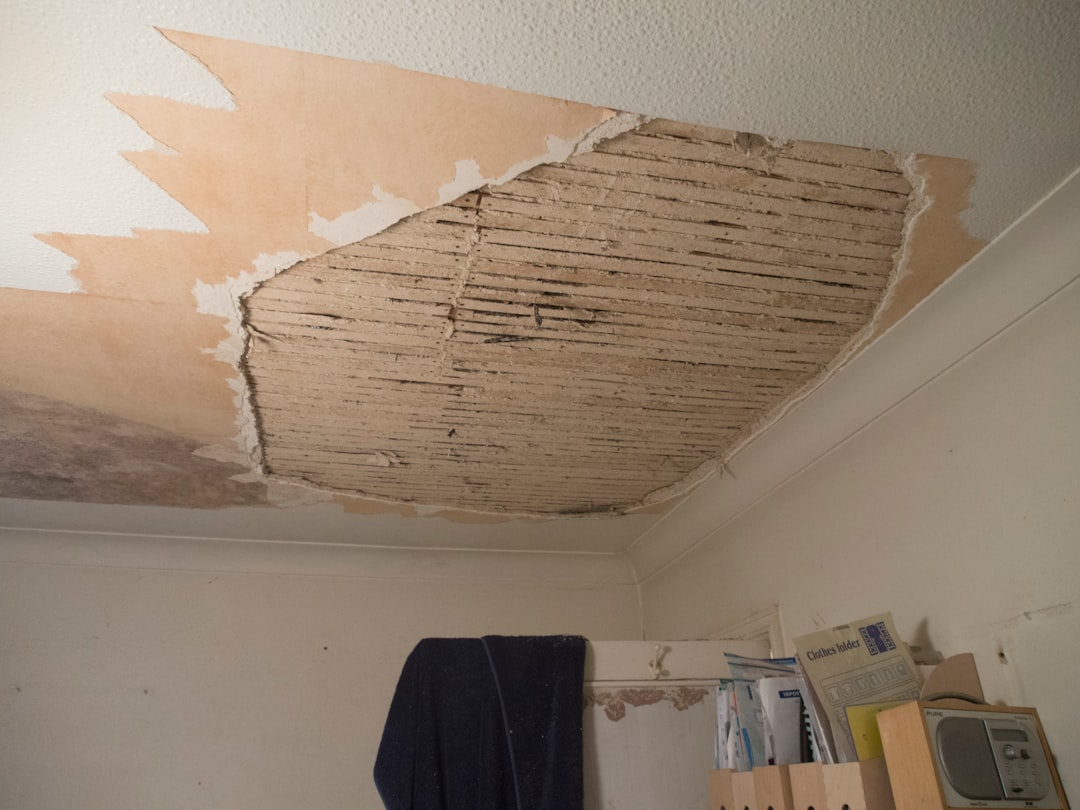
A ceiling leak is one of the most stressful problems a Singapore homeowner can face, partly because the water rarely comes from where the stain appears, and partly because the fix often involves a neighbour. A brown patch spreading across your living-room ceiling almost always means water from the unit above, or from your own roof or services, has found a path through the slab. Tracing it correctly is the whole battle.
This guide explains what causes a ceiling leak in a Singapore flat or condo, how to find the real source, who is responsible, and how to fix it so it does not come back.
Why a ceiling leak is hard to trace
Water does not drip straight down. It enters the concrete slab at one point, travels sideways along the path of least resistance, and emerges through a crack, a service penetration, or a weak spot some distance away. That is why the stain on your ceiling is often not directly below the actual leak source in the flat above. The visible damage is the end of a hidden journey through the slab.
Because reinforced concrete is porous and almost always carries fine cracks, it readily transmits water once a waterproofing layer has failed. This is also why a “patch the stain” approach fails so reliably — painting over the ceiling does nothing about the source, and the stain returns within weeks.
The common causes
In Singapore, a handful of causes account for most ceiling leaks. The most common in stacked flats is a failed bathroom waterproofing membrane in the unit above — water from showering seeps through and drips into your ceiling. Other causes include leaking pipes embedded in the slab or running above the ceiling, condensation from air-conditioning trunking, roof or external wall ingress in top-floor and corner units, and planter-box or balcony waterproofing failures.
- Bathroom membrane failure above — the classic inter-floor leak, usually worst near wet areas.
- Leaking concealed pipes — supply or waste pipes within the slab or ceiling void.
- Air-con condensation — poor drainage or insulation on the cooling pipework.
- External ingress — roof, façade, or balcony waterproofing in top-floor or perimeter units.
Each cause has a different fix, which is exactly why diagnosis must come before repair. A leak blamed on the wrong cause leads to wasted money and a returning stain.
How to find the source
Tracing a ceiling leak is detective work. The starting point is the pattern: a stain that worsens after someone showers upstairs points to a bathroom membrane; a stain that appears only in wet weather points to external ingress; a stain near air-con trunking points to condensation. The next step is to investigate above — in a stacked block that usually means cooperation with the upstairs neighbour to check their bathroom and pipework.
Professionals use moisture meters, dye tests, and sometimes thermal imaging to confirm the source before opening anything up. The aim is to avoid hacking the wrong area. If the cause is genuinely unclear — for instance, a leak that could be a slab crack rather than a membrane — it is worth an engineering eye, because a structural crack is a different problem from a finish defect. Our explainer on types of concrete cracks helps distinguish harmless shrinkage from cracks that matter.
Who is responsible
Responsibility depends on where the water comes from. In an HDB block, an inter-floor leak originating from the upstairs bathroom is generally the upstairs household’s issue to resolve, and HDB and BCA provide a framework for these disputes, including provisions for inspection where neighbours cannot agree. In a condominium, the management corporation (MCST) is typically responsible for common-property elements such as the external façade and roof, while what is inside the unit is the owner’s responsibility.
The practical advice is the same in both cases: establish the source before arguing about responsibility, because the source determines who pays. A leak from a shared external wall is a very different conversation from one caused by a neighbour’s bathroom renovation. Documenting the leak with photos and dates helps any later discussion.
Fixing it properly
A proper fix addresses the source, not the symptom. If the cause is a failed bathroom membrane upstairs, the real repair is re-waterproofing that bathroom — which means hacking the affected area, applying a new membrane, and re-tiling. A surface coating applied to your ceiling without fixing the upstairs membrane is a temporary cosmetic measure at best. If the cause is a leaking pipe, the pipe must be exposed and repaired or replaced.
Only once the source is fixed and the slab has dried should the ceiling be made good — stained sections cut out, the slab allowed to dry, and the ceiling re-skimmed and repainted. Painting over a damp ceiling traps moisture and the stain bleeds through. Patience here pays off: rushing the cosmetic repair before the structure dries is the most common reason a “fixed” leak reappears. Where the leak path or a slab crack is involved, our structural engineering consultancy can confirm whether the problem is cosmetic or structural before you commit to repairs.
Preventing the next leak
Prevention is mostly about waterproofing and maintenance. If you are renovating your own bathroom, insist on a proper membrane and a ponding test before tiling — this is the single best way to avoid causing a leak in the flat below. Maintain air-con pipework so condensation drains properly. In top-floor and perimeter units, keep an eye on external waterproofing and report façade or roof issues to the MCST early.
For older buildings, periodic checks matter. Membranes age, pipes corrode, and external coatings weather. A small, early repair is far cheaper than a major leak that has soaked a slab and damaged finishes in two units. Treating water as the building’s main enemy — and waterproofing as its main defence — is the right mindset.
Frequently asked questions
Why does my ceiling leak only after the upstairs neighbour showers?
That pattern strongly indicates a failed bathroom waterproofing membrane in the unit above — water from showering seeps through the slab and emerges in your ceiling — and the real fix is re-waterproofing that bathroom rather than coating your ceiling.
Who pays for an inter-floor ceiling leak in HDB?
An inter-floor leak originating from the upstairs bathroom is generally the upstairs household’s responsibility to resolve, and HDB and BCA provide a dispute framework including inspection provisions, so the key first step is establishing the source before deciding who pays.
Can I just paint over a ceiling water stain?
No — painting over a stain without fixing the source and letting the slab dry simply traps moisture, and the stain bleeds back through within weeks; the source must be repaired and the concrete allowed to dry before any cosmetic ceiling repair.
Is a ceiling leak ever a structural problem?
Usually a ceiling leak is a waterproofing or pipe issue rather than structural, but persistent water can corrode reinforcement over time, and a leak through a slab crack can be confused with a structural defect, so an engineering assessment is worthwhile when the cause is unclear.
How do professionals find a hidden ceiling leak?
They use the leak pattern as a first clue, then confirm the source with moisture meters, dye tests, and sometimes thermal imaging, and cooperate with the unit above where needed, so that only the genuine source is opened up rather than guessing and hacking the wrong area.
What should I do immediately when water is dripping from my ceiling?
Catch the water with a bucket, move valuables away, and switch off the electrical circuit if water is near a light fitting, fan or socket. Then photograph the stain with dates and inform the upstairs neighbour, or the condo management if the source may be common property. Avoid poking holes in the ceiling or painting over it until the source has been identified and repaired.
How much does ceiling leak repair cost in Singapore?
Costs vary widely with the cause, but a leak investigation or minor pipe repair typically runs into a few hundred dollars, while re-waterproofing a bathroom above commonly costs several thousand dollars once hacking, membrane and re-tiling are included. Making good the ceiling below is a separate, smaller cost. Getting the source correctly diagnosed first is the best way to avoid paying for the wrong repair.
How long does a ceiling take to dry after a leak?
A concrete slab soaked by a leak often takes several weeks to dry out properly after the source has been fixed, and longer in Singapore’s humid conditions. A moisture meter is the reliable way to confirm it is dry. Repainting or re-skimming too early traps moisture, so the stain bleeds back through and the cosmetic repair has to be repeated.
Can a ceiling leak cause mould?
Yes, a persistent ceiling leak can cause mould, because damp concrete and plaster in a warm, humid climate create ideal conditions for growth. Black spotting, peeling paint and a musty smell are common signs. Fixing the water source and letting the slab dry fully is essential; treating the mould without stopping the moisture only gives a temporary result, and long-term dampness can also affect reinforcement.
Related reading
- Toilet Bowl Types Compared for Singapore Homes
- Shower Screens in Singapore: Types, Glass and Tips
- Choosing Bathroom Tiles in Singapore: A Guide
- Wet and Dry Kitchen Layouts Explained
Not sure if your ceiling leak is cosmetic or structural? Talk to our consultancy or get in touch for an accountable diagnosis.