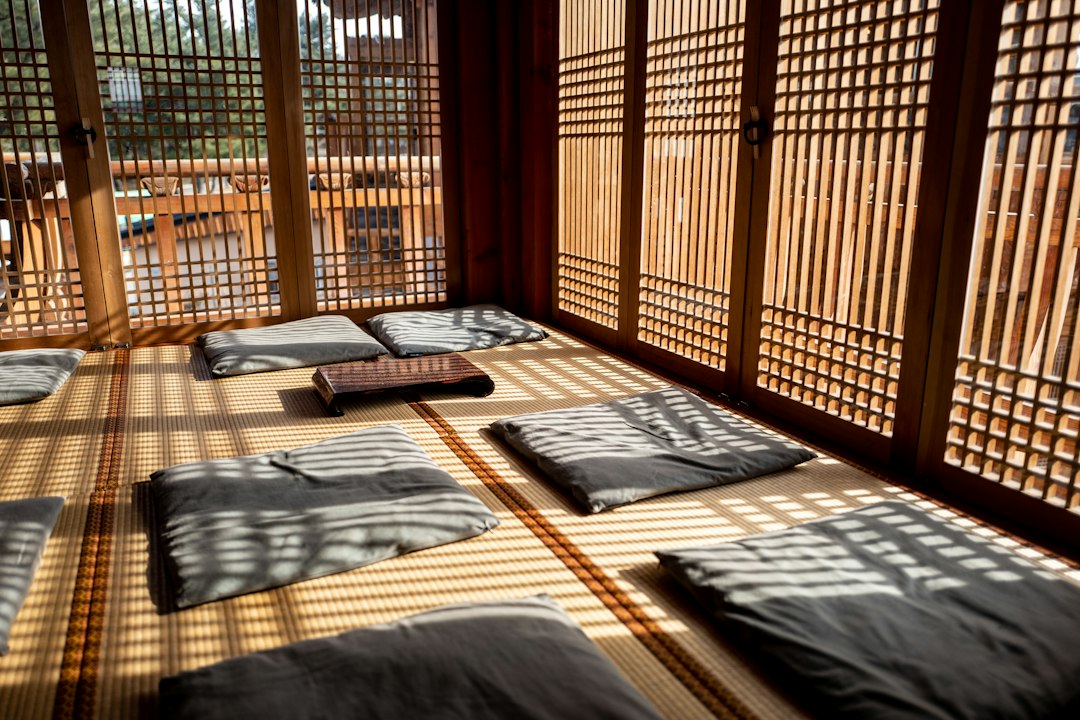
A tatami bed is a raised platform finished with tatami mats, on which a futon or thin mattress is laid. It sits between two traditions: the Japanese practice of sleeping on futons spread over a tatami floor, and the Western bed frame that lifts the sleeper off the ground. Done well, it gives a firm, calm sleeping surface and a clean, low-profile bedroom. Done badly, especially in a humid climate, it becomes a mould problem.
This guide explains how tatami beds are constructed, how mat sizes and core materials differ, what to consider when building a platform into a room, and how to keep the whole assembly dry and healthy in a climate like Singapore’s.
What a tatami bed is, and is not
In a traditional Japanese room the whole floor is tatami, and bedding is unrolled at night and stored away in the morning. Our guide to tatami explains the mat itself and its place in Japanese architecture. A tatami bed takes a small number of mats, typically two for a single or three to four for a double, and sets them into a timber frame raised above the floor.
It is not a mattress. The mats are a firm surface, not a cushion; most people place a futon or thin mattress on top. Nor is it simply a platform bed with a decorative top: the mats change how the bed breathes, how it is cleaned and how it ages.
Tatami beds come in three broad forms:
- Free-standing frames, low timber beds with recessed tops sized to take standard or custom mats.
- Storage platforms, with drawers or lift-up sections beneath the mats.
- Built-in raised floors, where part of the room is lifted to form a tatami area that serves as a bed at night and a sitting area by day.
Mat sizes and why they matter
Tatami sizes vary by region and era in Japan, which matters when sizing a frame. The main standards are:
- Kyōma (Kyoto and western Japan): about 191 by 95.5 centimetres.
- Chūkyōma (Nagoya region): about 182 by 91 centimetres.
- Edoma or Kantōma (Tokyo region): about 176 by 88 centimetres.
- Danchima (apartment blocks): about 170 by 85 centimetres.
For a bed, length is the critical dimension. Mats around 176 centimetres long are short for many adults once a pillow is added, so beds designed for taller sleepers often use longer mats or custom-made panels. Many tatami beds outside Japan use mats made to the frame’s dimensions rather than a regional standard, which is perfectly acceptable as long as the frame and mats are designed together. Traditional mats are roughly 5.5 to 6 centimetres thick; many bed mats are thinner to reduce weight and overall height.
What tatami mats are made of
A tatami mat has three parts: a core (toko), a woven surface (omote) and edge binding (heri). The choice of core and surface affects weight, firmness, insulation and how the mat behaves in humidity.
Core
Traditional cores are compressed rice straw, dense, heavy and very good at absorbing and releasing moisture. Modern cores often use wood fibre board, foam boards or a combination with straw. These are lighter, more dimensionally stable and less attractive to insects, though they buffer humidity less. For beds, lighter cores are common because mats need to be lifted for cleaning and airing.
Surface
The classic surface is woven igusa rush, which has a fresh grassy scent when new and mellows from green to gold with age. Alternatives include washi paper and synthetic resin weaves. Paper and synthetic surfaces resist staining and moisture better and are often preferred in humid climates or by people who want lower maintenance, at some loss of the traditional feel.
Building the frame: a practical structural view
A tatami bed is not structurally demanding, but a few points make the difference between a solid bed and one that creaks or sags. The mats need continuous support. A slatted base should have slats close enough and stiff enough that the mats do not bridge between them and deflect under a person’s knee or hip. A solid but ventilated deck is another option. The frame should be rigid enough to resist racking when people sit on the edge, which usually means proper joints or concealed metal fixings at the corners.
Built-in platforms raise slightly different questions. A raised floor across part of a bedroom is usually light enough for any normal residential slab, but it should be fixed to walls and floors without damaging waterproofing, concealed services or, in apartments, elements that should not be drilled. If a platform is being combined with other works such as removing walls or adding heavy built-in storage, it is worth checking the scope against your building’s rules; our guide to A&A works in Singapore explains when alteration work needs professional input.
Height is a design choice. Very low frames feel closest to the Japanese floor tradition but make getting up harder and reduce air space underneath. Higher frames allow storage and better airflow but begin to lose the low, grounded character that makes the tatami bed appealing.
Humidity, mould and ventilation
This is the most important section for anyone in a tropical climate. A sleeping body releases moisture overnight. On a conventional sprung mattress, much of that moisture escapes through the mattress and an open frame. On a futon laid over tatami, it moves down into the futon and then into the mat. If the underside of the mat cannot breathe, moisture accumulates and mould follows, often unseen until it appears on the underside of the mat or futon.
Practical measures:
- Ventilate under the mats. Use slatted or perforated bases rather than sealed boxes, and keep some air gap beneath the platform. Enclosed storage directly under the mats can trap damp air.
- Air the bedding. Lift or fold the futon regularly so the mat surface can dry, and periodically raise the mats themselves.
- Control room humidity. Air-conditioning or a dehumidifier helps, particularly in rooms that are closed up during the day.
- Choose materials for the climate. Paper or synthetic surfaces and non-straw cores are more forgiving in sustained high humidity.
- Keep the base clean and dry. Spills and damp mopping around a built-in platform can wick into the frame and mats.
Mould on a tatami bed is usually a ventilation and humidity issue rather than a defect in the mat. If damp seems to come from the floor or walls rather than the bedding, it may indicate a building problem such as a leak or condensation, which is worth having a professional investigate separately.
Designing a bedroom around a tatami bed
A tatami bed suits rooms with a quiet, uncluttered character. Natural timber, plaster or limewash walls, paper or fabric screens and soft, low lighting all reinforce its calm. It fits naturally into a Japandi bedroom, where Japanese restraint meets Scandinavian warmth, or a more traditional room that extends the tatami to the whole floor, as discussed in our guide to tatami flooring.
Think about how the bed will be used through the day. A built-in platform can double as seating or a play area, which changes how much of the bed’s surface will be exposed and how often bedding will be put away. Those habits influence the choice of surface, the platform height and where storage should go.
Frequently asked questions
Is a tatami bed comfortable?
A tatami bed gives a firm, even surface. Most people sleep on a futon or thin mattress laid on top, which provides cushioning while the mats keep the base flat and supportive. Comfort depends largely on the futon or mattress chosen.
Do tatami beds get mouldy in Singapore?
They can if moisture is trapped. Ventilated bases, regular airing of the futon and mats, room humidity control and moisture-tolerant mat materials greatly reduce the risk. Sealed platforms with closed storage under the mats are more prone to problems.
What size tatami mats are used for beds?
Japanese regional standards range from about 170 to 191 centimetres long. Many tatami beds use mats made to the frame’s dimensions, and longer mats are advisable for taller sleepers.
Can I put a regular mattress on a tatami bed?
Yes, though thinner mattresses suit the low profile better. Heavier mattresses reduce airflow to the mat surface, so ventilation and periodic airing become even more important.
How long do tatami mats last?
Lifespan depends on use, materials and care. Rush surfaces can often be flipped or replaced while keeping the core, which is the traditional way of extending a mat’s life. Synthetic surfaces generally wear more slowly.
Related reading
- Japandi Kitchen Design: Materials, Layout and Detailing
- Japanese Ceramics: Kilns, Tea Wares and Roof Tiles
- Kazuyo Sejima: SANAA, Lightness and the Pritzker Prize
- Sou Fujimoto: From House NA to the Expo Grand Ring
Planning a built-in platform or bedroom alteration and want to be sure the structure is right? Talk to our consultancy or get in touch.