
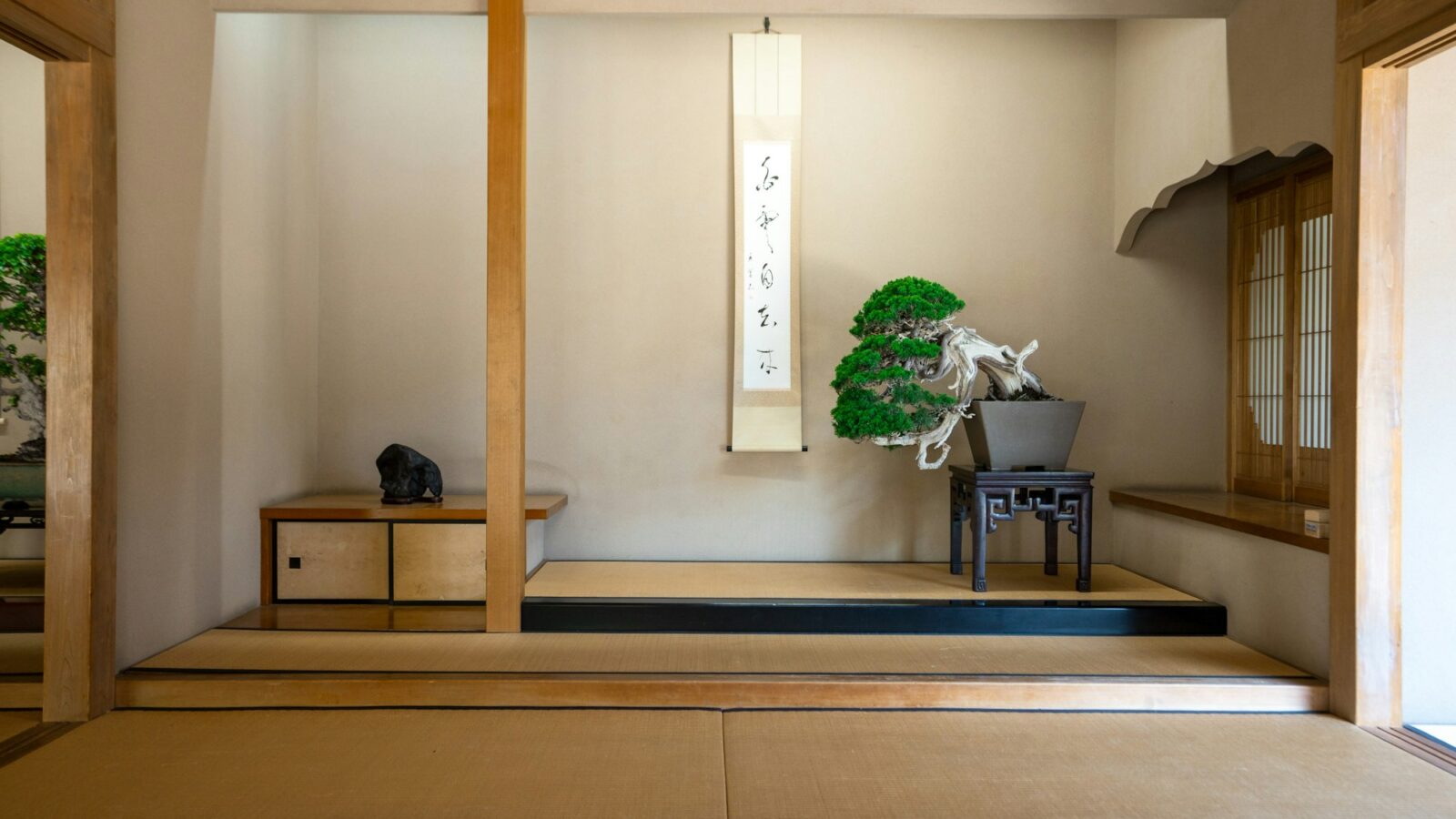
In the formal room of a traditional Japanese home, there is one place where display is allowed — a recessed alcove that holds a single scroll, a flower, or a treasured object. This is the tokonoma, and it is the quiet focal point of the room. In a culture of restraint, the tokonoma is where beauty is concentrated.
What is a tokonoma?
A tokonoma is a built-in recessed alcove in a Japanese-style room, set slightly apart from the rest of the space and used to display a carefully chosen object or two. Rather than filling a room with ornaments, the Japanese home concentrates display in this single, considered spot. The tokonoma is the room’s place of honour — and the restraint of everything around it is exactly what gives it power.
The elements of a tokonoma
A traditional tokonoma has recognisable parts: a slightly raised floor that sets it apart from the tatami, a back wall for hanging a scroll, and often a distinctive ornamental post to one side — the tokobashira — sometimes left with its natural form to show the character of the wood. These elements frame whatever is displayed, turning a corner of the room into a small, dignified stage.
What goes inside
The classic display is a hanging scroll (kakemono) — a painting or piece of calligraphy — paired with a simple flower arrangement (ikebana), and perhaps an incense burner or a single ornament. The point is selection, not abundance: one beautiful thing, perfectly placed. The arrangement is changed with the seasons and occasions, so the tokonoma becomes a kind of calendar, marking the turning year through what it holds.
The focal point of the room
Because it is the only place of display, the tokonoma anchors the whole room. The eye is drawn to it, and the emptiness elsewhere exists partly to let it shine — a clear example of ma, where the empty space gives the single object its meaning. A guest seated facing the tokonoma is in the position to appreciate it, which is why it shapes how the room is used as well as how it looks.
The seat of honour
The tokonoma carries etiquette. The most honoured guest is traditionally seated nearest to it, with their back to it — a place called the kamiza — while lower seats are further away. One does not step inside the alcove or place belongings in it; it is treated as a space apart. These customs show how the tokonoma is not just decorative but woven into the social life of the room.
A little history
The tokonoma developed alongside the formal shoin style of architecture and the world of the tea ceremony, where the display of a single scroll or flower set the tone for the gathering. From these refined origins it became a standard feature of the formal room in traditional homes. Its history is bound up with the broader aesthetics of wabi-sabi and the value placed on the considered, the seasonal and the restrained.
The tokonoma today
Many modern Japanese homes still include a tokonoma in their one tatami room, and designers beyond Japan borrow the idea — a single niche for one beautiful, changing object, against a backdrop of calm. It is a lesson any home can use: rather than scattering ornaments everywhere, concentrate display in one considered spot and let emptiness do the rest. The tokonoma is restraint made into a feature, very much in the spirit of minimalist and traditional Japanese design alike.
Frequently asked questions
What is a tokonoma used for?
It is a recessed alcove for displaying a single carefully chosen object — typically a hanging scroll and a flower arrangement — changed with the seasons. It is the formal focal point and place of honour in a traditional Japanese room.
Can you sit or step in a tokonoma?
No. The tokonoma is treated as a space apart — you do not step into it or place belongings in it. The honoured guest sits in front of it, with their back to it, in the seat of honour.
The tokobashira: the alcove’s pillar
To one side of the tokonoma often stands the tokobashira, an ornamental post that frames the alcove. Unlike the squared structural timbers elsewhere, it is frequently chosen for its natural character — a trunk left with its bark, an unusual grain, a gentle irregularity. It is a small but telling expression of the Japanese love of natural materials and quiet imperfection, a deliberate touch of the organic in an otherwise composed space. Connoisseurs prize a beautiful tokobashira, and its selection is part of the art of building a fine tatami room.
Display through the seasons
What makes the tokonoma alive is that it changes. The scroll and the flower are swapped to suit the season, the weather, or the occasion — cherry blossom in spring, a cooling image in summer, autumn grasses, a snow scene in winter. In this way the alcove becomes a small calendar within the home, keeping the household attuned to the turning year. It is one of the most graceful expressions of the Japanese sensitivity to the seasons.
The art of a single object
The deepest lesson of the tokonoma is about restraint. By concentrating display in one spot and showing only a piece or two, it makes each object matter enormously — the opposite of a room crowded with ornaments where nothing stands out. It is the principle that less can be more, made physical. Anyone wanting a calmer home can borrow it directly: choose one beautiful thing, give it space, and let the emptiness around it do the work.
Roots in the tea room
The tokonoma owes much to the tea ceremony, where a single scroll set the spiritual tone of the gathering and a humble flower spoke of the season. That world of refined simplicity shaped the alcove into what it became. To understand the tokonoma fully is to glimpse the whole aesthetic of the tea room — restraint, attention, and the beauty of the carefully chosen.
Related reading
- Japanese Roof Styles: Form, Eaves and Why They Curve
- Japanese Minimalism: The Philosophy Behind the Calm
- Genkan: The Japanese Entrance Where Shoes Come Off
- Kintsugi: The Japanese Art of Repairing with Gold
More in Japanese Design. See also the traditional Japanese house.


