Washi is traditional Japanese paper, and it is far more than a writing surface. Strong, translucent and beautifully textured, washi paper has long been a building material in its own right — most famously as the translucent skin of the shoji screen, where it filters daylight into the soft, even glow that defines the traditional Japanese interior. Washi sits at the meeting point of craft, material and light.
This guide explains what washi is, how it is made, why it is so much stronger than ordinary paper, and how it is used in Japanese design and architecture. It connects directly to the screens, dividers and lighting of the traditional Japanese house, where paper does real architectural work.
What washi is
Washi is paper made in the traditional Japanese manner, typically from the long fibres of certain native plants rather than from wood pulp. The most important of these is the bark of the paper mulberry, whose long, strong fibres give washi much of its remarkable character. Other plant fibres are also used, each lending its own qualities to the finished sheet.
It is the use of these long plant fibres that sets washi apart. The fibres interlock to form a sheet that is far stronger and more flexible than ordinary wood-pulp paper, with a distinctive texture and translucency. This makes washi suitable for uses that would tear or fail in ordinary paper — including service as a semi-architectural material that must take handling, light and time.
How washi is made
Traditional washi-making is a craft of many careful steps. The plant fibres are harvested, prepared and cleaned, then beaten to separate them. The fibres are suspended in water, and a sheet is formed by drawing a screen through the suspension so the fibres settle into an even, interlocking mat. The wet sheets are then pressed and dried to produce the finished paper.
The skill of the papermaker lies in producing sheets of consistent thickness, strength and texture by hand, controlling the fibres and the water with practised judgement. As with other Japanese crafts, this is knowledge built up over long experience and passed down through generations of makers. The result is a material whose quality reflects the care of its making, much like the joinery and timber crafts it sits alongside.
Strength and translucency
Two qualities make washi exceptional as a design material: its strength and its translucency. The long interlocking fibres give it tensile strength and flexibility well beyond ordinary paper, so it can be stretched over a frame, handled, and used in everyday fittings without tearing easily. This durability is what allows paper to serve as the working surface of a sliding screen.
At the same time, washi is translucent — it transmits light while diffusing it. Light passing through a washi screen is softened and spread into an even, gentle glow rather than a harsh beam. This combination of toughness and luminosity is precisely what makes washi so valuable in interiors: it is a material you can build with that also transforms light. Few materials do both so gracefully.
Washi paper in architecture and interiors
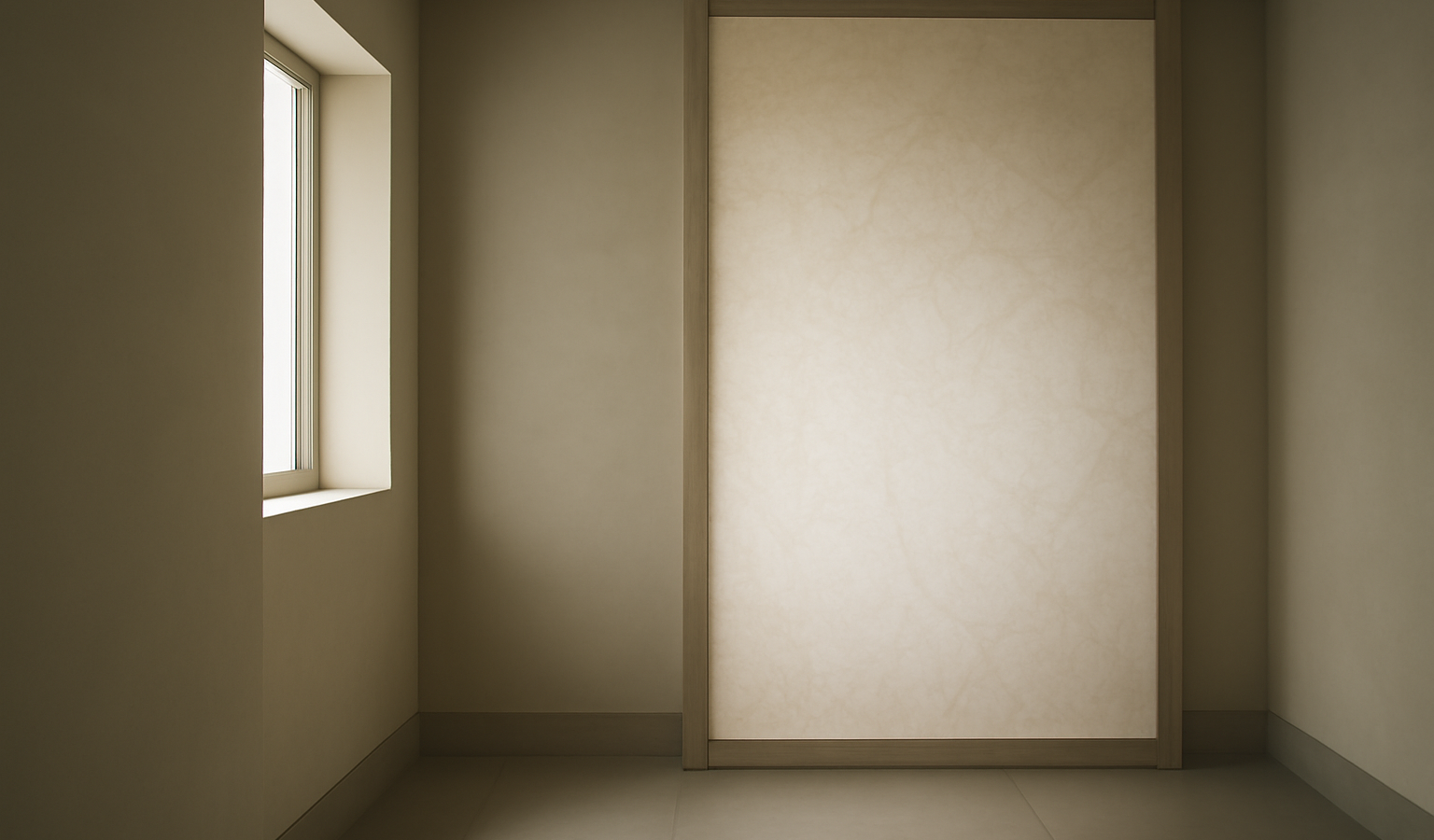
The classic architectural use of washi is in the shoji, the sliding screen whose timber lattice is covered with translucent paper. The shoji divides space while letting light pass, filling a room with soft daylight and giving the traditional interior its characteristic quality of light. Paper here is doing genuine architectural work — defining space, controlling light, and shaping the atmosphere of the room.
Washi is also widely used in lighting. Paper lanterns and lampshades exploit the same diffusing quality, wrapping a light source in translucent paper to produce a soft, warm glow. Beyond screens and lighting, washi appears in a range of interior and decorative applications wherever its texture, strength and luminous quality are wanted:
- Shoji screens — translucent partitions that filter daylight into rooms.
- Lanterns and lampshades — diffusing artificial light into a soft glow.
- Sliding doors and dividers — separating space while keeping it light.
- Decorative and craft applications — where washi’s texture and character are valued.
Why washi endures
Washi endures because it does something few materials can: it combines real practical performance with a unique sensory quality. It is strong enough to build with, soft enough to transform light, and beautiful enough to be valued for its texture alone. In an age of mass-produced materials, the qualities of handmade washi — its strength, its warmth, its way with light — remain difficult to replicate.
For anyone interested in Japanese design, washi is a perfect example of how a humble material, made with care, can become a defining element of architecture and atmosphere. The same logic that makes paper a serious building material — choosing the material for what it genuinely does well — underpins all good construction, from a shoji screen to the work we describe in our consultancy. Washi reminds us that material, craft and light are inseparable in the best design.
Frequently asked questions
What is washi paper made from?
Washi is traditional Japanese paper made from the long fibres of certain native plants, most importantly the bark of the paper mulberry, rather than from wood pulp. These long, strong fibres give washi its distinctive strength, flexibility, texture and translucency.
Why is washi so strong?
Washi’s strength comes from the long plant fibres it is made from, which interlock to form a sheet far tougher and more flexible than ordinary wood-pulp paper. This is why it can be stretched over a frame and used in screens and fittings without tearing easily.
How is washi used in architecture?
The classic use is in the shoji screen, where translucent washi is stretched over a timber lattice to divide space while filtering daylight into a soft, even glow. Washi is also used in paper lanterns and lampshades and in sliding doors and dividers.
How is washi made?
Plant fibres are harvested, cleaned and beaten, then suspended in water. A screen is drawn through the suspension so the fibres settle into an even, interlocking mat, and the wet sheets are pressed and dried. Skilled control of fibre and water gives consistent quality.
Why does light through washi look soft?
Washi is translucent, transmitting light while diffusing it. Rather than a harsh beam, light passing through a washi screen is softened and spread into a gentle, even glow, which is why it gives traditional Japanese interiors their characteristic quality of light.
Related reading
- Hinoki: Japanese Cypress Wood Explained
- Japanese Carpentry and the Miyadaiku Tradition
- Sashimono: Japanese Furniture Joinery Explained
- Kumiko: Japanese Lattice Woodwork Explained
Bringing Japanese materials and light into a building or interior? Talk to our consultancy or get in touch.