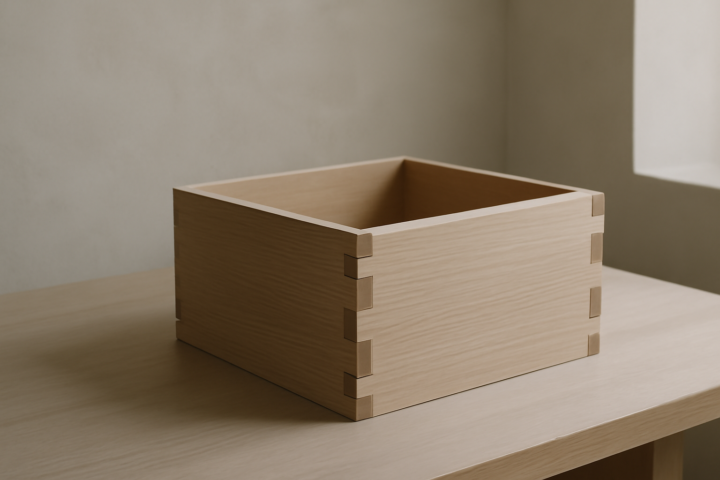
Hinoki, the Japanese cypress, is among the most prized building timbers in Japan. Valued for its fine grain, its warm pale colour, its distinctive fragrance and its exceptional durability, hinoki wood has been used for centuries in the most important and demanding construction — from temples and shrines to baths and fine interiors. Few materials carry the same combination of beauty, performance and cultural significance.
This guide explains what makes hinoki special, where it is used, and why it is held in such high regard. It belongs to the wider story of timber in Japanese building that we explore through the traditional Japanese house and the carpentry traditions that work it.
What hinoki is
Hinoki is a species of cypress native to Japan, a slow-growing softwood that yields a fine, straight-grained timber. It has a pale, warm tone — typically a light cream to pale pink — that ages gracefully, and a smooth, even texture that finishes beautifully. These qualities alone would make it a desirable wood, but hinoki’s reputation rests on more than its appearance.
The timber is worked and finished to bring out its natural character rather than to disguise it. In the Japanese tradition, hinoki is often left unpainted and uncovered, its surface simply planed and smoothed so the grain, colour and fragrance can be appreciated directly. The wood is treated as intrinsically beautiful, which suits the broader aesthetic preference for natural, honest materials.
Durability and performance
One of hinoki’s most valued properties is its durability. The timber is naturally resistant to decay and to insects, and it holds up well to moisture, which is why it has been chosen for buildings and objects expected to last a very long time. This resilience is a major reason it has been used in temples and shrines, structures intended to endure for generations.
Hinoki is also relatively stable and works well, taking a clean cut and a fine finish — qualities that matter greatly to carpenters cutting the precise joints of a timber frame. A wood that is durable, dimensionally well-behaved and pleasant to work is exactly what the most demanding construction calls for. These practical virtues, as much as its beauty, explain hinoki’s status as a premium timber.
The scent of hinoki
Hinoki is famous for its fragrance — a fresh, clean, woody scent that is one of its most cherished qualities. The aroma is associated with calm and freshness, and it is part of why the wood is so prized in spaces meant for relaxation and contemplation. The scent persists in the wood and is released especially when it is warmed or wet, which connects directly to one of its classic uses.
That use is the bath. Hinoki is the traditional wood for the Japanese soaking tub, the ofuro, where its water-resistance and its released fragrance combine to make the bathing experience distinctive and restorative. We discuss that tradition in our wider Japanese design writing; the marriage of a fragrant, durable wood with the ritual of the bath is one of the most evocative uses of any material in Japanese culture.
Where hinoki is used
Hinoki’s combination of beauty, durability and fragrance has made it the wood of choice for some of the most significant and refined applications in Japan:
- Temples and shrines — where its durability suits structures meant to last for generations.
- Baths (ofuro) — where its water-resistance and scent create the classic soaking-tub experience.
- Fine interiors and joinery — where its grain, colour and finish are shown to advantage.
- Important objects and fittings — where a premium, long-lasting timber is wanted.
Because it is slow-growing and highly valued, good hinoki is a precious material, reserved for uses where its qualities truly count. This rarity adds to its prestige and to the care with which it is selected and worked.
Why hinoki wood matters in Japanese design
Hinoki is more than a useful timber; it carries real cultural weight. Its use in sacred and significant buildings, its association with cleanliness and freshness, and its sensory pleasures of grain and scent have given it a special place in Japanese building and life. To work with hinoki is, in a sense, to participate in a long tradition of valuing natural material for what it genuinely is.
That ethic — choosing the right material for the demands of the job, respecting its natural properties, and letting it show honestly — is one we share in our own practice. Whether the material is fragrant cypress or reinforced concrete, understanding how a material behaves and using it accordingly is the foundation of building well, and hinoki is one of the most beautiful examples of that principle.
Frequently asked questions
What is hinoki wood?
Hinoki is Japanese cypress, a slow-growing native softwood prized for its fine straight grain, warm pale colour, distinctive fresh fragrance and exceptional durability. It has been used for centuries in Japan’s most important construction, including temples, shrines and baths.
Why is hinoki so durable?
Hinoki is naturally resistant to decay and insects and holds up well to moisture, which is why it has long been chosen for buildings and objects meant to last a very long time, including temples and shrines intended to endure for generations.
Why is hinoki used for Japanese baths?
Hinoki is the traditional wood for the Japanese soaking tub, or ofuro, because it resists water well and releases its cherished fresh, woody fragrance when warmed and wet. Together these qualities make the bathing experience distinctive and restorative.
What does hinoki smell like?
Hinoki has a fresh, clean, woody scent associated with calm and freshness. The aroma persists in the timber and is released especially when the wood is warmed or wet, which is part of why it is prized in baths and contemplative spaces.
Is hinoki expensive?
Good hinoki is a precious, premium material because it is slow-growing and highly valued, so it tends to be reserved for uses where its beauty, durability and fragrance truly count, such as significant buildings, baths and fine joinery.
Related reading
- Washi: Japanese Paper in Design and Architecture
- Contemporary Japanese Architecture Explained
- Toyo Ito: Architect Profile and Philosophy
- SANAA: Sejima and Nishizawa’s Architecture
Choosing the right materials for a project and want experienced guidance? Talk to our consultancy or get in touch.