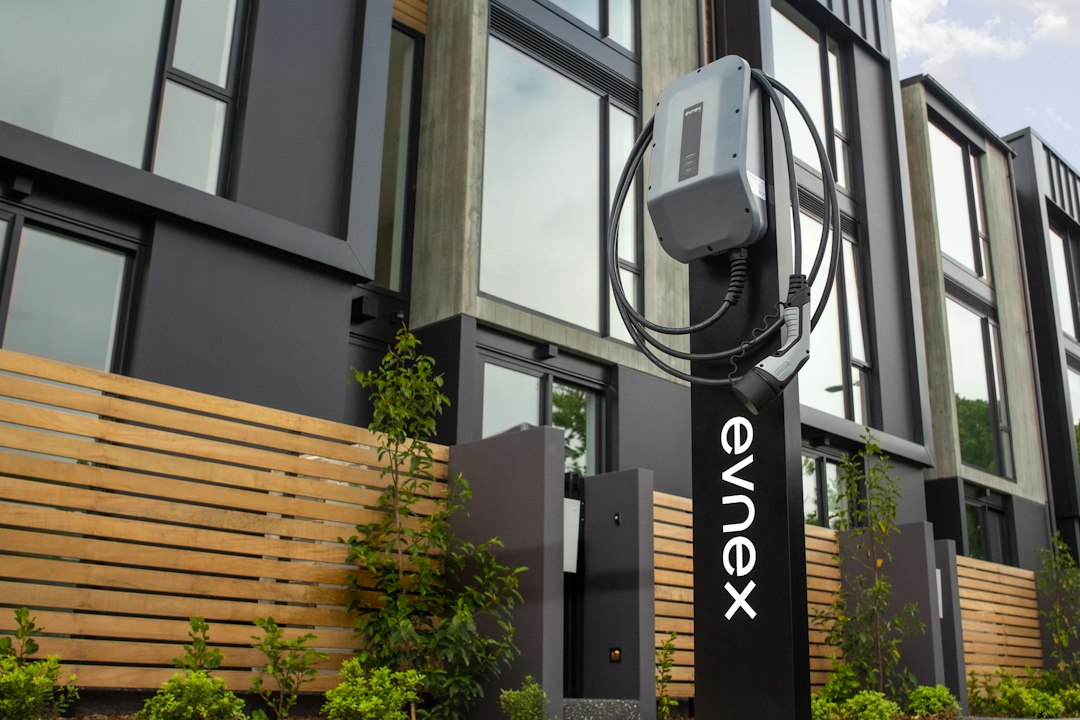
Electric vehicles now make up a large and growing share of new car registrations in Singapore, and charging at home is the most convenient way to run one. For residents of strata developments, the ev charger condo question is not only technical but collective: the carpark is common property, the electrical supply is shared, and decisions are made through the management corporation. For landed homes, the decisions are the owner’s, but the regulations still apply.
This guide explains the current regulatory framework under the Electric Vehicles Charging Act, how condominiums approve and install chargers, what landed homeowners need to do, and the electrical and structural questions that are often underestimated. The position described is current at the time of writing; the rules have changed several times in recent years, so confirm details with LTA before proceeding.
The regulatory framework
EV charging in Singapore is regulated by the Land Transport Authority (LTA) under the Electric Vehicles Charging Act 2022, which commenced on 8 December 2023. Its main requirements for residential chargers are:
- Type approval — charger models must be type-approved by LTA and carry an approval label before they can be supplied or installed.
- Installation and certification — fixed chargers must be installed by a Licensed Electrical Worker (LEW) and certified by a charger equipment specialist, after which a certificate of fitness is issued.
- Registration — every charger must be registered with LTA before use, and the owner affixes the registration mark LTA issues. Using an unregistered charger has been an offence since 8 June 2024.
- Licensing of operators — businesses that provide charging services may need an EV charging operator licence. LTA has stated that landed homeowners charging only their own household vehicles, and fleet owners charging only their own fleet, do not.
Chargers must meet the national technical standard for EV charging. According to the Ministry of Transport, Singapore Standard SS 722 superseded the earlier Technical Reference 25 (TR25) on 1 April 2026; LTA’s guidance should be checked for how this applies to type approval of particular models.
How an EV charger condo project is approved
In a condominium, carpark lots are normally common property, so installing chargers requires a decision of the management corporation (MCST). Following amendments to the Building Maintenance and Strata Management Act that took effect with the EV Charging Act, an MCST can approve the installation or removal of EV chargers on common property by an ordinary resolution at a general meeting, provided any lease of common property to a charging operator does not exceed ten years and the proposal does not draw on the MCST’s management or sinking funds. By-laws on the use of parking lots for EV charging can also be made by ordinary resolution. Other proposals may require a higher threshold.
In practice, most condominiums appoint a licensed charging operator to install, own and run shared chargers, with residents paying for the electricity they use. The government’s EV Common Charger Grant has co-funded shared chargers in non-landed private residences; according to MOT and LTA, it is available until 31 December 2026 or until a set number of chargers have been supported, whichever comes first.
Individual residents who want a dedicated charger at a particular lot face more complexity, since the lot, the cable route and the supply all involve common property. The MCST’s by-laws and approval are needed, and many developments prefer shared chargers for fairness and load management. Our guide to condo renovation rules covers the wider approvals framework.
Electrical capacity: the real constraint
In a typical EV charger condo installation, the limiting factor is the electrical supply. Older developments were designed before EV charging was anticipated, and the spare capacity at the main switchboard or transformer may be modest. Adding many chargers, each drawing several kilowatts for hours, can exceed it.
A Licensed Electrical Worker assesses the available capacity and designs the installation. Options include load management systems that share available power across chargers and reduce charging rates at peak times, phased rollouts that add chargers as demand grows, and, where needed, supply upgrades in coordination with SP Group. Slower AC charging overnight is usually sufficient for residents and is far easier on the supply than fast DC charging.
For new developments, the Act requires passive and active provisions. Developments with planning permission or electrical load applications made on or after 8 December 2023 for specified building works must provide electrical capacity of at least 1.3 kVA per car and motorcycle lot, with chargers installed for a portion of that capacity.
Carpark structure and cable routes
Chargers need cables from the switchroom to the carpark, and those cables must pass through walls and slabs. This is where structural care matters. Many carpark slabs, particularly in multi-storey and basement carparks, are post-tensioned. Drilling or coring through a post-tensioned slab without locating the tendons can cut a stressed tendon, with serious consequences for the slab’s capacity and potentially for safety.
Before any coring, the structural drawings should be reviewed and the reinforcement and tendons located by scanning. Openings through beams and structural walls should be avoided or approved by a Professional Engineer. Cable trays and containment fixed to soffits must be anchored appropriately, and wall- or pillar-mounted chargers need suitable fixings. Our article on whether you need a structural engineer explains when an assessment is advisable. Fire safety requirements for EV charging installations in carparks should also be checked against SCDF’s current requirements.
EV chargers for landed homes
For landed homeowners the process is simpler, but the same core rules apply: the charger model must be type-approved, installed by a Licensed Electrical Worker, certified and registered with LTA. Homeowners charging only their own household vehicles do not need an operator licence.
Practical considerations include:
- Supply capacity — the LEW checks whether the existing supply and distribution board can take the additional load. Older homes may need a supply upgrade or rewiring; see our guide to electrical rewiring.
- Single-phase or three-phase — many larger landed homes have three-phase supplies, which allow higher charging rates; others are single-phase.
- Location — chargers must be installed where a vehicle would ordinarily park, such as a garage or car porch, and protected from rain and impact. Some chargers are approved only for restricted access locations such as the parking area of a landed house.
- Solar and storage — homes with rooftop solar can charge during the day to use more of their own generation; see our guide to home battery storage for how batteries fit in.
HDB residents
HDB residents do not install their own chargers. Chargers in HDB carparks are deployed through government-led programmes and operated by licensed operators. According to MOT, all HDB towns were EV-ready by December 2025, and the national goal is 60,000 charging points across Singapore by 2030.
Frequently asked questions
Can I install my own EV charger in a condo?
Only with the MCST’s approval, because carpark lots and cable routes are usually common property. Many condominiums instead install shared chargers through a licensed operator. Any charger must be type-approved, installed by a Licensed Electrical Worker, certified and registered with LTA.
What vote does an MCST need to approve EV chargers?
Under the amended Building Maintenance and Strata Management Act, installing or removing EV chargers on common property can be approved by ordinary resolution at a general meeting, provided any lease to an operator is no more than ten years and MCST funds are not used. Other arrangements may need a higher threshold.
Does a landed home EV charger need to be registered?
Yes. All EV chargers must be registered with LTA before use, including those at landed homes. Homeowners charging only their own household vehicles do not need an operator licence, but the charger must be type-approved, installed by a Licensed Electrical Worker and certified.
Why do condo EV charger projects get delayed?
Common causes are limited electrical capacity, the need to agree arrangements at a general meeting, and practical issues with cable routes through the carpark structure. Load management and phased installation can help, and early structural review avoids problems with coring through slabs.
Is drilling through a carpark slab for EV cables safe?
Only after checking. Many carpark slabs are post-tensioned, and cutting a tendon can seriously weaken the slab. The structural drawings should be reviewed and the slab scanned before any coring, and openings through beams or structural walls should be approved by a Professional Engineer.
Related reading
- How to Save Electricity at Home in Singapore’s Climate
- Recycled Solar Panels: What Happens at End of Life
- How an Escalator Works: Parts, Structure and Safety Rules
- Fire Alarm Systems Explained: Components and SG Rules
Planning EV charging in a condominium carpark and need the structure checked before coring? Talk to our consultancy or get in touch.