
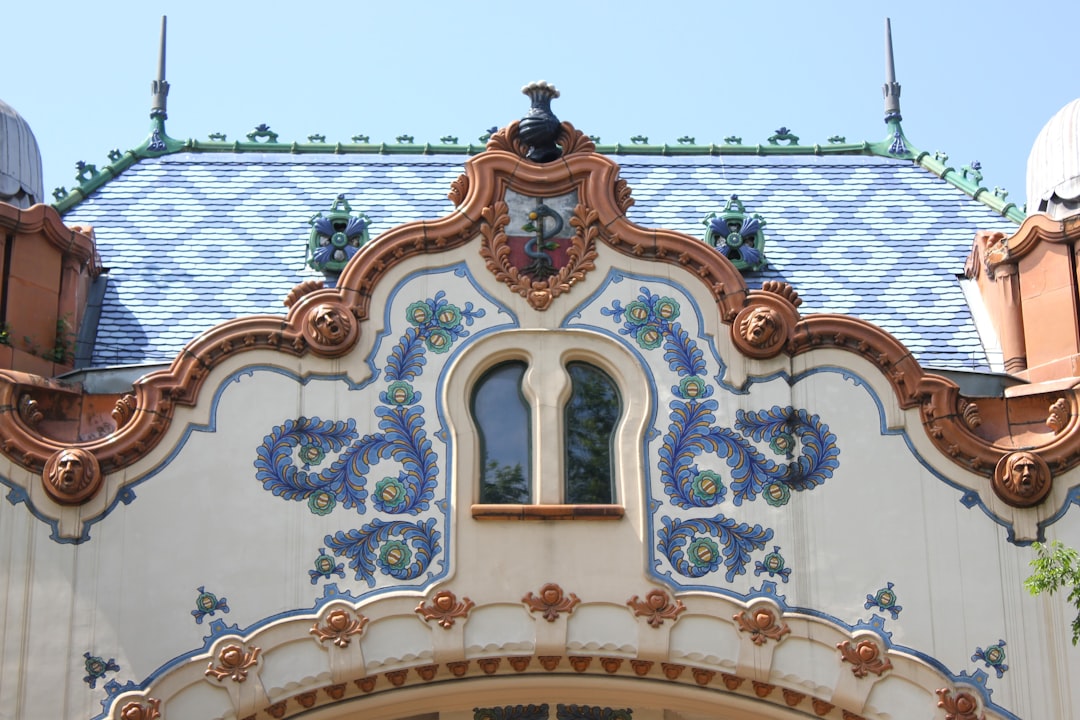
Art nouveau architecture is the style of the curve. Flourishing around the turn of the twentieth century, it drew its forms from nature — flowers, stems, vines and flowing hair — and translated them into iron, glass, stone and wood. For a brief, intense period across Europe, buildings became sinuous, decorative and unmistakably new.
This guide explains where art nouveau came from, the ideas that animated it, its defining features, the architects and buildings that made it famous, and the legacy it left for later design.
Origins: a new art for a new century
Art nouveau (French for “new art”) emerged in the 1890s and flourished until about 1910, when other movements began to displace it. It was an international phenomenon with many local names: Jugendstil in Germany, Secession in Austria, Modernisme in Catalonia, Stile Liberty in Italy. Despite the different labels, the impulse was shared — to create a fresh, modern style free of historical imitation.
The movement was part of a wider reaction against the heavy historicism of nineteenth-century architecture and against the soullessness many felt in industrial mass production. It was closely linked to the Arts and Crafts movement’s emphasis on craftsmanship and to a desire to unite the fine and decorative arts. New industrial materials, especially iron and large sheets of glass, gave architects the means to realise its flowing forms.
The guiding ideas
Art nouveau is held together by a few clear convictions.
- Nature as the source. Plant and organic forms — tendrils, blossoms, insects, waves — provide the basic vocabulary.
- The whip-lash line. A long, sinuous, asymmetrical curve runs through the style, energising surfaces and structures alike.
- Total design. Architects designed not just the building but its railings, lamps, furniture, glass and ironwork, aiming for a unified whole.
- Honest expression of new materials. Wrought and cast iron are shown openly, their flexibility exploited for curving forms.
- Craft and ornament. Decoration is integral, not applied as an afterthought.
This integration of structure and ornament makes art nouveau a fascinating case within the broader study of architectural styles and principles.
Defining features you can recognise
Art nouveau buildings are easy to spot. Facades curve and ripple; window and door openings take on organic, sometimes irregular shapes. Wrought-iron balconies, railings and gates twist into plant-like patterns. Stained glass and decorative tilework carry floral and flowing motifs. Mosaics, carved stone and sculpted plaster blur the line between architecture and ornament.
Interiors continue the theme, with curving staircases, custom light fittings and furniture that echo the building’s lines. The overall impression is of a building that has grown rather than been assembled — soft, continuous and alive with detail.
Key architects and buildings
Several architects defined the movement in different cities. In Brussels, Victor Horta pioneered the style; his Hôtel Tassel (1893) is often considered the first true art nouveau building, with exposed curving ironwork and a flowing interior. In Paris, Hector Guimard designed the famous green cast-iron entrances to the Métro, instantly recognisable emblems of the style.
In Barcelona, Antoni Gaudí developed an extraordinary, deeply personal version of Modernisme. His Casa Batlló and Casa Milà (La Pedrera) twist and undulate as if carved by wind and water, and his still-unfinished Sagrada Família reaches toward an organic, structural fantasy of stone. In Glasgow, Charles Rennie Mackintosh produced a more geometric, restrained interpretation, seen at the Glasgow School of Art. In Vienna, the Secession architects, including Otto Wagner and Joseph Maria Olbrich, gave the style a cleaner, more architectural discipline. These are all real, documented buildings.
Structure, iron and glass
Art nouveau depended heavily on iron. Cast and wrought iron could be shaped into the long, curving lines the style demanded, and they could also serve as genuine structure — columns, beams and balcony supports — left visible rather than hidden behind masonry. This honest use of iron places art nouveau within the same nineteenth-century engineering revolution that produced great glass-and-iron exhibition halls and stations.
Gaudí, in particular, was a serious structural innovator. He studied the natural geometry of catenary curves and branching columns to find efficient ways to carry loads, anticipating ideas that engineers still use. The relationship between an expressive form and the forces it must carry is exactly the territory of what a structural engineer does, and art nouveau shows how closely art and structure can be intertwined.
Decline and legacy
Art nouveau was intense but short-lived. Its handcrafted ornament was expensive and difficult to mass-produce, and after about 1910 tastes shifted. The more streamlined, geometric art deco style and the rising modern movement, with its rejection of ornament, soon displaced it.
Yet its legacy endures. Art nouveau reasserted the value of craftsmanship and unified design at a moment of rapid industrialisation, and it proved that new materials could be expressive as well as practical. Its influence carried into art deco, into graphic and product design, and into the later interest in organic architecture. Today its surviving buildings are treasured landmarks, and their delicate ironwork, glass and decorative plaster demand careful, specialist conservation.
Frequently asked questions
What is art nouveau architecture?
Art nouveau architecture is a turn-of-the-twentieth-century style that drew its forms from nature, using flowing organic curves, ornate ironwork, stained glass and unified decoration to create a deliberately new, modern look.
When was art nouveau popular?
It flourished from roughly the 1890s to about 1910, spreading across Europe under different names before being displaced by art deco and the modern movement.
Who is the most famous art nouveau architect?
Several are celebrated, including Victor Horta in Brussels and Hector Guimard in Paris, but Antoni Gaudí in Barcelona is perhaps the best known, thanks to buildings such as Casa Batlló and the Sagrada Família.
What are the main features of art nouveau architecture?
Key features include sinuous “whip-lash” curves, organic and floral motifs, expressive wrought-iron railings and balconies, stained glass, decorative tilework and a unified approach in which the architect designs the whole building and its fittings.
Why did art nouveau decline?
Its elaborate handcrafted ornament was costly and hard to mass-produce, and after about 1910 tastes shifted toward the more streamlined art deco style and the ornament-free modern movement.
Related reading
- Net-Zero Energy Buildings Explained: How They Work
- Passive House (Passivhaus) Explained: The Five Principles
- Mixed-Use Development Explained: Uses, Pros and Cons
- Adaptive Reuse in Architecture Explained
Conserving a decorative iron-and-masonry heritage building and need senior structural advice? Talk to our consultancy or get in touch.


