The roof is the part of a building that works hardest against the weather, and it does more than any other element to set a building’s silhouette. The main types of roofs can be sorted in two ways: by their shape, which decides how water is shed and how the structure beneath is arranged, and by their covering, which decides durability, heat gain and maintenance. A good roof gets both right for its climate.
This article sets out the common roof shapes, the materials used to cover them, and the structural and climatic reasoning behind each. The perspective is that of a structural engineer working in a hot, wet climate such as Singapore’s, where intense rain and strong sun matter far more than snow load.
Why roof form matters
A roof has three jobs. It must keep water out, it must resist the loads placed on it, including its own weight, maintenance traffic and wind, and it must moderate the heat and light that reach the rooms below. Shape affects all three. A steep pitch sheds water quickly and gives a ventilated void beneath; a flat roof is easier to build over a concrete frame and can be used as a terrace, but depends entirely on its waterproofing.
Wind is the load most often underestimated. On a pitched roof, wind passing over the ridge creates suction on the leeward slope and, at low pitches, on the windward slope too. Edges, corners and ridges see the highest uplift, which is why fixings are closer together there. Choosing a roof type is therefore never only an aesthetic decision; it sets the structure, the drainage and the long-term upkeep.
Pitched roof types
Pitched roofs slope at an angle and are framed either with rafters and purlins or with prefabricated trusses. The main forms are:
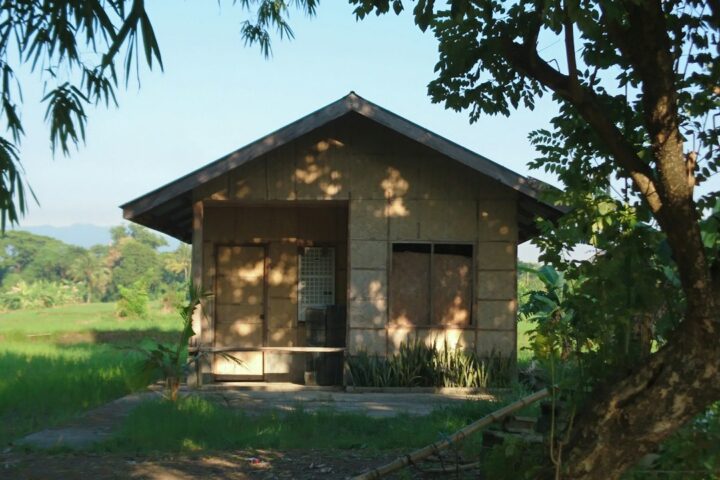
- Gable roof — two slopes meeting at a ridge, with triangular end walls. Simple to frame and ventilate, though the gable ends are exposed to wind.
- Hip roof — slopes on all four sides meeting at a ridge or a point. It braces itself well, performs well in strong wind and gives deep eaves all round, which is why it is so common on colonial bungalows in Singapore.
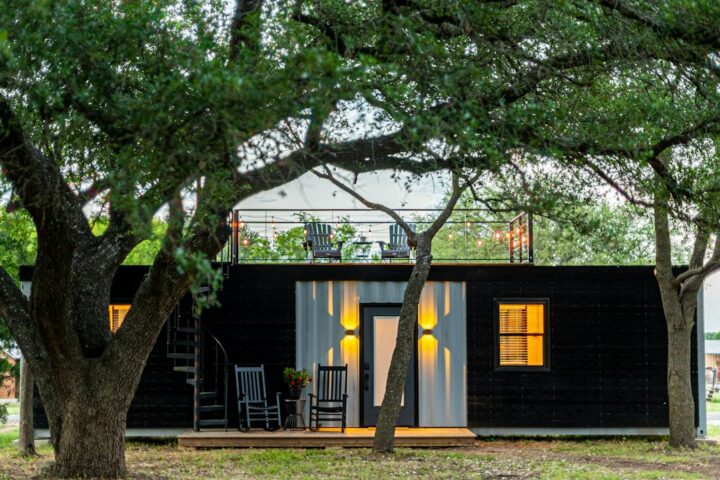
- Skillion or mono-pitch roof — a single slope, often used on extensions and contemporary houses. Easy to drain to one gutter, but the high side needs careful detailing.
- Butterfly roof — two slopes falling inward to a central valley. Visually light and good for collecting rainwater, but the valley gutter must be generously sized and kept clear.
- Mansard and gambrel roofs — double-pitched forms with a steep lower slope, used historically to gain habitable space in the roof. Rare in the tropics.
- Sawtooth roof — a series of ridges with glazed vertical faces, traditionally on factories to admit even daylight.
Many traditions combine these forms. The hip-and-gable roof of East Asian architecture, discussed in our guide to Japanese roof styles, is a hip roof with small gables at the top, giving ventilation at the ridge and a strong silhouette.
Flat and low-slope roofs
A flat roof is never truly flat. It is laid to a fall, typically achieved with a screed or by sloping the structure, so that water runs to outlets rather than ponding. In Singapore most HDB blocks, condominiums and commercial buildings have reinforced-concrete flat roofs, because they sit naturally on a concrete frame, carry water tanks and plant, and can be used as roof gardens.
The weaknesses of flat roofs are well known. They rely on a continuous membrane, any blocked outlet leads to ponding, and the concrete slab absorbs a great deal of solar heat. Good practice is a properly designed fall, adequate outlets with overflows, a protected membrane and insulation above or below the slab. A flat roof can also become a green roof, which shades the slab and slows run-off, but the extra weight of saturated soil must be checked against the slab’s capacity.
Curved and special roof forms
Beyond the familiar shapes are roofs that use their geometry structurally. Domes and barrel vaults carry load largely in compression, shells span great distances with very thin concrete, and tensile fabric roofs work in tension. These forms appear in stadiums, transport halls and civic buildings rather than houses, because they need specialist design and construction.
Curved metal roofs are a more everyday example. Profiled metal sheet can be curved over a frame to make a gentle arch, which sheds water well and avoids a ridge detail entirely. Covered walkways and sheltered link-ways often use this approach.
Roof covering materials
The covering is chosen for weight, durability, heat behaviour, appearance and the minimum pitch it tolerates. The most common options are:
- Clay and concrete tiles — heavy and durable, with good thermal mass and a ventilated gap beneath. They need a reasonable pitch and a structure strong enough to carry them.
- Metal sheet — light, quick to install and suitable for low pitches. Covered in detail in our article on metal roofing; it needs insulation and attention to rain noise in the tropics.
- Polycarbonate and glass — used where daylight is wanted, such as canopies and skylights.
- Reinforced concrete with a membrane — the standard flat roof in Singapore.
- Shingles, slate and timber shakes — common in temperate countries but less suited to sustained tropical humidity and heavy rain.
Each material implies a structure. Tiles need closely spaced battens and a robust frame; metal sheet can span further between purlins on a lighter frame; a concrete roof is part of the building’s structure itself.
Choosing types of roofs for a tropical climate
In a climate with heavy, intense rain and high sun all year, a few principles carry more weight than style. Generous pitches and wide eaves keep rain off the walls and shade the windows. Large gutters and downpipes cope with short, heavy storms. A ventilated roof space or a reflective, insulated covering limits the heat that reaches the rooms, which is one of the most effective forms of passive cooling. Dark, uninsulated roofs over occupied rooms are the most common cause of discomfort we see in tropical houses.
Among the types of roofs available, the hip roof with deep eaves remains one of the best all-round choices for a landed house in Singapore: it handles wind, shades the façade and ventilates well. Flat concrete roofs suit dense, multi-storey buildings and make useful outdoor space, provided the waterproofing and insulation are done properly. Whatever the form, alterations to an existing roof, such as adding plant, solar panels or a roof garden, change the loads and should be checked by an engineer, and in Singapore significant structural changes need a Professional Engineer’s endorsement through the BCA process. Our structural engineering consultancy carries out such checks.
Frequently asked questions
What are the most common types of roofs?
The most common shapes are the gable roof, the hip roof, the flat or low-slope roof and the mono-pitch or skillion roof. Butterfly, mansard, gambrel, sawtooth and curved roofs appear less often. In Singapore, flat concrete roofs dominate high-rise housing, while landed homes often have hipped or pitched roofs with tiles or metal sheet.
Which roof shape is best in strong wind?
Hip roofs generally perform better than gable roofs in strong wind, because they have no tall gable wall for the wind to push against and the slopes brace one another. Whatever the shape, the critical details are the fixings at edges, corners and ridges, where wind uplift is highest, and a positive connection from the roof down into the walls.
Is a flat roof a good idea in Singapore?
A flat concrete roof works well in Singapore when it is laid to a proper fall, has enough outlets and overflows, uses a good waterproofing membrane and is insulated against solar heat. Most problems come from ponding, blocked outlets and failed membranes rather than from the flat form itself.
Can I change my roof type during a renovation?
It is possible, but changing a roof alters the loads on the walls, beams and foundations below, as well as the drainage and the building’s appearance. For a landed house, a new roof structure usually needs an engineer’s design and, in Singapore, approval through the relevant authorities before work begins.
What roof material keeps a house coolest?
No single material is coolest on its own. A light-coloured, reflective covering, a ventilated roof void and a good layer of insulation together keep heat out far better than any covering alone. Heavy tiles or concrete store heat and release it later, while light metal heats and cools quickly, so both need insulation over occupied rooms.
What is the minimum pitch for a roof?
The minimum pitch depends on the covering: clay and concrete tiles typically need around 15 to 25 degrees or more, while profiled metal sheets can often be laid at just a few degrees, and standing seam profiles lower still. Flat concrete roofs still need a fall to their outlets, commonly at least around 1 in 100. Always follow the manufacturer’s minimum pitch, as laying flatter risks leaks in heavy tropical rain.
What is the difference between a hip roof and a gable roof?
A gable roof has two sloping sides meeting at a ridge, with vertical triangular walls at each end, while a hip roof slopes down on all four sides. Gable roofs are simpler and cheaper to frame and give more roof space, but their end walls catch the wind. Hip roofs brace themselves better, perform better in strong wind and provide eaves all round to shade every wall.
How long do different roofing materials last?
Clay and concrete tiles can last 50 years or more, though battens, underlays and flashings need attention sooner. Coated metal roofs commonly last around 20 to 40 years depending on coating and exposure, and polycarbonate sheets about 10 to 15 years. Waterproofing membranes on flat concrete roofs typically need renewal every 10 to 20 years, depending on the system and how well it is protected.
Related reading
- Bamboo Architecture: Structure, Durability and Examples
- Neoclassical Architecture: Order, Reason and Form
- Baroque Architecture Explained: Drama in Stone
- Gothic Architecture: Characteristics, Examples and Origins
Planning a new roof or altering an existing one? Talk to our consultancy or get in touch.