
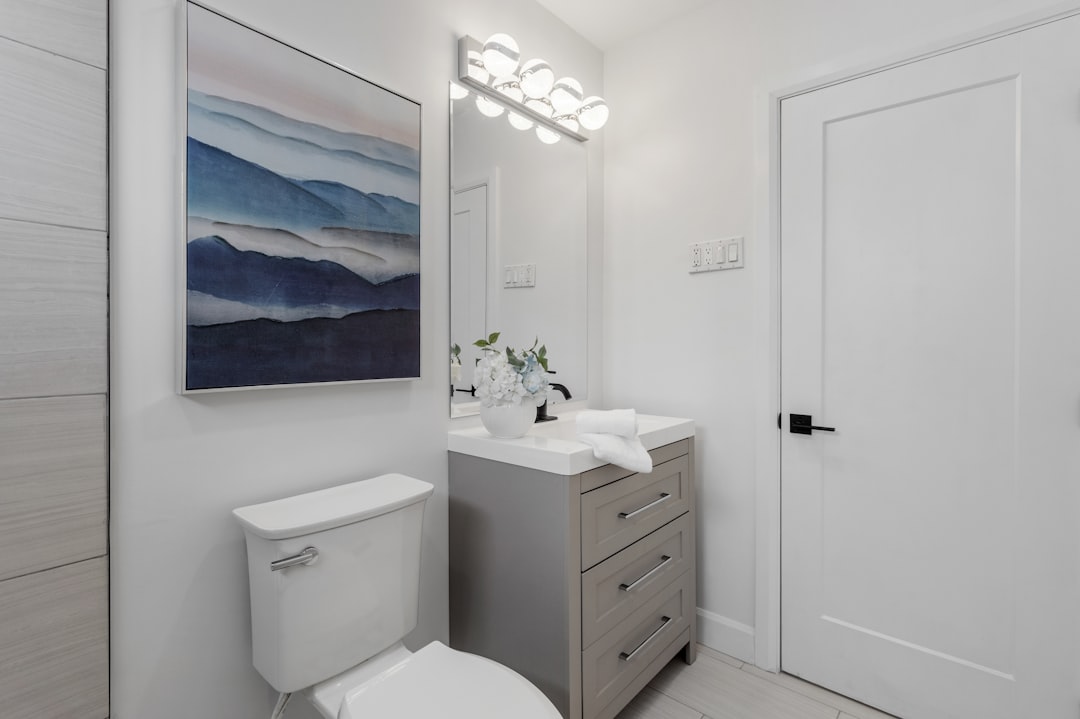
Thoughtful powder room design is one of the most rewarding small projects in any home. Because the room is compact and used only briefly, it can carry a level of drama and detail that would feel overwhelming spread across a larger space. The powder room is the one bathroom your guests are most likely to see, which makes it worth a disproportionate share of attention. A small footprint also means premium materials become affordable, so a few tiles or a single roll of striking wallpaper can transform the entire room.
This guide explains what a powder room is, then works through the decisions that make a memorable one: bold surfaces, the choice between a vanity and a pedestal or wall-hung basin, lighting and mirrors, ventilation, and the fixtures and finishes that tie everything together. The aim is a space that feels considered and a little luxurious without overreaching the budget.
What a powder room is
A powder room is a guest half-bath: a small room containing only a toilet and a basin, with no bath or shower. The “half” describes the reduced fixture count compared with a full bathroom. Its purpose is convenience for visitors and for the household during the day, sparing guests a trip to a private bedroom bathroom.
Because it omits bathing facilities, the powder room avoids the heavy moisture load of a full bathroom, which opens up finishes that would be impractical elsewhere. That freedom is the secret behind so many beautifully designed powder rooms, and it is why this little room is often where a home’s interior personality shows most clearly. Our broader notes on interior design explain how a single concentrated space can set the tone for a whole home.
Making a small space feel special
The instinct in a tiny room is to keep everything pale and recessive, but the powder room rewards the opposite approach. Since no one lingers, you can take risks that would tire the eye in a living room. A saturated paint colour, a dramatic mirror or an unexpected light fitting turns a purely functional cubicle into a moment of surprise.
Think of the room as a jewel box. Choose one strong idea, a deep colour, a patterned floor, a sculptural basin, and let everything else support it quietly. The smallness is an asset: a single feature reads as bold and intentional rather than busy, and the cost of going premium on a few square metres stays modest.
Bold finishes: wallpaper, paint and tile
The walls are your largest canvas and the easiest place to make an impression. Each finish offers a different character, and the right choice depends on how much drama you want and how the room is ventilated.
Wallpaper and paint
Patterned wallpaper is a powder-room favourite because the room is small enough to cover affordably and dry enough to suit paper, though a wipeable or vinyl-coated paper is wiser near the basin. Deep, enveloping paint colours, charcoal, forest green, oxblood, make a windowless room feel intimate rather than cramped. A durable, washable finish copes better with splashes and cleaning.
Tile and stone
Tile brings pattern, texture and durability. A patterned cement-look floor tile, a run of zellige on a feature wall, or a slab of veined stone behind the basin all elevate the room. Because quantities are small, materials normally reserved for grand projects become realistic here. If your project touches more extensive works, our guide to renovation cost in Singapore helps frame the overall budget.
Vanity versus pedestal or wall-hung basin
The basin choice shapes both the look and the practicality of the room, and it is the decision most worth pausing over. There is no universally correct answer; it depends on whether you value storage or floor space more.
- Vanity unit: offers concealed storage for spare paper, cleaning supplies and toiletries, and hides plumbing. Best where you have a little width to spare and want a tidy, practical room.
- Pedestal basin: a classic, space-efficient choice that suits period and traditional schemes, though it provides no storage and leaves pipework partly visible.
- Wall-hung basin: mounts directly to the wall with the floor left clear beneath, making the room feel larger and easing cleaning. It needs solid wall support and careful plumbing concealment.
In the tightest powder rooms, a small wall-hung or corner basin frees the most floor area and keeps the room from feeling boxed in. Where you choose a wall-hung unit, the wall behind must be robust enough to carry the load; if it is a stud partition, it may need reinforcement, and our explanation of load-bearing walls is worth reading before committing.
Lighting and the mirror
Powder rooms are often windowless, so lighting carries the whole atmosphere. The aim is flattering, even light on the face plus a layer of mood. Downlights alone cast harsh shadows under the eyes; the better approach places light beside or around the mirror at face height.
Wall sconces flanking the mirror, or a backlit mirror, give the most flattering result and a touch of glamour. A small decorative pendant can add character where ceiling height allows. The mirror itself is a styling opportunity: an interesting shape or a substantial frame becomes the room’s focal point, and a generously sized mirror bounces light around and enlarges the space.
Ventilation and moisture
Even without a shower, a powder room produces moisture and odours, so ventilation is non-negotiable. A window is ideal where the layout allows; otherwise a mechanical extract fan is essential, ideally on a timer or humidity sensor so it clears the air after use. Poor ventilation is the quickest way to ruin beautiful wallpaper and breed mildew.
Match your finishes to the ventilation you can provide. A well-ventilated room tolerates paper and delicate materials; a poorly ventilated one calls for tile, vinyl-coated paper and washable paint. Getting this balance right protects your investment in the finishes and keeps the room fresh for guests.
Fixtures and finishes
In a small room every fitting is on show, so the metalwork and accessories do real work. Coordinate the finish of the tap, the toilet flush plate, the towel ring and any handles, brushed brass, matt black, polished nickel, so the details feel intentional rather than collected at random.
Choose a tap and basin proportioned to the room; an oversized fitting overwhelms a compact space. Allow for the small practicalities guests need: somewhere to hang a hand towel, a spare roll within reach, and a discreet bin. These quiet courtesies are part of good design and sit within the architectural styles and principles of designing for genuine use.
Common mistakes to avoid
The most common error is timidity, treating the powder room like a scaled-down full bathroom and missing the chance to make it special. The second is the reverse: piling in so many bold elements that they fight one another. Choose one hero and restrain the rest.
- Harsh overhead-only lighting that casts unflattering shadows on the face.
- Delicate wallpaper installed in a room with no extract ventilation.
- A bulky vanity that leaves no room to move in a tight footprint.
- Mismatched metal finishes across tap, flush plate and accessories.
- Forgetting guest essentials: a towel hook, spare paper and a bin.
- An undersized mirror that misses the chance to add light and drama.
Sidestep these and the powder room becomes the small, confident gem it ought to be, the room guests remember and quietly admire.
Frequently asked questions
What is the difference between a powder room and a full bathroom?
A powder room is a half-bath containing only a toilet and basin with no bath or shower, intended mainly for guests, whereas a full bathroom adds bathing facilities and carries a much heavier moisture load.
Can I use wallpaper in a powder room?
Yes, because the room has no shower it is usually dry enough for wallpaper, though a wipeable or vinyl-coated paper near the basin and adequate extract ventilation will keep it looking good for far longer.
Should I choose a vanity or a wall-hung basin?
Choose a vanity when you need concealed storage and have a little width to spare, and a wall-hung or pedestal basin when floor space and an open, airy feel matter more, accepting the loss of storage.
Do powder rooms need ventilation without a shower?
Yes, they still produce moisture and odours, so a window or a mechanical extract fan, ideally on a timer or humidity sensor, is essential to protect the finishes and keep the room fresh.
How do I make a tiny powder room feel special?
Treat it as a jewel box: pick one strong idea such as a deep colour, patterned floor or sculptural basin, support it with flattering side lighting and a generous mirror, and keep everything else quiet.
Related reading
- Bohemian (Boho) Interior Design
- Modern Interior Design: Principles and Ideas
- Contemporary Interior Design Explained
- Minimalist Interior Design: A Complete Guide
A small room, done with care, can be the most memorable space in the home. Talk to our consultancy or get in touch.


