
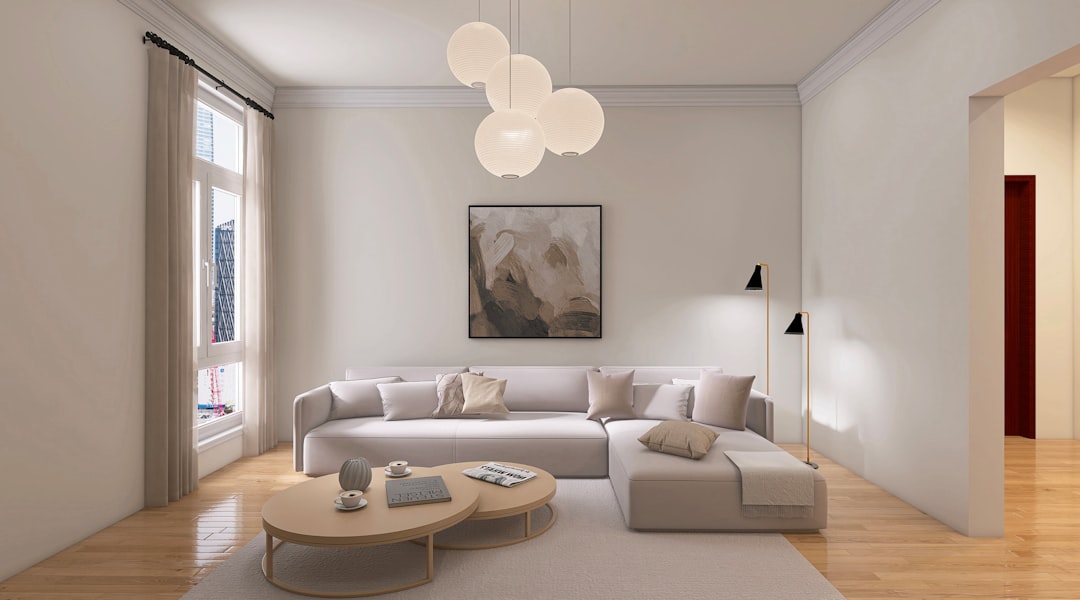
Minimalist interior design is the discipline of reducing a room to what matters and removing everything that does not. It is not the absence of decoration so much as a careful editing of it: every surface, object and line earns its place. Done well, a minimalist interior feels calm, generous and quietly expensive, even when the materials are modest.
This guide explains where the style comes from, what actually defines it, and how to achieve it in a real home rather than a showroom photograph. The aim is to give you the principles, not a shopping list, so you can apply minimalist interior design to a flat, a landed house or a single room.
Where minimalism comes from
The modern minimalist interior has several roots. The most direct is the early-twentieth-century modern movement, particularly the Bauhaus school and architects such as Ludwig Mies van der Rohe, whose phrase “less is more” became shorthand for the whole idea. Their work stripped away ornament in favour of clean structure, honest materials and proportion.
A second, older root is traditional Japanese design, where empty space — known as ma — is treated as a positive element rather than something to be filled. The restraint of a tatami room, with its low furniture and uninterrupted floor, anticipated Western minimalism by centuries. You can read more about that lineage in our piece on the traditional Japanese house, which shares much of minimalism’s logic.
By the 1960s and 1970s, minimalism had become a recognised movement in art and architecture, and it has since settled into one of the most enduring approaches to interior design. Its appeal is partly practical: a pared-back home is easier to maintain, easier to live in, and ages slowly.
The defining features of minimalist interior design
Minimalist interior design is recognisable less by any single object than by a set of consistent choices. The clearest markers are restraint in colour, simplicity in form, and a deliberate amount of empty space.
- A limited palette. Whites, off-whites, soft greys, warm beiges and muted earth tones dominate. Colour is used sparingly, often as a single accent.
- Clean lines and simple forms. Furniture tends to be low, rectilinear and unfussy, with few mouldings or carvings.
- Negative space. Walls are left largely bare, floors uninterrupted, and surfaces clear. The space between objects does the work.
- Hidden storage. Clutter is the enemy of minimalism, so storage is built in, concealed and generous.
- Quality over quantity. A few well-made pieces replace many cheap ones.
None of these features is decorative in itself. Each exists to keep the eye calm and the room legible.
Colour, light and materials
The minimalist palette is built on neutrals, but neutrals are not flat. The interest comes from texture and from the play of natural light across honest materials. A white plastered wall, a pale oak floor, a length of linen and a slab of stone can sit in the same near-colourless scheme and still feel rich, because each surface reflects light differently.
Natural materials are preferred: timber, stone, concrete, wool, linen and glass. They are usually left close to their raw state — oiled rather than high-gloss, matte rather than shiny. Lighting is treated as a material in its own right. Large windows are prized, and artificial light is kept warm, layered and unobtrusive, often recessed or hidden behind a cornice so that the source itself disappears.
The discipline extends to hardware and fittings. Handle-less cabinetry, flush skirtings and concealed door frames all reduce visual noise. The goal is a continuous, quiet surface rather than a series of competing details.
Furniture and layout
Minimalist furniture is chosen for proportion and function. Pieces are generally low to the ground, with simple geometry and slim profiles, so the room reads as open. Rather than filling a space, you give each item room to breathe. A single well-placed sofa, a low table and a good chair will usually do more for a minimalist living room than a fuller arrangement.
Layout follows the architecture. Furniture is aligned with walls and windows, circulation routes are kept clear, and the floor plane is left as open as possible. Where many styles add layers, minimalism subtracts them: no skirting of objects along the walls, no surface crowded with ornaments, no rug fighting the floor it sits on. Symmetry and alignment are used quietly to bring order without drawing attention to themselves.
How to achieve a minimalist interior
Most people arrive at minimalism by editing what they already own rather than buying new things. The process is more about subtraction than acquisition.
- Start by removing. Clear surfaces completely, then return only the items you genuinely use or value. This single step transforms a room.
- Choose one neutral base. Pick a wall colour and a floor tone and let them run throughout, so spaces flow into one another.
- Invest in storage. Built-in, concealed storage is what makes a minimalist home liveable rather than spartan.
- Buy fewer, better pieces. One considered sofa outlasts and outperforms three compromises.
- Let light lead. Keep windows unobstructed and use warm, layered artificial light at night.
It is worth distinguishing minimalism from emptiness. A cold, under-furnished room is not minimalist; it is simply unfinished. The warmth comes from material quality, soft textiles and the careful curation of a few meaningful objects. If your renovation involves removing walls to open up space, do read our note on load-bearing walls first, because the open plans minimalism favours often depend on getting the structure right.
Frequently asked questions
Is minimalist interior design the same as modern design?
No. Modern design refers to a specific historical period and aesthetic, while minimalism is a principle of restraint that can be applied within several styles. The two overlap heavily, but you can have a modern room that is busy and a minimalist room that uses traditional materials.
Does minimalism mean a cold, empty home?
It should not. Good minimalism is warm because it relies on natural materials, soft textures and well-placed lighting rather than ornament. Emptiness without warmth simply reads as an unfinished room, not a minimalist one.
Is minimalist design cheaper to achieve?
Not necessarily. You own fewer things, but each one tends to be of higher quality, and built-in storage and seamless finishes can cost more than off-the-shelf furniture. The saving is usually long term, because the look ages slowly and needs less replacing.
How do I keep a minimalist home from looking sparse?
Layer texture rather than objects. Combine timber, linen, wool and stone within the same neutral palette, keep lighting warm and indirect, and add one or two meaningful pieces rather than many small ones. Texture gives depth without clutter.
Can minimalism work in a small flat?
Yes, and it often suits small flats especially well. Clear surfaces, concealed storage and a single light palette make a compact space feel larger and calmer than a heavily decorated one.
Related reading
- Bohemian (Boho) Interior Design
- Modern Interior Design: Principles and Ideas
- Contemporary Interior Design Explained
- Tray Ceilings and Ceiling Design Ideas Explained
Planning a pared-back renovation and want the structure to match the calm of the finishes? Talk to our consultancy or get in touch.


