A moss garden is one of the most serene forms of Japanese landscape design: a ground plane of soft green carpeting the earth beneath trees, around stones and along paths, with little else competing for attention. Where a dry rock garden abstracts water with raked gravel, a moss garden celebrates living texture, shade and the slow passage of time. It suggests age, care and quiet more directly than almost any other planting.
This article looks at the origins of the form in Japan, the design principles behind it, the conditions moss needs, and what it takes to create one, including the particular challenges and opportunities of a tropical climate. It sits within our broader guide to Japanese garden design.
Origins: Saiho-ji and the moss temple
The most famous moss garden in Japan is at Saiho-ji in western Kyoto, widely known as Koke-dera, the moss temple. In 1339 the Zen priest and garden designer Muso Soseki became head of the temple and remodelled its grounds, creating a garden around a pond in the lower part and a more austere, stone-based composition on the hillside above. Saiho-ji is today part of the Historic Monuments of Ancient Kyoto World Heritage listing.
What is remarkable is that the moss was not part of Muso’s original intention. Historians generally agree that the moss spread much later, during centuries when the temple fell into periods of neglect and the damp, shaded valley allowed it to colonise the ground. Accounts vary on exactly when, with most placing the spread in the Edo period or the nineteenth century. Today the garden is noted for roughly 120 varieties of moss.
The lesson for designers is instructive. The most celebrated moss garden is partly an accident of climate and time, and the best moss gardens still depend more on getting the conditions right than on any planting plan.
Design principles of a moss garden
The style is about restraint. The moss itself is the main surface, and other elements are placed sparingly so that it reads as a continuous, flowing plane.
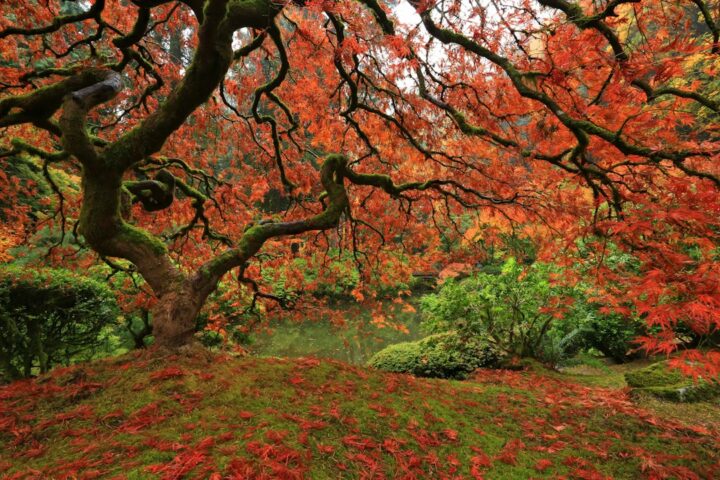
- Canopy and shade. Trees such as maples overhead filter light, create the dappled shade moss prefers and frame views.
- Stone. Rocks set partly into the ground, stone lanterns and basins provide counterpoint, their hard surfaces softened by moss creeping over the edges.
- Paths. Because moss tolerates little foot traffic, paths of gravel or stepping stones guide visitors and protect the planting.
- Topography. Gentle mounds and hollows give the moss surface a landscape quality, catching light differently across the day.
- Water. A pond or stream, real or suggested, adds humidity and reflection.
Moss also features in smaller ways in other Japanese garden types. In the roji tea garden, moss and stepping stones create the sense of a mountain path leading to the tea house. In some dry gardens, islands of moss sit within raked gravel, as at the karesansui gardens discussed in our guide to zen gardens.
What moss needs to thrive
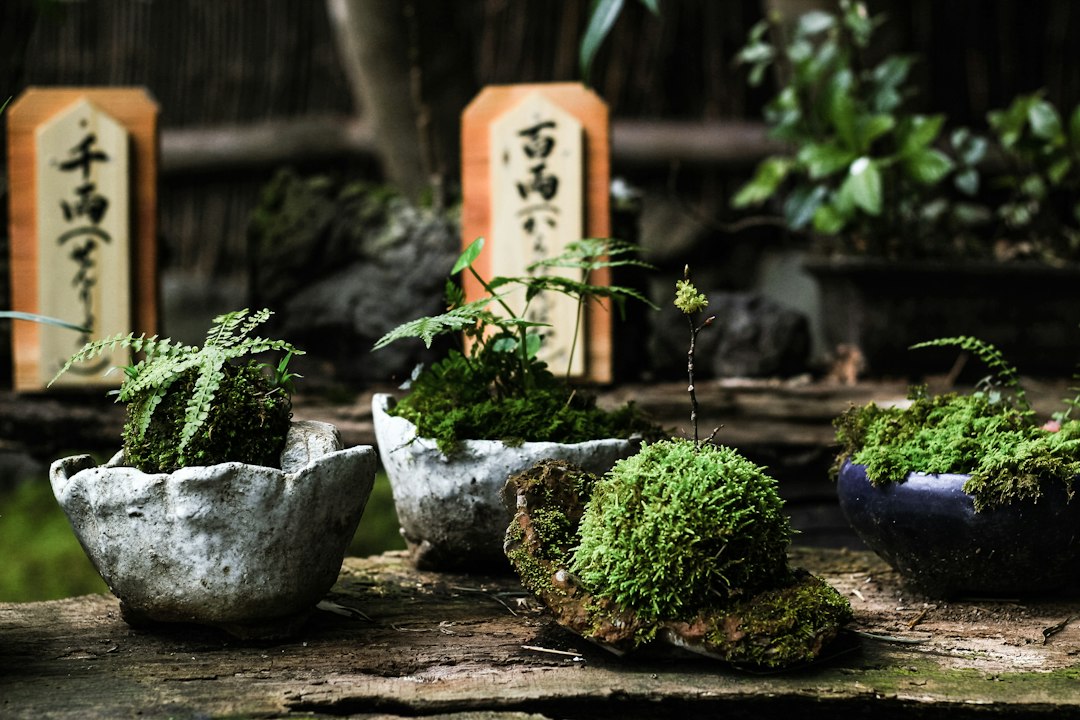
Mosses are simple, non-flowering plants without true roots. They anchor themselves with fine threads called rhizoids and absorb water and nutrients mostly through their leaves. That biology explains their requirements.
Moisture
Moss needs consistent moisture in the air and on its surface. Many species can dry out and revive, but they grow only when moist. High humidity, morning dew and gentle, frequent watering suit them better than occasional heavy watering.
Light
Most garden mosses prefer partial or dappled shade. Some species tolerate more sun if kept moist, but intense direct sun combined with dry air will scorch them.
Substrate
Moss generally favours firm, compacted, slightly acidic soil with low fertility. Rich, loose soil invites grasses and weeds to compete. Clay-based or sandy-loam soils that hold some moisture without waterlogging work well.
Little competition
Fallen leaves, weeds and grass smother moss quickly, which is why Japanese moss gardens are swept and weeded by hand with great regularity.
Creating a moss garden in a tropical climate
Singapore’s high year-round humidity is, in principle, favourable to moss, and moss grows freely on shaded walls, drains and tree trunks across the island. The difficulty is that the temperate mosses used in classic Japanese gardens are not adapted to sustained heat and strong equatorial sun, and heavy tropical downpours can dislodge newly laid patches.
A tropical moss garden therefore works best in a shaded courtyard, under a dense canopy, on the north or east side of a building, or within a covered or semi-enclosed space. Local mosses collected responsibly from similar conditions, or sourced from specialist growers, are more likely to establish than imported temperate species. Misting systems on timers help through dry spells. Where true moss struggles, designers often use low, moss-like ground covers in exposed areas and reserve real moss for the most sheltered spots. Our guide to plants for a Japanese garden discusses suitable alternatives.
On rooftops and podium decks, this kind of planting raises practical questions. Saturated soil and stone add significant weight, and constant moisture places demands on waterproofing and drainage. The structure must be checked for the additional load, and the membrane and drainage layers detailed to cope with permanently damp conditions.
Establishing and maintaining moss
Moss can be established by transplanting sheets or clumps onto prepared, firmed soil, pressing them down so the rhizoids make contact, then watering lightly and often until they attach. A slower method spreads fragments over the surface and keeps them moist while they colonise. Either way, the first months need patience and protection from foot traffic.
Ongoing care is mostly removal. Fallen leaves should be cleared gently with a soft broom or by hand, weeds pulled while small, and areas of thin growth repaired by pressing in fresh pieces. Fertiliser is generally unnecessary and often encourages competition. Avoid walking on moss, especially when wet, and direct people to paths and stepping stones instead.
A well-kept example improves with time. Its colour deepens, stones and lanterns acquire their own patina, and the garden comes to express the Japanese appreciation of age and impermanence that lies at the heart of wabi-sabi.
Frequently asked questions
What is the most famous moss garden in Japan?
Saiho-ji in Kyoto, known as Koke-dera or the moss temple, is the best known. Its garden was remodelled by Muso Soseki in 1339, though the moss that now covers it spread much later, and it is noted for around 120 varieties of moss.
Can a moss garden grow in Singapore?
It can in the right spot. Moss grows readily in Singapore’s humidity, but a moss garden needs consistent shade, shelter from heavy rain and direct sun, and locally adapted species rather than temperate mosses used in Japan.
Does moss need soil?
Moss has no true roots and absorbs moisture mainly through its leaves, so it can grow on stone, timber or compacted soil. In a garden, a firm, slightly acidic, low-nutrient soil surface helps it establish and discourages weeds.
Can you walk on a moss garden?
Only lightly and occasionally. Most mosses tolerate little foot traffic, which is why moss gardens use stepping stones and gravel paths to guide people and protect the planting.
Is a moss garden suitable for a roof terrace?
Possibly, but it needs careful design. Saturated soil and stone add load, and permanently damp conditions demand robust waterproofing and drainage, so the structure and roof build-up should be assessed by an engineer first.
Related reading
- Junya Ishigami: Thin Structures and Architecture as Air
- Tatami Bed Guide: Construction, Sizes and Humidity
- Chichu Art Museum: Tadao Ando’s Underground Gallery
- Edo Tokyo Open Air Museum: An Architecture Reading
Planning a garden on a roof or podium and need to know what the structure can carry? Talk to our consultancy or get in touch.