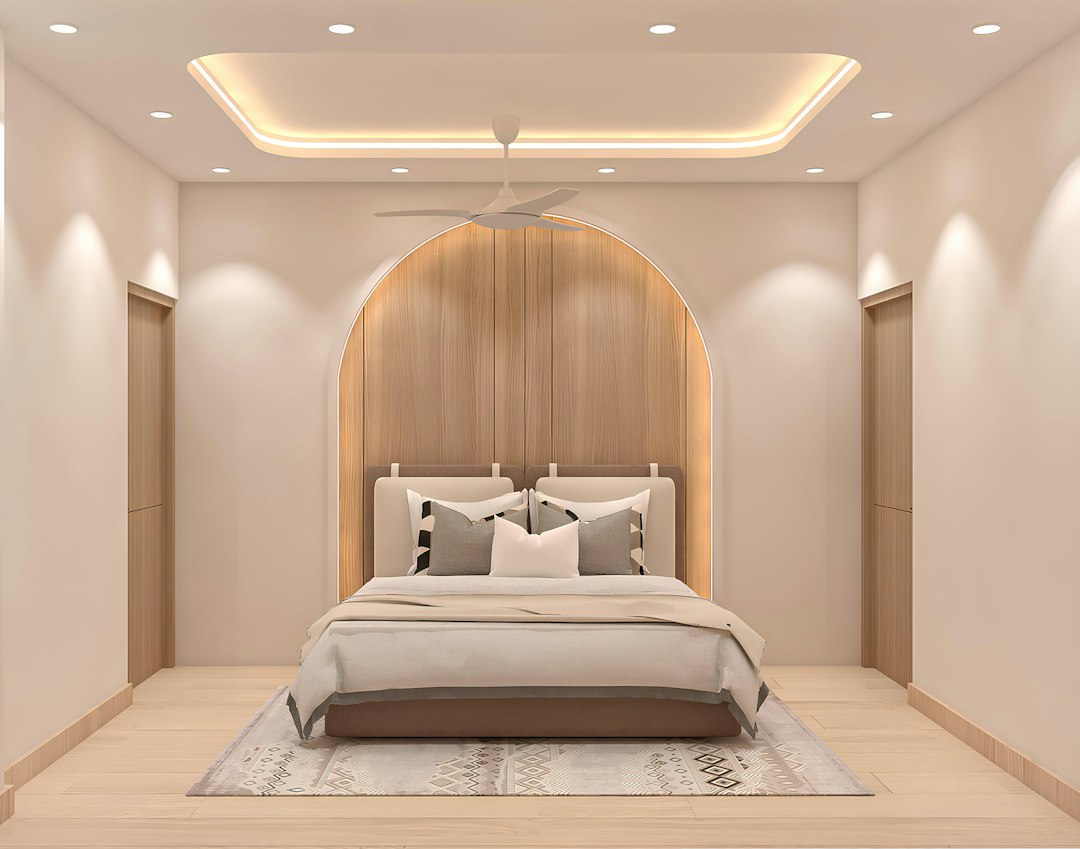
A headboard does several jobs at once. It gives you something comfortable to lean against, protects the wall from scuffs and hair oils, and sets the visual centre of the bedroom. Because it sits where the eye lands as you walk in, headboard design often decides the character of the room more than the bed frame or the bedding.
This article covers the main types of headboard, the materials that suit Singapore’s climate, typical proportions, built-in options with lighting and storage, and how to fix a headboard so it stays solid. Dimensions given are typical ranges to plan around, not standards.
Freestanding, frame-mounted or wall-mounted
Headboards fall into three broad categories, and the choice affects both installation and flexibility.
- Integrated with the bed frame. Many upholstered and timber beds come with a headboard bolted to the frame. They move with the bed and need no wall fixing, but they can rock slightly if the frame is light.
- Freestanding or frame-mounted. A separate headboard bolted to the back of a divan or platform base, or standing on its own legs between the bed and the wall. Easy to change later.
- Wall-mounted. Fixed directly to the wall, often wider than the bed and sometimes running the full width of the room. This is the most common approach in built-in HDB and condo carpentry, and the one with the most design freedom.
Our guide to bed frame types explains how different bases pair with each option.
Headboard design by material
Upholstered
Fabric or leather over foam is the most comfortable to lean against and softens a room acoustically. Channel tufting, vertical piping and simple flat panels each give a different feel. In Singapore’s humidity, choose fabrics with a tight weave and good stain resistance, keep the panel away from direct contact with an external wall that may feel damp, and ventilate the room regularly to discourage mould.
Timber and timber veneer
Solid timber or veneered board gives a warm, durable surface that suits japandi, Scandinavian, mid-century and colonial schemes. It is easy to wipe clean. Slatted timber creates rhythm and shadow; a single smooth panel feels calmer and more minimalist.
Fluted and panelled
Fluted panels, in timber, MDF or moulded composite, have become a popular choice for full-width headboard walls. Traditional panelling and wainscoting achieve a similar effect in a classical idiom. Our articles on fluted panel design and wainscoting cover both.
Rattan, cane and woven
Cane and rattan headboards are light, breathable and well suited to tropical and colonial-inspired rooms. They are less comfortable to lean against for long periods, so they are often combined with cushions.
Painted or plastered
The simplest headboard of all is a painted shape or a band of limewash or textured plaster on the wall behind the bed. It costs little, takes no floor space and works well in very small rooms, although it does nothing for comfort.
Proportions and sizing
Getting the proportions right matters more than the material. A few typical ranges help with planning:
- Height. Many standard headboards rise somewhere around 100–140 cm from the floor, so that a reasonable part sits above the pillows. Taller statement headboards, or full-height wall panels, suit rooms with good ceiling height and little else on the wall.
- Width. A headboard usually matches the width of the bed frame or extends beyond it. Wall-mounted headboards often extend to include the bedside tables, which ties the composition together.
- Thickness. Upholstered panels add depth that the bed must clear; check that the bed still fits between the headboard and any wardrobe or walkway opposite.
Mattress thickness and bed height vary considerably, so measure the top of the mattress with pillows in place before deciding how high the headboard needs to be. If the headboard is barely visible above the pillows, it will look undersized.
Built-in headboards with lighting and storage
In compact bedrooms, a built-in headboard can absorb functions that would otherwise need furniture. A shallow ledge across the top holds books, glasses and a phone; integrated reading lights remove the need for bedside lamps; floating bedside shelves extend from the same panel.
Concealed LED strips behind or above a headboard create a soft wash of light on the wall. This is a close cousin of cove lighting, and the same principles apply: hide the light source, allow enough setback for the light to spread evenly, and choose a warm colour temperature for a bedroom. Plan power points, switches and USB outlets before carpentry begins, because moving them afterwards is disruptive.
Some HDB owners also use a deep headboard cabinet to create storage above the bed. If you do, keep the bottom of any overhead cabinet comfortably clear of your head when sitting up, and make sure it is fixed to a wall that can carry it.
Fixing a headboard properly
A headboard is leaned on, bumped and occasionally pushed by the bed every night, so the fixing matters more than its weight suggests. On concrete or masonry walls, a proper mechanical fixing into the wall, or a timber batten or French cleat screwed to the wall, holds a heavy panel securely. On lightweight drywall partitions, screws should land on studs or on plywood backing installed for the purpose; ordinary cavity fixings may loosen over time under repeated loading.
Before drilling, check for concealed services. Power cables to bedside switches and air-conditioning trunking often run behind the bed wall. In HDB flats, check current HDB and SCDF guidance before fixing anything to a household shelter wall, as its structure must not be compromised.
Matching the headboard to the room
The headboard should belong to the same family as the rest of the bedroom. A pale oak slatted panel suits a japandi or minimalist scheme; a deep channel-tufted velvet headboard leans towards Art Deco or contemporary glamour; a cane panel with dark timber suggests colonial or tropical. For larger rooms, our guide to master bedroom design shows how the headboard wall can anchor the whole layout, and a painted or plastered accent wall is a sound alternative when you prefer to treat the wall rather than add a separate piece.
Frequently asked questions
How high should a headboard be?
Many standard headboards are somewhere around 100 to 140 cm from the floor, but the right height depends on your mattress and pillows, ceiling height and how much of the wall you want to cover, so measure with the bed made up before deciding.
Should a headboard be wider than the bed?
It is usually at least as wide as the bed frame, and wall-mounted headboards often extend further to frame the bedside tables, which tends to look more intentional than a headboard narrower than the bed.
Which headboard material is best for Singapore’s humidity?
Sealed timber, veneer, laminate, rattan and tightly woven performance fabrics generally cope well, provided the room is ventilated and the headboard is not pressed against a damp external wall where moisture can build up behind it.
Can I mount a headboard on a drywall partition?
Yes, but the fixings should go into studs or into plywood backing installed for the purpose, because a headboard is leaned on and knocked repeatedly and ordinary cavity fixings may loosen over time.
Do I need a headboard at all?
Not strictly, but without one the wall behind the bed tends to mark and there is nothing comfortable to lean against, so even a simple painted panel or wall-mounted cushion is often worthwhile.
Related reading
- Terrazzo: History, Types, Installation and Everyday Uses
- Loft Bed Guide: Design, Headroom and Safety Basics
- Murphy Bed Guide: Mechanisms, Wall Fixing and HDB Walls
- Platform Bed Explained: Design, Support and Ventilation
Planning built-in carpentry or heavy wall fixings during a renovation? Talk to our consultancy or get in touch.