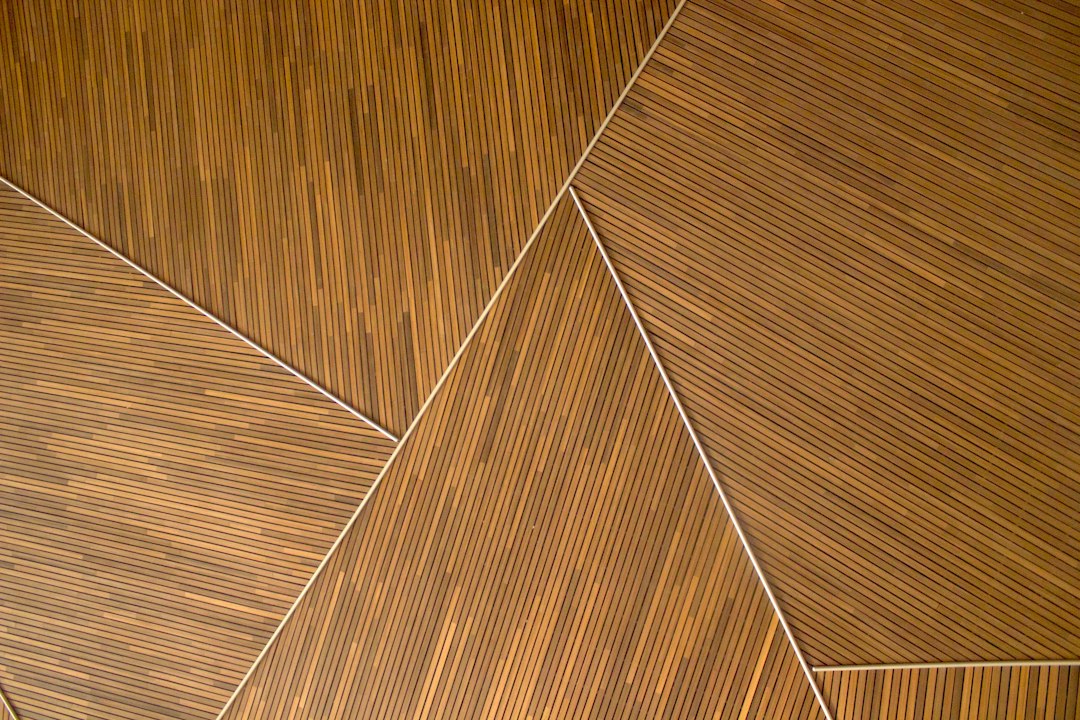
Fluted panel design uses a surface cut or moulded into a series of parallel channels or ribs, usually vertical, to give walls, cabinets, kitchen islands and furniture a linear texture that catches light. It draws on one of the oldest decorative devices in architecture and has become a staple of contemporary interiors, from hotel lobbies to HDB living rooms.
This article explains where the idea comes from, the difference between fluting and reeding, the materials used and how each behaves in a humid climate, and the practical points that decide whether a fluted wall looks crisp or tired after a few years.
From classical columns to modern interiors
Fluting began on the shafts of classical columns. Greek and Roman builders cut shallow vertical grooves into stone columns, which made them appear taller and slimmer and gave a play of light and shadow down their length. The Doric, Ionic and Corinthian orders each had characteristic fluting, and our guide to architectural styles and principles traces how these orders shaped later design.
The motif returned repeatedly: in neoclassical pilasters and furniture, in Art Deco glass and joinery, and in mid-century timber screens. Its current popularity rests on the same qualities. A fluted surface adds texture without pattern, reads as calm rather than busy, and changes character through the day as light moves across it.
Fluting versus reeding
The terms are often used interchangeably, but strictly they describe opposite profiles.
- Fluting is a series of concave grooves cut into a surface, as on a classical column.
- Reeding is a series of convex, rounded ribs standing proud of the surface, like a bundle of reeds.
Most products sold as fluted panels for walls are in fact reeded, with half-round or D-shaped ribs. Other profiles include square-edged battens with gaps between them, sometimes called slat or batten panelling, and asymmetric or tambour profiles that can bend around curves. Each produces a different shadow. Concave flutes give soft, graded shading; convex reeds give bright highlights; square battens give sharp lines and deep shadow.
Materials and how panels are made
Routed MDF
Medium-density fibreboard is machined with a profiled cutter to form the grooves, then painted or veneered. It is stable, gives a crisp profile and suits painted finishes. Its weakness is water: exposed MDF swells, so every face and edge must be sealed, and it is not appropriate for wet zones.
Solid timber and veneer
Solid battens or reeded mouldings give a warm, natural look. Timber moves with humidity, so individual battens can twist or open gaps if not well seasoned and fixed. Veneered MDF gives a timber appearance with more stability.
PVC and WPC
Extruded plastic or wood-plastic composite panels are moisture-resistant and quick to install, often clipping onto a track. They suit bathrooms and areas near sinks but can look less refined up close, and their surface can scuff.
Gypsum, GRG and concrete
Cast panels in gypsum, glass-reinforced gypsum or concrete give a monolithic, architectural fluted wall and can be painted or left natural. They are heavier and need a substrate and fixing system capable of carrying their weight.
Tambour
Narrow strips glued to a flexible backing allow the fluted surface to wrap curves, used on curved islands, columns and cabinet fronts.
Where fluted panels work well
Good fluted panel design concentrates the texture where it will be seen and touched with care. Common applications include:
- A television or headboard feature wall, where the vertical lines frame the focal point. See our feature wall ideas for Singapore for related approaches.
- Kitchen island fronts and bar counters, where fluting softens a large flat face.
- Wardrobe and cabinet doors, sometimes only on a few doors as an accent.
- Concealed doors, where the flutes disguise the door edge within a continuous wall.
- Glass partitions using fluted or reeded glass to blur the view while admitting light.
Fluting works less well in heavy-traffic zones at low height, where grooves catch dirt and edges chip, and in very small rooms when used on every surface, where the texture becomes restless.
Fluted panel design details that make the difference
Pitch and depth matter more than colour. Fine, closely spaced flutes read as a subtle texture and suit small rooms; wider, deeper profiles read as bold architecture and need space to be appreciated. Keep the module consistent across adjacent surfaces, so that flutes on cabinet doors line up with those on a neighbouring wall panel.
Ends and junctions decide whether the work looks crafted. Plan where panels stop at ceilings, skirtings, corners and openings, and avoid cutting a flute in half at a visible edge. Switches and sockets cut into a fluted surface look awkward; locate them on a plain zone or a flat border. Lighting from above or the side, such as a concealed linear light, exaggerates the profile and gives the wall depth at night.
Cleaning should be considered at the start. Grooves collect dust, and painted finishes in deep flutes are hard to touch up. A satin or semi-gloss finish is easier to wipe than a flat matt, and a moderate groove depth is easier to clean than a very deep one.
Humidity, fixing and long-term behaviour
In Singapore’s climate the main failures are swelling, gaps and mould. Painted MDF panels near kitchen sinks or bathroom doors absorb moisture at any unsealed edge and the flutes lose their crispness. Timber battens open gaps or bow if fixed tightly without allowance for movement. Panels glued directly to a wall that is damp, or to the inside face of an external wall that suffers condensation, can trap moisture and grow mould behind.
Check that the wall behind is dry and sound, use moisture-resistant materials near water, and seal all faces and edges of boards. Fix heavy panels such as cast gypsum or concrete to battens or brackets anchored into the wall substrate, not into a skim coat or thin lining, and keep fixings clear of concealed services. Lightweight partitions may need backing or a lighter panel choice; our article on drywall partitions in Singapore explains their limits.
For a related classic approach to wall texture, compare with wainscoting, which uses framed panels rather than continuous ribs.
Frequently asked questions
What is the difference between fluted and reeded panels?
Fluted panels have concave grooves cut into the surface, while reeded panels have convex rounded ribs standing proud of it. In everyday use both are often called fluted, and most wall panels sold under that name are actually reeded.
Can fluted panels be used in a bathroom?
Yes, if the material is moisture-resistant, such as PVC, WPC, sealed cast panels or fluted glass, and edges are properly sealed. Standard painted MDF should be kept away from wet zones because it swells when it absorbs water.
Are fluted walls hard to clean?
The grooves do collect dust. A moderate profile depth, a wipeable satin finish and regular dusting with a soft brush keep them presentable, while very deep flutes in matt paint are the hardest to maintain.
Will fluted panels go out of style?
Fluting has recurred in architecture for over two thousand years because it adds texture and rhythm without pattern. Restrained use on one or two surfaces, in a neutral finish, is less likely to date than covering every wall.
Related reading
- Terrazzo: History, Types, Installation and Everyday Uses
- Murphy Bed Guide: Mechanisms, Wall Fixing and HDB Walls
- Platform Bed Explained: Design, Support and Ventilation
- Storage Bed Guide: Types, Mechanisms and Small Homes
Planning heavy wall panels or feature joinery and want an independent view on fixing and substrate? Talk to our consultancy or get in touch.