Gypsum board, also called plasterboard, drywall or gypsum panel, is a sheet of gypsum plaster sandwiched between two layers of heavy paper. Fixed to light steel or timber framing, it forms partitions, ceilings and wall linings quickly, cleanly and with little weight. It is the default material for false ceilings and dry partitions in Singapore offices, condominiums and renovated flats.
This article explains what gypsum board is, the main board types, why it performs well in fire and poorly in water, what it can and cannot carry, and how to specify it for Singapore’s humid climate. It takes an engineer’s selection angle rather than a product one, so there are no brands or prices.
What gypsum board is made of
Gypsum is a soft mineral, calcium sulphate dihydrate, mined naturally or produced as a by-product of flue-gas desulphurisation at power stations. To make board, gypsum is heated to drive off part of its water, producing a powder known as stucco or plaster of Paris. This is mixed with water and additives into a slurry, spread between two paper liners, allowed to set back into gypsum, then cut and dried.
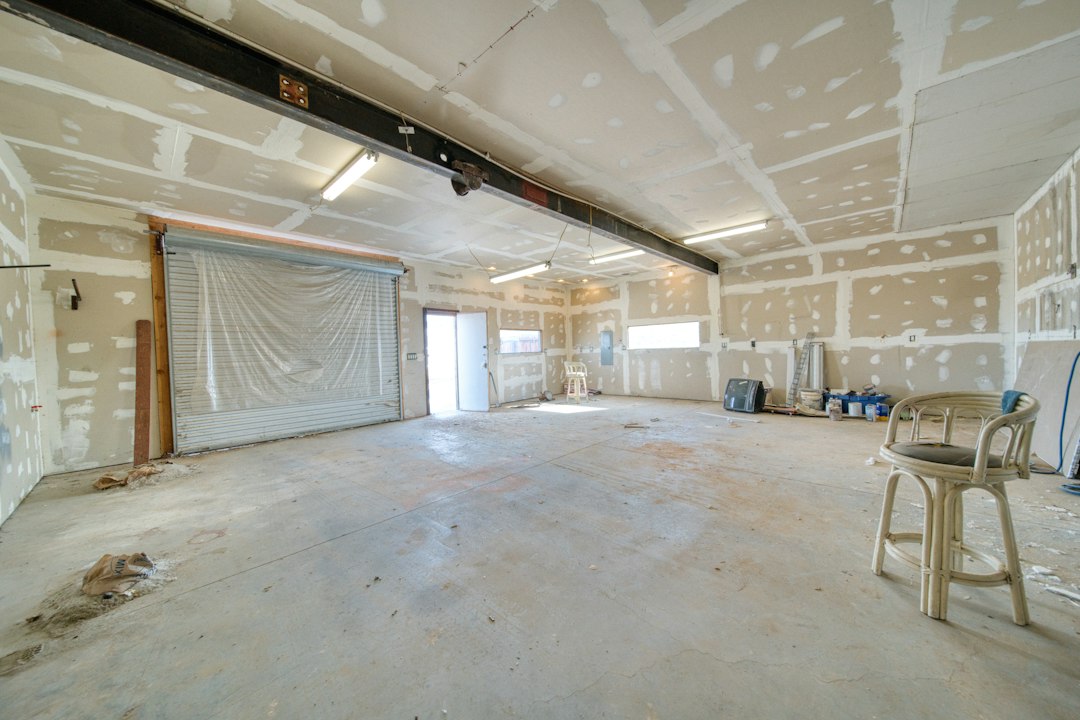
The result is a rigid, flat board that can be cut with a knife, fixed with screws and finished with jointing tape and compound to give a seamless surface. Common thicknesses are in the range of about 9 to 15 mm, with thicker or multiple layers used where fire resistance or sound insulation is needed.
Types of gypsum board
In Europe and many markets that follow European standards, board types are classified under EN 520, which uses letter designations. A single product often combines several letters:
- Type A — standard board for general walls and ceilings.
- Type H — reduced water absorption, used in areas of occasional humidity.
- Type F — improved core cohesion at high temperature, usually with glass fibres in the core; the basis of fire-resistant systems.
- Type D — controlled density, used for improved acoustic or impact performance.
- Type I — enhanced surface hardness for areas prone to knocks.
- Type R — enhanced strength.
- Type E — sheathing board, used behind external cladding.
North American standards use different names, such as Type X for fire-rated board. In Singapore, products from several markets are used, so specifications should name the standard and type, not just “fire board” or “moisture board”. Our guide to moisture-resistant plasterboard covers Type H products in more depth.
How gypsum board behaves in fire
Gypsum board performs well in fire because of its chemistry. Gypsum contains chemically combined water, roughly a fifth of its weight. When heated, that water is driven off as steam, a process called calcination, which absorbs heat and holds the far side of the board at around the boiling point of water until the gypsum is spent. That is what allows a properly built partition to protect the room behind it, or a steel beam behind a board casing, for a defined period.
Two points are often misunderstood. First, fire resistance belongs to a tested system, not a board. A partition’s rating depends on the board type and number of layers, the stud size and spacing, the screw spacing, joint treatment, insulation in the cavity and the sealing of every penetration. Changing any of these can invalidate the rating. Second, ordinary boards crack and fall away as the core calcines; fire-resistant boards add glass fibres and other additives so the core holds together for longer.
In Singapore, where fire-rated construction is required, it must meet SCDF’s Fire Code, with elements of construction tested and certified for the required period, and installation must follow the tested detail. Our article on fire protection of structures explains how board casings protect steel members.
Gypsum board and moisture
Water is gypsum board’s weakness. Gypsum is slightly soluble, and the paper liners are cellulose, which loses strength and grows mould when wet. A board soaked by a leak softens, sags and usually needs replacing. Even without leaks, sustained high humidity can encourage mould on paper faces, which is a real concern in Singapore’s climate, particularly in rooms that are closed and unconditioned for long periods.
Practical rules for humid climates:
- Use moisture-resistant boards in kitchens and areas exposed to humidity, but recognise that they are water resistant, not waterproof.
- Do not use paper-faced gypsum board as a tile backer in showers or wet zones. Cement-based boards or proprietary wet-area systems are more suitable; see our guide to cement board.
- Keep boards off wet floors with a small gap at the base, and protect stored boards on site from rain and ground moisture.
- Find and fix leaks quickly. Ceilings below air-conditioning trunking, pipes and bathrooms are common problem areas.
The paper facing also means gypsum board offers nothing to termites in the core, but the cellulose liner and any timber framing can still be attacked, so in areas with termite activity light steel framing is generally preferred.
Fixing loads and strength
Gypsum board is not a structural material in the sense of carrying building loads; the framing does that. Its own capacity to hold fixings is limited. Light items such as pictures can hang on suitable cavity fixings, but heavy items such as wall-hung cabinets, televisions, basins, wall-hung toilets and handrails need backing: plywood or steel noggins built into the framing behind the board, or proprietary support frames.
This needs to be planned before the boards go up. A common renovation problem is a heavy cabinet fixed only into gypsum board, which slowly pulls out. Mark the positions of heavy fixtures on the partition drawings so the contractor installs backing in the right places. Our guide to drywall partitions in Singapore covers framing, backing and acoustic build-ups.
Where gypsum board is used
- False ceilings — concealing services, forming bulkheads and cove lighting details.
- Partitions — dividing rooms in offices and homes without adding much weight to the floor slab.
- Wall linings — over masonry or on furring channels, to provide a flat surface or a services zone.
- Fire protection — encasing steel members and forming fire-rated walls and shafts in tested systems.
- Acoustic walls — multiple layers with insulation in the cavity and decoupled framing.
Its light weight is a genuine engineering advantage. A board partition imposes far less load on a floor slab than a masonry wall, which can make it the right choice when adding walls on an existing slab. Even so, the slab’s capacity should be confirmed for any significant new partitioning, especially in older buildings.
Frequently asked questions
Is gypsum board the same as drywall and plasterboard?
Yes. Gypsum board, plasterboard and drywall all describe the same basic product: a gypsum core between paper liners, fixed to framing to form walls and ceilings without wet plastering.
Is gypsum board fire resistant?
Gypsum board resists fire well because its chemically combined water absorbs heat as it is released. Fire ratings, however, apply to complete tested systems, including board type, layers, framing and sealing, not to the board alone.
Can gypsum board be used in bathrooms?
Moisture-resistant boards can be used in bathroom ceilings and areas away from direct water, but paper-faced gypsum board should not be used behind tiles in showers or other wet zones. Cement-based boards or wet-area systems are better suited.
How much weight can a gypsum board wall hold?
The board alone holds only light items on cavity fixings. Heavy items such as cabinets, televisions and basins need backing, such as plywood or steel noggins, installed in the framing before the board is fixed.
Does gypsum board attract termites?
The gypsum core does not feed termites, but the paper liners and any timber framing can be damaged. Light steel framing is generally preferred where termites are a concern.
Related reading
- Fire Shutter Explained: Types, Operation and SCDF Rules
- Box Culvert Design: Structure, Hydraulics and Installation
- Gabion Wall Design: How Stone-Filled Baskets Retain Soil
- Types of Mortar in Construction: Cement Mortar and More
Adding partitions on an existing slab or need a fire-rated board system checked? Talk to our consultancy or get in touch.