
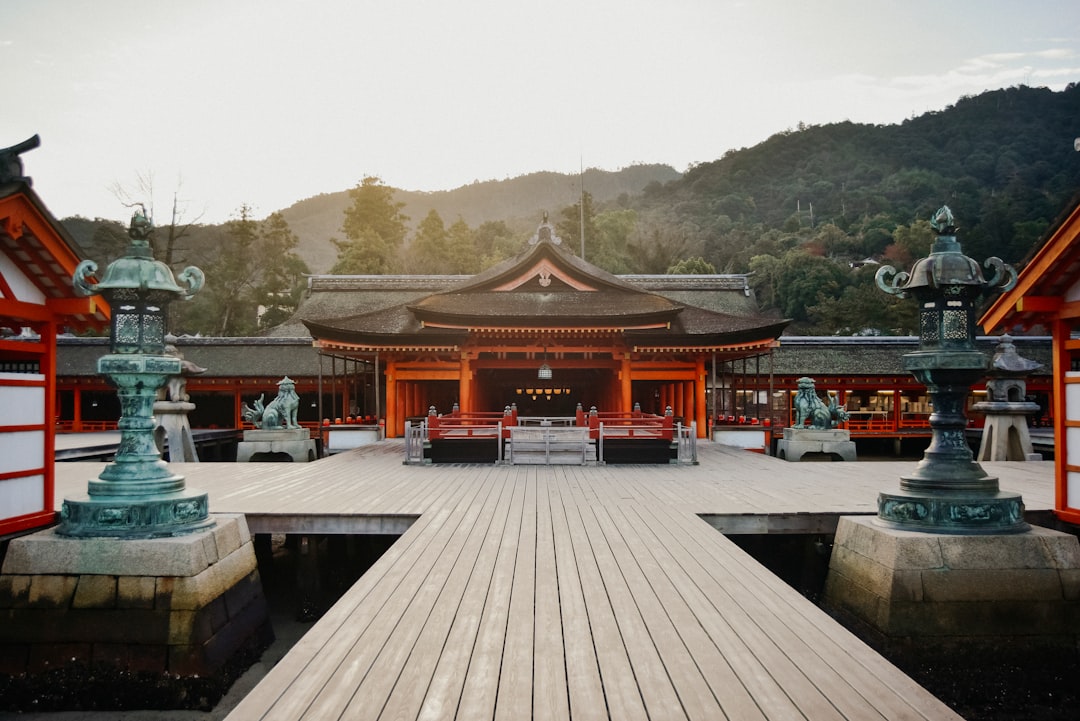
Yugen is among the deepest and most elusive of the Japanese aesthetic ideals. Usually rendered as “profound grace,” “subtle mystery” or “the dimly profound,” yugen (幽玄) points to a beauty that is felt rather than seen — a sense of depth, suggestion and quiet awe that lies just beyond what can be fully grasped or said. It is the resonance of the half-glimpsed and the unspoken.
This article explains yugen: its literal meaning, its origins in classical poetry and Noh theatre, and how this sense of profound, understated depth shapes Japanese space and design. Yugen is hard to define precisely, and that is fitting — its whole power lies in what is suggested rather than stated outright.
What yugen means
The two characters that form yugen are telling. Yu (幽) carries a sense of dimness, faintness, the secluded or hidden; gen (玄) means dark, deep, profound, mysterious — the same character used for the unfathomable depth spoken of in Chinese philosophy. Together they describe something dimly profound: a depth that is sensed but not seen clearly, present yet veiled.
Yugen is therefore the opposite of the obvious. It is the feeling of standing at the edge of something vast and only partly visible — mist drifting across a mountain, a sound fading into silence, a meaning that hovers just past the words. The classic descriptions speak of watching the sun sink behind a flower-clad hill, or following a ship as it disappears behind a distant island: beauty that opens onto the immense and the unknown.
Origins in poetry and Noh theatre
Yugen first matured as a critical ideal in classical Japanese poetry, where poets and critics prized verse that gestured toward depths beyond its literal meaning. A great poem, in this view, did not state everything; it left an unspoken resonance, an emotional and spiritual reverberation that continued after the words ended. The finest work pointed past itself.
Yugen found its most famous expression in Noh theatre, above all through the playwright and theorist Zeami in the fourteenth and fifteenth centuries. Zeami made yugen the highest aim of the Noh actor — a refined, graceful profundity achieved through restraint. The slow, masked, deeply understated style of Noh, with its long silences and minimal gesture, is built to evoke yugen: feeling held back so that it deepens, beauty suggested so that the audience completes it within themselves.
Yugen and suggestion
The heart of yugen is the power of suggestion over statement. What is hidden, partial or implied moves us more than what is fully revealed. A landscape seen through mist is more profound than the same landscape in clear daylight, because the mist invites the imagination to reach into the unseen. Yugen trusts the viewer to feel the depth that lies just beyond the visible edge.
This is why yugen resists definition: to state it plainly would be to destroy it. It depends on the gap between what is shown and what is felt — the silence after the note, the space around the object, the meaning behind the image. Emptiness and restraint are not absences here but the very means by which depth is conveyed.
Yugen in Japanese architecture and space
Translated into building, yugen becomes an art of the half-revealed. Traditional Japanese architecture rarely exposes everything at once. A path may curve so the garden is disclosed gradually; a screen may filter a view rather than open it fully; deep eaves and shadowed interiors hold a space in soft half-light instead of flooding it with brightness. The unseen is given as much weight as the seen.
Shadow is central to this. The dim, layered interiors of older Japanese rooms — where light falls softly through paper screens and recedes into darkness at the edges — create exactly the sense of depth and mystery that yugen prizes. A glow rather than a glare; a corner that fades into shadow rather than being lit flat. Much of this atmosphere lives in the traditional Japanese house, where the interplay of light and shadow gives even a plain room a quiet profundity.
Yugen also shapes how a building meets its surroundings. By framing a partial view — a slice of garden through a low window, a borrowed distant hill seen between eaves and planting — Japanese design lets the small built space open onto something larger and unbounded. The room becomes a threshold to depth beyond it, which is yugen made spatial.
Yugen among the Japanese aesthetics
Yugen sits within the broader family of Japanese aesthetic concepts and shares territory with several. It overlaps with mono no aware in its emotional depth and its feeling for what lies beyond words, and with the wider tradition’s trust in suggestion, restraint and empty space. But yugen reaches further toward the mysterious and the spiritual than its neighbours.
Where iki is urbane and social, and kanso is about plain simplicity, yugen is about profundity — the sense that beauty opens onto something vast and not fully knowable. It gives Japanese aesthetics their depth dimension, the feeling that beneath the calm surface there is more than can be seen. Understanding this helps make sense of the fuller picture set out in our overview of architectural styles and principles.
Evoking yugen in contemporary design
Yugen is subtle, but it can be worked into a modern home through a few deliberate choices. Resist the urge to reveal and illuminate everything. Let some light be soft and indirect; allow corners to fall into shadow; use a screen, a partial wall or a turn in the path so a space or a view is disclosed gradually rather than all at once.
Leave room for emptiness and suggestion. A largely bare wall, a single framed glimpse of the outside, a quiet pause between rooms — these create the gaps in which depth can be felt. The aim is not minimalism for its own sake but atmosphere: a sense that the space holds more than it shows. This pursuit of mood and depth sits naturally within a considered approach to interior design, and homeowners chasing that quality often work with our consultancy to realise it on a sound structural footing.
Frequently asked questions
What does yugen mean?
Yugen means profound, subtle grace or mystery — a deep beauty that is felt rather than plainly seen. The word combines characters for the faint and hidden with the dark and profound, describing a sense of depth that lies just beyond what can be fully grasped or expressed.
Where does the concept of yugen come from?
Yugen developed as an ideal in classical Japanese poetry, which prized verse that suggested depths beyond its literal meaning. It became central to Noh theatre, especially through the playwright and theorist Zeami, who made yugen the highest aim of the refined, restrained Noh style.
How is yugen different from mono no aware?
Both are deep, feeling-rich aesthetics. Mono no aware is the poignant awareness of impermanence — the tender sadness of passing things. Yugen reaches toward profound mystery and the sense of vast depth beyond the visible. One centres on transience, the other on the dimly profound and unknowable.
How is yugen expressed in architecture?
Through the half-revealed: gradual disclosure of views, filtered light, deep shadow and partial framing. Traditional Japanese rooms use soft, layered light and shadowed edges to create depth, and frame partial views so a small space opens onto something larger and unseen.
Can yugen be applied in a modern home?
Yes. Use soft, indirect light, allow some corners to fall into shadow, and disclose spaces or views gradually with screens or a turning path. Leave room for emptiness and suggestion so the space feels as though it holds more than it shows.
Related reading
- Kotatsu: The Heated Japanese Table Explained
- Irori: The Japanese Sunken Hearth Explained
- Sudare: Japanese Bamboo Blinds Explained
- Noren: Japanese Fabric Dividers Explained
Want a home with atmosphere and depth, built on sound structure? Talk to our consultancy or get in touch.


