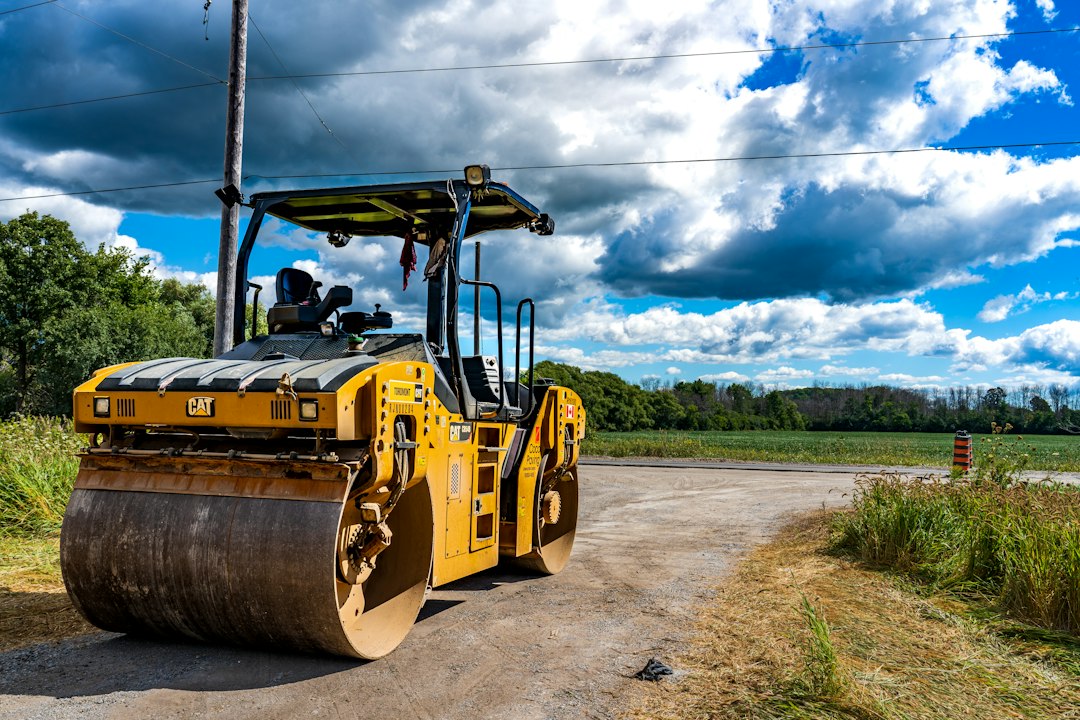
A road roller is a heavy machine with one or more large drums or rubber tyres that compacts soil, granular fill and asphalt. The name comes from road building, but the same machines are essential on building projects: they compact the fill under ground slabs, the sub-base of car parks and roads, and the working platforms on which piling rigs and cranes stand.
Compaction is easy to underestimate because the result is invisible once the slab is poured. Yet poorly compacted ground is a common cause of settlement, cracked slabs and failed pavements. This guide explains how rollers work, the main types, how they fit into a building project and the safety and vibration issues they bring.
Why compaction matters
Loose soil and fill contain air voids. When load is applied, the particles rearrange and the voids close, and the surface settles. Compaction forces the particles closer together before construction, increasing density and strength and reducing future settlement and permeability. It is the cheapest way to improve the performance of fill, and one of the most effective.
The right moisture content is part of the process. Each soil has an optimum moisture content at which it compacts to its maximum dry density under a given effort, established in the laboratory by a compaction test. Too dry and the particles resist rearranging; too wet and the water fills the voids and the material pumps under the roller. The principles behind this are explained in our guide to soil mechanics.
Main types of road roller
Single-drum vibratory rollers
These have one large steel drum at the front and rubber tyres at the rear for traction. The drum contains a rotating eccentric weight that makes it vibrate, adding dynamic force to the machine’s static weight. They are the usual machine for compacting soil and granular fill in layers.
Padfoot rollers
A padfoot or sheepsfoot drum has protruding pads that knead and compact cohesive soils such as clays, which smooth drums struggle to compact effectively. The pads also help break up clods and bond successive layers.
Tandem rollers
Tandem rollers have two smooth steel drums, front and rear, often both vibrating. They are used mainly for asphalt, producing a smooth, dense surface, and smaller versions are used for footpaths and confined areas.
Pneumatic tyred rollers
These use a set of rubber tyres that knead the surface as they pass. They are used on asphalt and granular layers to seal and close the surface texture.
Static and pedestrian rollers
Static rollers rely on weight alone and are used where vibration must be avoided. Small walk-behind rollers and plate compactors handle trenches and narrow strips, covered in our guide to the compactor.
How a road roller works
The roller applies compactive effort in two ways: static pressure from its weight, and dynamic force from vibration or impact. Vibration is controlled by amplitude, how far the drum moves, and frequency, how often it moves. High amplitude penetrates deeper and suits thick soil layers; low amplitude and high frequency suits thin layers and asphalt.
Material is placed in layers, or lifts, of a thickness set by the specification for the material and roller. The roller makes a set number of passes over each layer, overlapping each pass, before the next layer is placed. Many modern rollers include intelligent compaction systems that measure drum response and map the stiffness of the ground in real time, helping the operator find weak spots.
Testing the result
Compaction is checked against the specification by field density tests, such as sand replacement or nuclear density gauge methods, compared with the laboratory maximum dry density. Plate load tests measure the stiffness of the finished surface, and are often used to verify working platforms and slab formations.
Where the road roller is used on a building project
- Ground-bearing slab formations: compacting fill and sub-base under slabs on grade for warehouses, car parks and ground floors.
- Working platforms: compacting granular platforms that carry piling rigs and crawler cranes.
- Roads, car parks and hardstanding: compacting sub-base, base and asphalt layers in the external works.
- Backfill: compacting fill behind retaining walls and around structures, using smaller machines close to walls.
Working platforms deserve special mention. A piling rig or crawler crane can impose very high track pressures, and a platform that is too thin or poorly compacted can fail suddenly, overturning the machine. The platform should be designed for the specific plant and its construction verified, a task that sits within temporary works design.
Site safety and vibration
Roller work is covered by the general duties of the Workplace Safety and Health Act and the requirement to carry out a risk assessment. The main hazards are specific to how rollers are used.
Overturning
Rollers often work on embankment edges, slopes and the shoulders of fills, where the edge can give way. A rollover protective structure and seat belt are essential, and operators should keep a safe distance from unsupported edges.
Struck-by and run-over
Rollers move back and forth constantly, and the operator’s attention is on the surface. Pedestrians should be kept out of the compaction area, reversing alarms maintained and the area controlled under the site’s traffic management plan, consistent with the WSH Council’s guidance.
Vibration on nearby structures
Vibratory compaction transmits vibration into the ground, which can disturb neighbours, damage sensitive finishes or affect fragile structures and buried services nearby. Near existing buildings, it is good practice to reduce amplitude, switch to static mode, use lighter machines and monitor vibration where the risk is significant. Noise near homes is also controlled under NEA’s construction noise rules.
Whole-body vibration and heat
Operators are exposed to whole-body vibration and, on asphalt work, to heat and fumes. Well-maintained seats and suspension, rest breaks and hydration all help.
Getting compaction right
Most compaction problems come from three sources: placing layers too thick, compacting at the wrong moisture content, and skipping the testing. Each is easy to avoid with a clear specification and supervision. For buildings with ground-bearing slabs or significant fill, the earthworks specification and its testing regime are part of the structural design, not an afterthought. If you need a slab formation or working platform reviewed, our structural engineering consultancy can help.
Frequently asked questions
What does a road roller do?
It compacts soil, granular fill and asphalt by applying weight and often vibration, increasing density and strength and reducing future settlement of the ground beneath slabs, roads and platforms.
What is the difference between vibratory and static rollers?
A static roller compacts by its weight alone, while a vibratory roller adds dynamic force from a rotating eccentric weight inside the drum, compacting thicker layers more effectively but transmitting vibration into nearby ground and structures.
Which roller is best for clay?
A padfoot or sheepsfoot roller is generally preferred for cohesive soils such as clay, because its pads knead the material and compact it more effectively than a smooth drum.
How is compaction tested?
Compaction is usually tested by field density methods such as sand replacement or nuclear gauge tests compared with the laboratory maximum dry density, and by plate load tests that measure the stiffness of the finished surface.
Can roller vibration damage nearby buildings?
Vibration can disturb neighbours and affect sensitive finishes, fragile structures or services, so near existing buildings contractors often reduce amplitude, switch to static mode, use lighter machines and monitor vibration levels.
Related reading
- Total Station in Surveying: How It Works on a Building Site
- Trench Box Systems: How They Work and Keep Trenches Safe
- Construction Equipment: A Complete Guide to Site Plant
- Piling Machine Types: Rigs for Bored and Driven Piles
Need a working platform or slab formation checked? Talk to our consultancy or get in touch.