A compactor is any machine that densifies soil, fill or asphalt by applying repeated force. On building sites the word usually means the small hand-guided machines, plate compactors and rammers, that compact trenches, footing backfill and narrow strips where a ride-on roller cannot reach. They are simple machines, but the quality of their work decides whether the ground under a slab, a drain or a paved area stays where it was put.
This guide explains the main compactor types, how each works, which material each suits, where they are used on a building project and how to manage their hazards, from hand-arm vibration to exhaust fumes in trenches.
Why the right compactor matters
Compaction reduces the air voids in soil and fill, increasing density and stiffness and reducing future settlement. Different materials respond to different kinds of force. Granular materials such as sand and gravel compact best under vibration, which lets the particles shuffle into a denser arrangement. Cohesive materials such as clay need impact or kneading to push the particles together and expel air. Using the wrong machine on the wrong material can produce a surface that looks firm but is loose a short distance down.
The fill must also be placed in thin layers at an appropriate moisture content. No machine can compact a thick, loose lift through its full depth. The underlying soil behaviour is explained in our guide to soil mechanics.
Plate compactors
A plate compactor has a heavy steel base plate with a vibrating mechanism, usually an eccentric weight driven by a petrol, diesel or electric motor. The operator guides it with a handle as the vibration both compacts the material and drives the machine forward.
- Forward plate compactors move in one direction only and suit granular sub-base, paving bedding and thin layers over open areas.
- Reversible plate compactors are heavier, can move forward and backward and hover in place, and compact thicker layers. They suit trenches and backfill where turning is difficult.
Plate compactors work best on granular materials and on block paving, where a rubber mat on the plate protects the blocks. They are less effective on wet clays.
Rammers
A rammer, often called a trench rammer or jumping jack, has a small foot at the base of a tall body. An engine drives a mechanism that makes the machine leap and strike the ground repeatedly, delivering high-impact blows over a small area. Rammers are the machine for cohesive and mixed soils and for narrow trenches, around pipes, manholes and footings, and against walls where a plate cannot fit.
The impact action pushes deeper into cohesive material than vibration does, but it also transmits significant shock to the operator, making rammers among the most demanding tools for hand-arm vibration.
Rollers
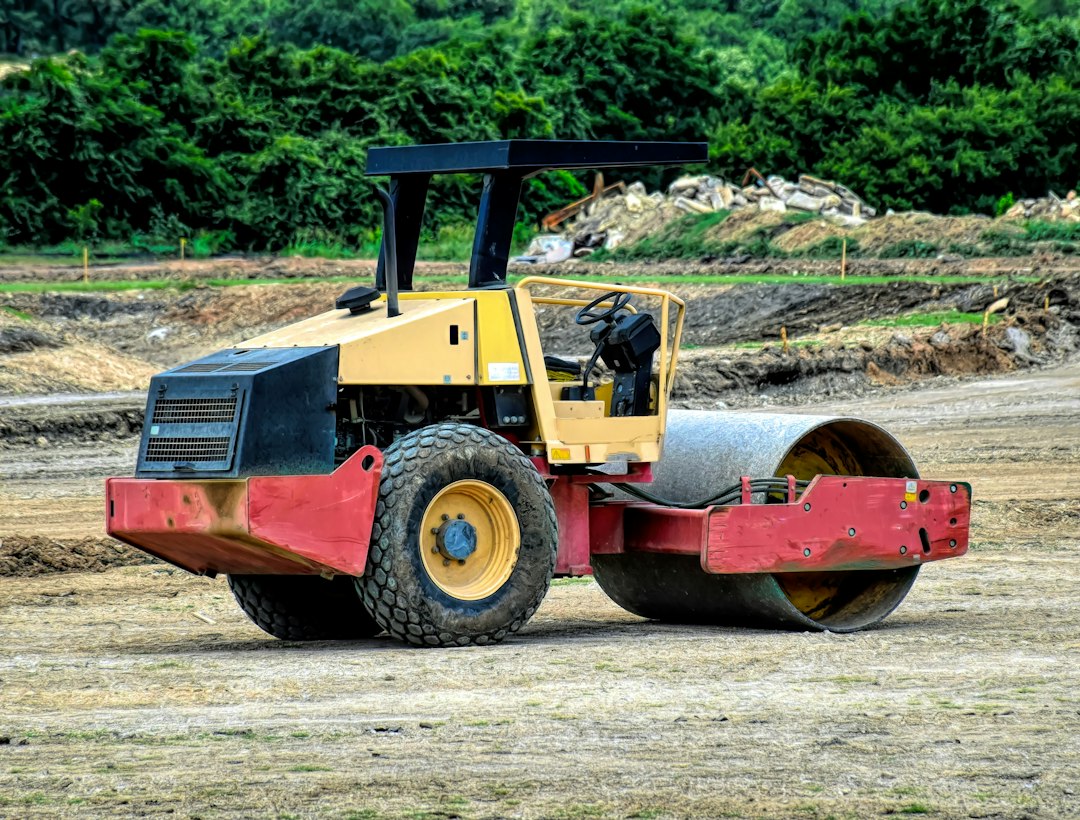
For larger areas, ride-on and walk-behind rollers take over. Small double-drum walk-behind rollers suit narrow strips and trenches; ride-on single-drum and tandem rollers compact sub-base, fill and asphalt over open areas. Padfoot drums suit cohesive soils, and smooth drums suit granular materials and asphalt. We cover these in more depth in our guide to the road roller.
Choosing between them
- Narrow trench, cohesive soil: rammer.
- Trench or backfill, granular soil: reversible plate compactor.
- Paving bedding and thin sub-base layers: forward plate compactor.
- Open areas, thicker layers: ride-on roller, vibratory for granular, padfoot for cohesive.
- Next to sensitive structures or services: lighter machine, low or no vibration, careful layer control.
Where the compactor is used on a building project
Hand-guided compaction is everywhere on a building project, usually in the small, awkward places that matter most:
- Backfilling around pad footings, pile caps and ground beams.
- Backfilling behind basement and retaining walls, where heavy rollers would add excessive pressure to the wall.
- Bedding and backfill around drainage pipes, inspection chambers and services.
- Sub-base under ground slabs in confined areas and between foundations.
- Paving and external works.
Backfill behind walls is a point where compaction and structural design interact. Heavy vibratory compaction close to a wall increases the lateral pressure on it, and walls are often designed assuming lighter compaction plant within a defined distance. The wall designer’s notes on backfill and compaction plant should be followed.
Testing
Field density tests, compared with the laboratory compaction test, show whether the specified density has been achieved. In trenches, the specification usually sets layer thicknesses and the number of passes for the plant used, and occasional density tests confirm the result.
Site safety
The employer must assess the risks under the Workplace Safety and Health framework. Compactors are small, but their hazards are real and cumulative.
Hand-arm vibration
Prolonged use of plates and rammers can cause hand-arm vibration syndrome, which damages blood vessels, nerves and joints in the hands and arms. Choosing low-vibration machines with isolated handles, rotating operators, limiting daily exposure and maintaining machines all reduce the risk.
Noise
Compactors are loud. Employers must manage noise exposure under the WSH (Noise) Regulations, including hearing protection where noise cannot be reduced at source. Near homes, NEA’s construction noise limits also apply.
Exhaust fumes in trenches
Petrol and diesel compactors produce carbon monoxide. In a deep trench, pit or enclosed basement, the gas can accumulate to dangerous levels. Ventilation, gas monitoring or electric and battery machines are the controls, and a deep, poorly ventilated excavation may need to be treated as a confined space under the relevant regulations.
Trench stability and manual handling
Operators working in trenches need the trench to be supported or battered back. Lowering a heavy compactor into a trench is a manual handling and lifting task that should be planned, using a suitable lifting point and equipment rather than workers lifting it by hand.
Vibration on services and structures
Compacting close to new pipes, fresh concrete or existing structures can damage them. Pipe manufacturers and designers usually specify a minimum cover before heavy compaction over a pipe.
Small machine, structural consequence
Many slab and pavement defects we see trace back to poor backfill compaction in trenches and around foundations: the slab is supported on firm ground except where a service trench crosses it, and there it settles and cracks. Specifying the right compaction method and testing it is a simple way to avoid that. If you are investigating settlement or cracking over trenches, our consultancy can assess the cause.
Frequently asked questions
What is the difference between a plate compactor and a rammer?
A plate compactor uses vibration through a broad flat plate and suits granular materials and open areas, while a rammer delivers repeated high-impact blows through a small foot and suits cohesive soils and narrow trenches.
Which compactor is best for clay?
A rammer or a padfoot roller is generally best for clay and other cohesive soils, because impact and kneading force the particles together more effectively than vibration alone.
Why is backfill compaction near walls restricted?
Heavy compaction close to a basement or retaining wall increases the lateral pressure on it, so designers often limit the size of plant used within a certain distance of the wall.
Can compactors be dangerous in trenches?
Yes, petrol and diesel compactors produce carbon monoxide that can build up in deep or enclosed trenches, so ventilation, gas monitoring or electric machines are needed alongside proper trench support.
How thick should each layer of fill be?
The layer thickness depends on the material and the compactor, and is set in the earthworks specification, but layers for hand-guided machines are generally kept thin because no compactor can densify a thick loose lift through its full depth.
Related reading
- Jackhammer and Breakers: Uses, Risks and Noise Rules
- Power Trowel Guide: Finishing Concrete Floors Well
- Laser Level in Construction: Types, Uses and Accuracy
- Theodolite Explained: How It Measures Angles on Site
Investigating settlement over trenches or specifying backfill behind walls? Talk to our consultancy or get in touch.