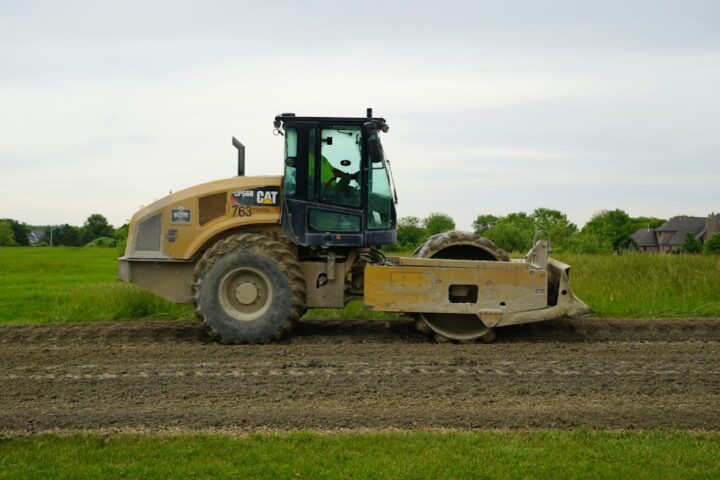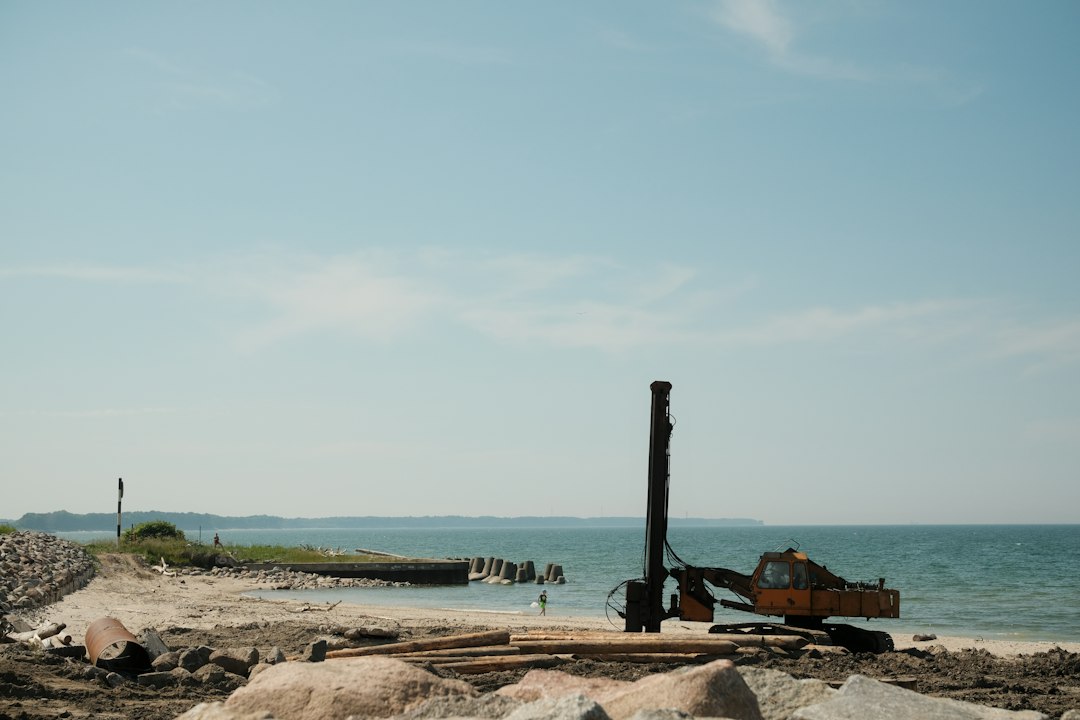
A piling machine is any rig that installs piles, the long structural elements that carry a building’s loads down through weak soil to stronger strata. The term covers very different equipment: tall rotary rigs that drill bored piles, cranes carrying hammers that drive precast piles, hydraulic jacks that press piles silently into the ground, and small rigs that install micropiles in a basement. Which one is used follows from the pile design, the ground and the neighbours.
This article explains the main types of rig, how each works, where each is used, and the practical issues of noise, vibration, working platforms and safety that surround piling in a dense city such as Singapore.
Choosing a piling machine to suit the pile
Piles are designed first and installed second. The structural engineer selects a pile type to suit the loads and the ground investigation, and the rig follows. Replacement piles, such as bored piles, remove soil and replace it with concrete; displacement piles, such as driven or jacked precast piles, push soil aside. Each family has its own machinery. Our overview of pile foundation types sets out the design side; this article focuses on the plant.
Rotary rigs for bored piles
A rotary bored-pile rig is a tracked base machine with a tall mast carrying a rotary drive, or kelly drive, that turns a telescopic kelly bar. Drilling tools on the bar, augers for soil and core barrels or rock buckets for harder strata, are rotated into the ground and lifted out repeatedly to remove spoil. A temporary steel casing is often installed at the top to support the bore, and drilling fluid or longer casings may be used where the soil would otherwise collapse or groundwater flows in.
Once the bore reaches the founding level, it is cleaned, a reinforcement cage is lowered in by crane, and concrete is placed from the bottom up by tremie. These rigs are the workhorses of Singapore’s larger foundations. Our article on bored piles covers the construction sequence and the quality checks in detail.
Variants include continuous flight auger (CFA) rigs, which drill with a long auger and pump concrete through its hollow stem as it is withdrawn, and grab or hydromill rigs used for barrettes and diaphragm walls.
Driven, jacked and press-in rigs
Impact rigs drive precast concrete or steel piles with a hammer, which may be a drop hammer, diesel hammer or hydraulic hammer, guided by a leader mast on a crane or purpose-built base machine. Driving is fast and gives direct evidence of resistance through the set, but it is noisy and transmits vibration into nearby buildings.
Jacked-in rigs push precast piles into the ground using hydraulic jacks reacting against a heavy counterweight on the machine. They are much quieter and produce little vibration, which is why they are widely used near occupied buildings. The jacking force recorded during installation also gives an indication of capacity.
Press-in rigs install sheet piles or tubular piles by gripping previously installed piles for reaction and pressing the next one in. They are used for retaining walls and cofferdams where noise and vibration must be minimised.
Vibratory hammers clamp onto sheet piles or casings and vibrate them into or out of the ground. They are efficient but can be noisy and can densify loose sands, which may cause settlement of nearby structures.
Small rigs and restricted-access piling
Where headroom or access is limited, inside an existing building, under a viaduct or beside a party wall, compact rigs install micropiles, mini bored piles or screw piles. These machines are small enough to pass through a door but still need a stable working surface and careful control of spoil, water and vibration. Underpinning and strengthening works often use this kind of piling machine.
Working platforms, noise and the neighbours
A large piling rig is tall, heavy and has a narrow track base. Many serious piling incidents worldwide involve rig overturning, usually because the working platform was too weak or too soft under one track. A properly designed and maintained working platform, often a layer of compacted granular material checked against the rig’s track pressures, is a temporary works element in its own right. The behaviour of soft ground under such loads is discussed in soil mechanics basics.
Noise is the other major constraint in Singapore. The National Environment Agency (NEA) sets maximum permissible noise levels at construction sites, with stricter limits near residential buildings and noise-sensitive premises such as hospitals. For residential buildings within 150 m of a site, the NEA limit for Monday to Saturday daytime is 75 dBA averaged over 12 hours, with lower limits in the evening and at night. NEA also applies a no-work rule from 10 pm on Saturday to 7 am on Monday, and over the eve of public holidays, for sites within 150 m of residential and noise-sensitive premises, unless a permit is granted. These rules strongly favour bored, jacked-in and press-in methods over impact driving in built-up areas.
Vibration and ground movement are monitored on many projects, with instruments on neighbouring buildings and trigger levels agreed in advance.
Safety and approvals
Piling plans are submitted to the Building and Construction Authority (BCA) by the Qualified Person as part of the structural submission, supported by the ground investigation, and piling works should not begin before approval. On site, the WSH framework administered by the Ministry of Manpower applies: lifting of reinforcement cages and piles falls under the crane regulations, and open bores must be covered or barricaded to prevent falls. Supervision of pile installation, records and integrity testing are central to quality, a point developed in our article on site supervision.
Frequently asked questions
What is the quietest type of piling machine?
Jacked-in and press-in rigs are generally the quietest, because they push piles into the ground hydraulically rather than hammering them. Bored-pile rigs are also relatively quiet compared with impact hammers, though drilling, casing installation and support plant still generate noise.
Why do piling rigs overturn?
Most overturning incidents involve a working platform that is too weak or uneven under the rig’s tracks, sometimes combined with a raised mast, a heavy tool or an unexpected soft spot. A designed, inspected working platform is the main control.
Can piling be done next to existing houses?
Yes, but the method must suit the setting. Bored, jacked-in or micropile methods are usually chosen near existing buildings, with monitoring of vibration and movement and agreed trigger levels. A condition survey of neighbouring properties before work begins is good practice.
Are there noise limits for piling in Singapore?
Yes. NEA’s construction noise limits apply to all construction work, including piling, with stricter levels near residential and noise-sensitive buildings and a no-work rule on Sundays and public holidays for nearby sites unless permitted. Contractors must plan methods and hours accordingly.
Related reading
- Total Station in Surveying: How It Works on a Building Site
- Trench Box Systems: How They Work and Keep Trenches Safe
- Construction Equipment: A Complete Guide to Site Plant
- Construction Hoist: How Rack-and-Pinion Lifts Work
Weighing up pile types, rig access or the effect of piling on a neighbouring building? Talk to our consultancy or get in touch.