Plywood is one of the most useful sheet materials in construction and interior carpentry, and also one of the most loosely described. Two boards sold under the same name can differ enormously in veneer quality, glue chemistry and how they behave after a few years beside a sink or in a humid store room. In Singapore, where the air is warm and damp all year, those differences decide whether a cabinet carcass stays square or slowly swells and delaminates.
This article explains how plywood is made, what its grades and bond classes actually describe, how it compares with other wood-based panels, and where it should and should not be used in HDB flats, condominiums and landed homes. It is written from the perspective of someone who looks at materials as structural systems: what holds them together, and what eventually pulls them apart.
How plywood is made
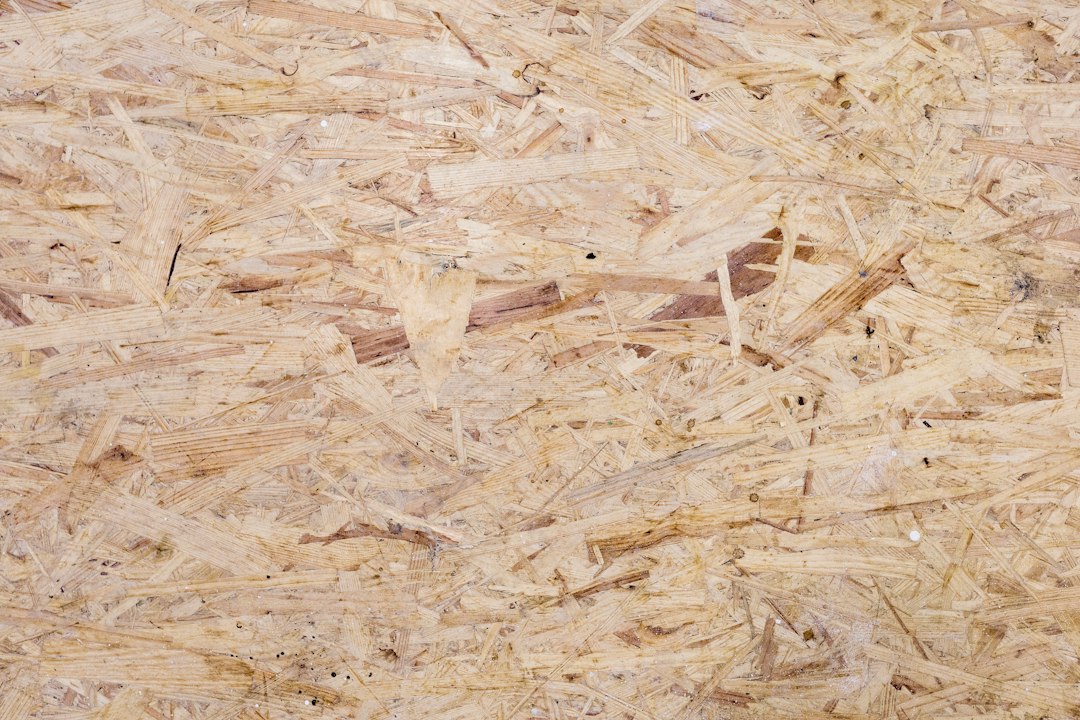
Plywood is built from thin sheets of wood, called veneers or plies, peeled from a rotating log or sliced from a block. The veneers are dried, graded, coated with adhesive and laid up so that the grain of each layer runs at right angles to the one beside it. The stack is then pressed under heat until the glue cures. Most boards have an odd number of plies so that the construction is balanced about its centre line.
That cross-lamination is the whole point. Solid timber is strong and stable along the grain but moves considerably across it as moisture content changes. By alternating grain direction, plywood restrains that movement in both directions, giving a sheet that is dimensionally stable, resistant to splitting at fixings, and strong in bending relative to its weight. It belongs to the wider family of engineered wood products, which all use the same principle of breaking timber down and reassembling it in a more predictable form.
The quality of the finished board depends on three things: the species and quality of the veneers, the thickness and uniformity of the core plies, and the adhesive. Voids in the core, overlapping veneers and uneven glue spread are the hidden defects that make a cheap board feel spongy, hold screws poorly or blister later.
Plywood grades and what they describe
Grading systems vary by country of manufacture, which is why a supplier’s label can be confusing. Broadly, there are two separate ideas that are often mixed together: the appearance grade of the face veneers, and the bond quality of the glue line.
Face and back veneer grades
Appearance grades describe how many knots, patches, splits and colour variations are permitted on the face and back. A board might be described with a pair of letters, the first for the face and the second for the back, so that a better face sits on the visible side and a lower-grade back faces the wall. For carcasses that will be covered with laminate or veneer, appearance grade matters little. For exposed plywood joinery, it matters a great deal.
Bond classes and glue types
The bond class tells you how the glue line performs when wet, and this is the grade that matters most in a humid climate. The European standard EN 314-2 sets out three bonding classes: class 1 for dry interior conditions, class 2 for humid interior conditions or protected exterior use, and class 3 for exterior exposure. In practice these correspond loosely to the glue chemistry:
- Urea-formaldehyde (UF) glue, used in ordinary interior plywood. It is economical but loses strength when repeatedly wetted.
- Melamine-urea-formaldehyde (MUF) glue, often sold as moisture-resistant plywood, which tolerates humidity and occasional splashes better.
- Phenol-formaldehyde (PF) glue, the dark glue line in exterior, WBP-type and marine boards, which remains bonded after prolonged wetting.
Marine plywood is a further step. The British standard BS 1088 covers marine plywood and requires not only a durable bond but also limits on core voids and veneer defects. It is a specification for boats, and for most interior uses it is more than is needed, though its void-free core makes it attractive for exposed, high-quality joinery.
Formaldehyde emissions and indoor air
Because most plywood adhesives contain formaldehyde, emissions are a legitimate concern, especially in small, air-conditioned bedrooms that are closed up for much of the day. The harmonised European standard for wood-based panels, EN 13986, defines two emission classes, E1 and E2. E1 corresponds to a steady-state chamber concentration of about 0.1 ppm when tested under EN 717-1. Labels such as “E0” or “E0.5” are widely used in the market, but E0 is not a class within that harmonised standard, and its meaning varies by manufacturer and national scheme.
The practical advice is to ask for the test standard and certificate behind any emission claim rather than relying on a label. Phenolic exterior glues tend to emit less formaldehyde once cured than urea-based interior glues, and edge-sealing and good ventilation during and after installation further reduce what reaches indoor air.
Plywood compared with MDF and particle board
Most built-in carpentry in Singapore uses one of three cores: plywood, medium-density fibreboard, or particle board. Each has a role. Plywood is stronger for its weight, holds screws well along its faces, spans further without sagging and recovers better from a brief wetting. It is, however, harder to machine to a crisp painted edge, and its surface shows grain through thin paint finishes.
MDF and HDF boards are uniform and machine beautifully, which suits routed doors and spray-painted finishes, but they are heavy and swell irreversibly at cut edges if water gets in. Particle board is economical and flat but weakest at fixings. Many good cabinet makers use plywood for carcasses in wet zones and MDF for painted doors, which plays to the strengths of each. The wider choice between fitted joinery and freestanding pieces is covered in our guide to built-in carpentry versus loose furniture.
Where plywood fails in humid homes
Plywood is not waterproof. It is water-resistant to the degree its glue and veneers allow, and its failure modes are predictable once you know what to look for.
- Edge wicking. End grain at the cut edges absorbs water far faster than the faces. Unsealed edges under sinks, at the base of wardrobes and around dishwashers are where swelling starts.
- Delamination. If interior-grade glue is repeatedly wetted, the plies separate and the face bubbles. This is a glue-line failure, not a timber failure.
- Fungal decay. Timber that stays persistently damp for long periods can rot, particularly in poorly ventilated, enclosed cabinets. Our article on wood rot explains the mechanism.
- Termite attack. Plywood is wood, and untreated boards in contact with damp walls or floors are vulnerable. Treated boards and an air gap from masonry help.
- Sagging shelves. Long spans of thin plywood creep under sustained load, especially with heavy books or crockery.
Most of these failures are detailing failures rather than material failures. A good board fixed straight onto a damp wall, left with raw edges and closed in without ventilation will perform worse than a modest board that is sealed, lifted off the floor and allowed to breathe.
Specifying plywood well in Singapore
For kitchen and bathroom carcasses, specify a moisture-resistant or exterior bond class, seal every cut edge, use a laminate or veneer finish on both faces to balance the panel, and keep the base off the wet floor with a plinth or legs. Leave a small gap between cabinet backs and external or wet-area walls so condensation and damp do not transfer straight into the board. Our guide to kitchen cabinet design in Singapore covers how these details fit into a full layout.
For wardrobes and dry living areas, an interior-grade board with a good emission certificate is usually adequate. For structural uses such as subfloors, platforms or temporary formwork, the grade, thickness and support spacing should be chosen against the actual loads rather than by habit. Where plywood forms part of a raised platform, mezzanine or anything people stand on, it is worth having the spans and fixings checked by an engineer; our structural consultancy reviews exactly this kind of detail.
Frequently asked questions
Is marine plywood necessary for kitchen cabinets in Singapore?
Usually not. Marine plywood is made to a boat-building specification with a fully waterproof bond and very few core voids. A moisture-resistant or exterior-bonded plywood with sealed edges, a laminate finish and a raised plinth will perform well in most kitchens, and the extra cost of true marine grade is better spent on good detailing around the sink.
Does plywood swell when it gets wet?
It swells less than MDF or particle board, and it usually recovers some of its shape as it dries, but repeated wetting will eventually cause delamination if the glue is interior grade. The cut edges are the weak point, so sealing them is the single most effective precaution.
What does E1 mean on a plywood label?
E1 is a formaldehyde emission class defined in the European standard for wood-based panels, corresponding to a chamber concentration of about 0.1 ppm under the EN 717-1 test. Labels such as E0 are common in the market but are not part of that harmonised standard, so it is sensible to ask for the actual test certificate.
Is plywood stronger than MDF?
In bending, screw holding at the face and resistance to impact, plywood is generally stronger for its weight. MDF is more uniform and machines to a better painted finish, but it is heavier, weaker at edges and much more sensitive to water.
Can termites attack plywood?
Yes. Plywood is made of wood and untreated boards can be attacked, particularly where they sit against damp masonry or floors. Using treated boards, keeping carpentry off the floor and maintaining a ventilation gap from walls all reduce the risk.
Related reading
- What a General Contractor Does on a Building Project
- Types of Welding in Steel Construction Explained
- What Is a Lintel? Types, Sizing and Common Mistakes
- Light Gauge Steel Framing: Design, Uses and Limits
Building a platform, mezzanine or heavily loaded joinery and want the plywood spans and fixings checked properly? Talk to our consultancy or get in touch.