
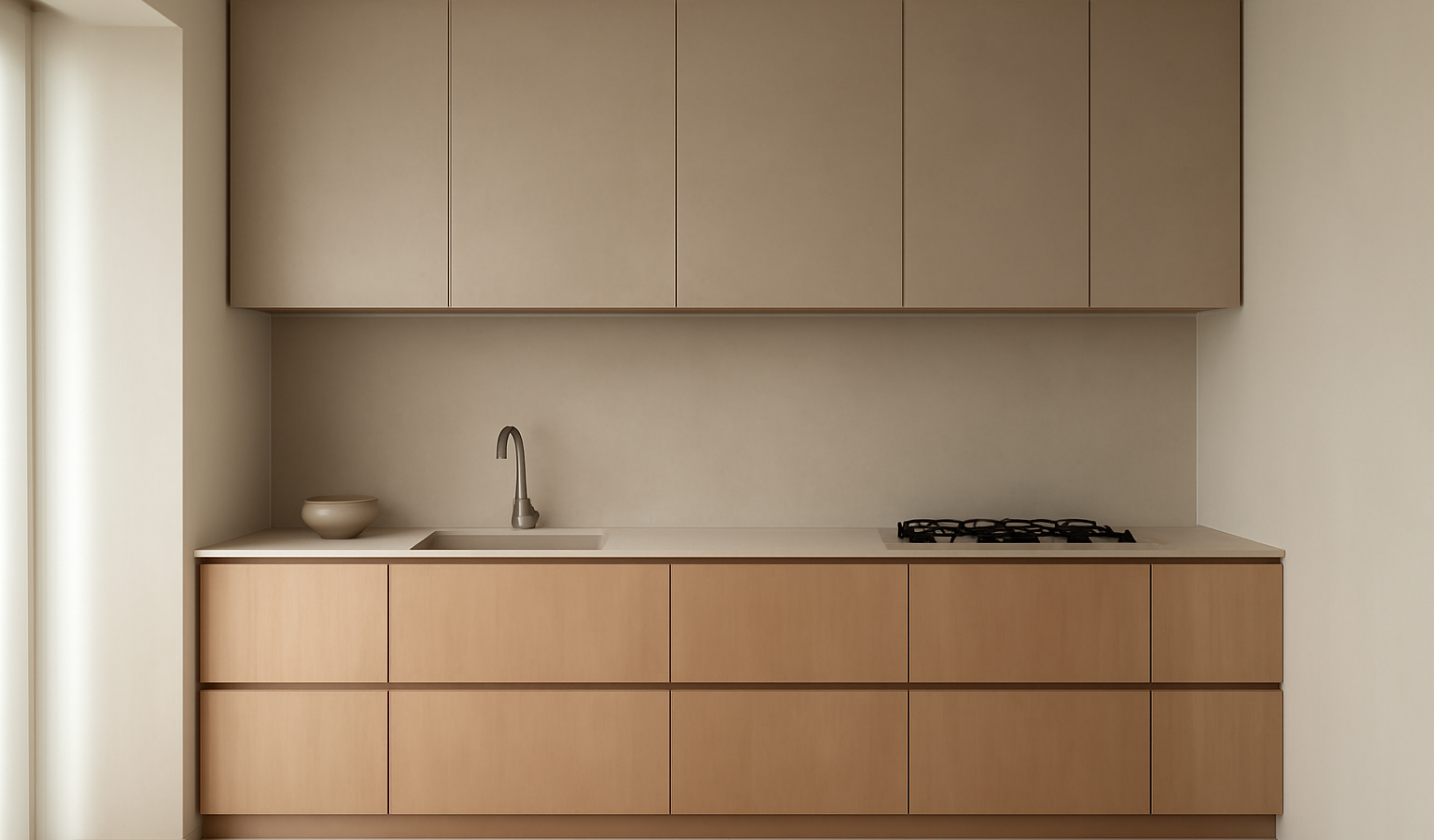
The cabinets are the single most expensive and most used element of any kitchen, so getting the kitchen cabinet design right has an outsized effect on how much you enjoy the room. Good cabinetry disappears into the background, putting everything within reach and standing up to years of heat, steam and heavy use. Poor cabinetry announces itself daily through sagging doors, swollen edges and wasted corners.
This guide covers what actually matters in kitchen cabinet design for Singapore homes — the carcass material, the door finish, the hardware, the layout and the storage decisions that make a kitchen genuinely pleasant to cook in. It is written for homeowners briefing a contractor or interior designer, not for the trade.
Carcass: the box that does the work
Behind every door is the carcass, the structural box that carries the load and shrugs off moisture. In Singapore’s humid kitchens the carcass material matters enormously. Plywood is the preferred choice for its strength, screw-holding ability and resistance to swelling if it gets damp. Moisture-resistant boards are a reasonable middle option, while ordinary chipboard or non-moisture-resistant MDF is best avoided in wet areas because it swells once water finds an edge.
The carcass is what you cannot see in the showroom but will live with for fifteen years, so it is worth asking exactly what the boxes are made of and insisting it appears in writing. A beautiful door on a poor carcass is a false economy. This is one of the line items where a careful read of the renovation quotation separates a sound job from a cheap one.
Door finishes and how they wear
The door front sets the look of the kitchen, and the finish determines how it ages. Each option has trade-offs.
- Laminate: A durable, affordable, heat- and scratch-resistant plastic surface in countless colours and woodgrains. The workhorse of Singapore kitchens.
- Acrylic: A glossy, glass-like finish that looks luxurious but shows fingerprints and fine scratches more readily.
- Spray paint (PU / 2K): A smooth, seamless painted finish with any colour; refined but more vulnerable to chips and more costly.
- Sintered stone or fenix: Premium, fingerprint-resistant, matt finishes that resist heat and marks well at a higher price.
For most family kitchens, a quality laminate front on a plywood carcass offers the best balance of looks, durability and value. Reserve the more delicate finishes for households that will treat them gently.
Hardware: hinges, runners and the daily feel
Nothing reveals the quality of a kitchen faster than its hardware. Soft-close hinges and full-extension drawer runners from reputable brands transform the daily experience and last far longer than budget alternatives. Drawers, in particular, are worth investing in — deep pot drawers on full-extension runners are vastly more usable than a base cupboard where everything hides at the back.
Ask which hinge and runner brands are being used and what the load rating of the drawers is. Good hardware costs more upfront but is the difference between cabinetry that still glides shut after a decade and doors that sag within a year or two. It is the least glamorous and most important upgrade in the kitchen.
Layout and the working triangle
However good the cabinets, the kitchen only works if the layout does. The classic principle is the working triangle between the sink, the hob and the fridge — keep these three close enough to move between easily but not so cramped that two people collide. In compact Singapore kitchens this often means a galley or L-shaped run that uses both walls efficiently.
Think about where you actually stand and work. The bin wants to be near the sink, the prep zone wants clear counter beside the hob, and frequently used items want to live at waist height, not on a top shelf reached by a stool. Coordinating the cabinet layout with the broader interior design of the home keeps sightlines and finishes consistent, especially in open-plan flats where the kitchen is on show.
Storage that earns its keep
Bespoke cabinetry is only worth the premium if it is designed around how you cook. The best kitchens turn awkward spaces into useful storage and put everyday items within easy reach.
- Tall pull-out larders bring dry goods to the front instead of burying them in a deep cupboard.
- Corner solutions such as carousels or magic corners reclaim the dead space that plagues L-shaped kitchens.
- Drawer inserts and dividers stop cutlery, utensils and pots from becoming a jumble.
- A dedicated tall unit for the oven and microwave keeps them at a comfortable height and frees up counter space.
Tell your designer what appliances you own and how you cook, and let the storage be designed around real habits rather than a generic template.
Built-in versus modular thinking
Most Singapore kitchens are built-in carpentry, custom-made to fit the exact wall lengths and ceiling heights of the unit. This maximises storage and gives a seamless look, which suits our often tight, irregular kitchens. The trade-off is that built-in cabinetry is fixed — it does not move with you and cannot easily be reconfigured later. For most homeowners that permanence is acceptable in a kitchen, where a fitted, gap-free run is genuinely more useful than flexible furniture. If you are weighing the broader choice between fitted and freestanding storage elsewhere in the home, that is a separate decision from the kitchen, where built-in almost always wins.
Frequently asked questions
What is the best carcass material for a Singapore kitchen?
Plywood is generally considered the best carcass material for local kitchens because it is strong, holds screws well and resists swelling in our humid, steamy conditions, whereas ordinary chipboard or non-moisture-resistant board can swell once water reaches an exposed edge.
Which cabinet door finish is most durable?
Laminate is the most durable everyday finish, resisting heat, scratches and fingerprints at a sensible cost, while glossier acrylic and painted finishes look more luxurious but show marks more readily and need gentler treatment.
Are drawers better than cupboards in a kitchen?
Deep drawers on full-extension runners are usually more practical than base cupboards because everything pulls out to you rather than hiding at the back, which makes pots, pans and dry goods far easier to reach in daily use.
How long should kitchen cabinets last?
Well-built cabinets with a plywood carcass and quality soft-close hardware can comfortably last around fifteen years or more, whereas cabinets built on poor board with budget hinges often show sagging doors and swollen edges within just a few years.
Should I choose built-in or modular kitchen cabinets?
In Singapore most kitchens use built-in carpentry custom-fitted to the exact wall lengths, which maximises storage and gives a seamless look; the trade-off is that built-in cabinetry is fixed and cannot easily be moved or reconfigured later.
Related reading
- Kitchen Sink Types and Materials Compared
- Kitchen Backsplash Ideas for Singapore Kitchens
- Kitchen Countertop Materials Compared for SG Homes
- Accent Wall Ideas for the Home: A Practical Guide
Planning a kitchen and want senior eyes on layout, structure or contractor quotes? Talk to our consultancy or get in touch.


