
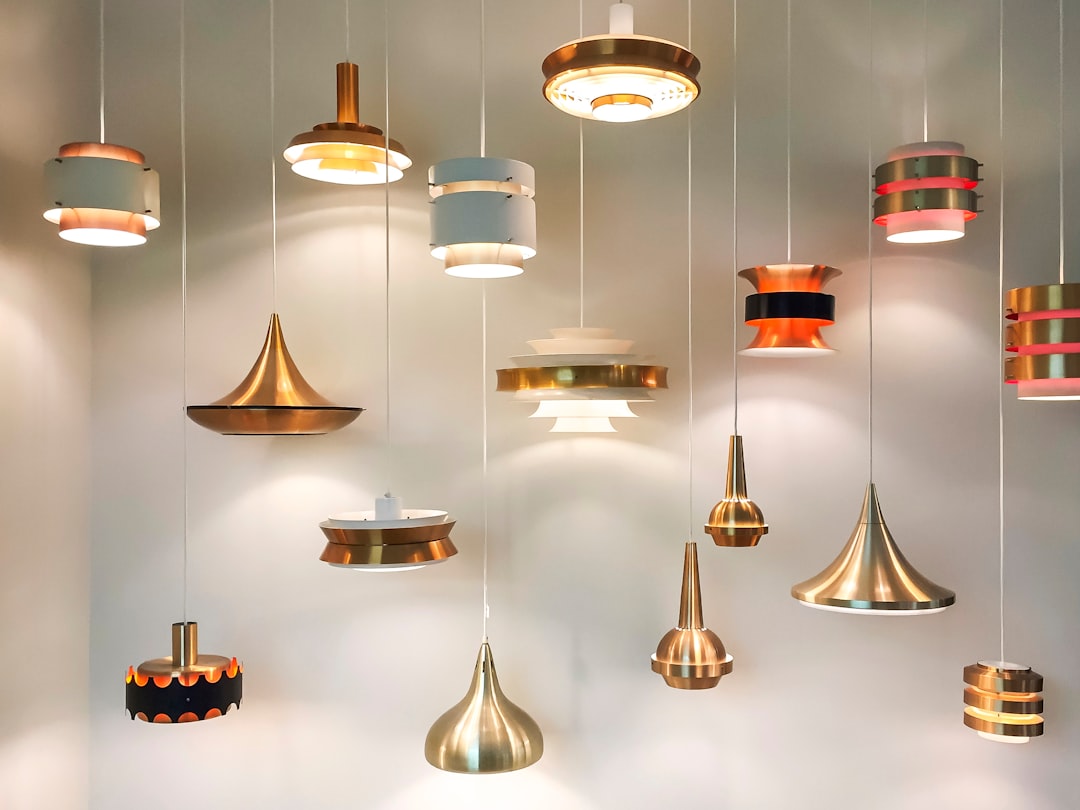
Few fittings change a room as quickly as a well-placed pendant. Pendant lighting draws the eye, marks out a zone and adds a layer of light that ceiling spots alone cannot. Done carelessly, though, it sits too high, too low or too small to do its job.
This guide gathers practical ideas for using pendants well: where they belong, how high to hang them, how to size them to a space, when to cluster them, and how to choose shades and bulbs. The principles are simple once you know them, and they apply whether your home is modern or traditional.
Where to use pendant lighting
Pendants earn their keep over surfaces and zones that benefit from focused, lowered light. A few locations come up again and again because they work so reliably.
Over a kitchen island
The kitchen island is the classic home for pendants. They provide task light for prep while marking the island as the heart of the kitchen. Use two or three evenly spaced pendants depending on the length of the island, and keep them in proportion to the worktop below.
Above a dining table
A pendant over the dining table sets the mood for meals and anchors the table in the room. A single large pendant or a linear fitting suits a long table, while a cluster can fill a wider span. Centre it precisely over the table, not the room, since the table is what the eye reads.
In entryways and stairwells
An entry or stairwell pendant makes a strong first impression and fills vertical space that would otherwise feel empty. Double-height halls in particular call for a generous fitting that has room to hang and be admired.
Beside the bed
Hanging pendants either side of the bed frees up the nightstand and adds a tailored, hotel-like feel. They work best when the heights and scale are matched on both sides.
Getting the hanging height right
Height is where most pendant schemes succeed or fail. Hung too high, a pendant loses its presence; too low, it blocks views and heads.
Over a dining table or island, the base of the pendant should sit roughly 75 to 90cm above the surface. That keeps the light useful and the fitting clear of sightlines across the table. In open walkways and entries, make sure the bottom of the pendant clears head height comfortably, with at least 2.1m of clearance where people pass beneath it. For very high ceilings, scale the drop up so the pendant reads in proportion and does not strand itself near the ceiling.
Always check the view from a seated position at a table, since that is where a badly hung pendant becomes most obvious. A simple way to test is to hang the fitting on a temporary cord and live with the height for a day before fixing it.
Sizing and scale
A pendant has to suit the size of both the surface beneath it and the room around it. Too small and it looks lost; too large and it dominates.
For a fitting over a table or island, a useful starting point is to make its width around one-half to two-thirds of the width of the surface below. For general room scale, a quick rule of thumb is to add the room’s dimensions in metres and treat the total in centimetres as a rough guide to a suitable fixture diameter. These are starting points, not laws, but they keep you in sensible territory and stop a pendant looking accidental.
Clustering and arrangement
A single statement pendant is not the only option. Grouping several smaller pendants creates impact and flexibility.
- In a row: two or three matching pendants evenly spaced along an island or a long table.
- In a cluster: several pendants at staggered heights over a round table, in a stairwell or in a corner, for a sculptural effect.
- Mixed but matched: different sizes of the same family of fitting, kept consistent in finish so the group reads as deliberate.
When clustering, vary the drop lengths so the arrangement has rhythm rather than sitting in a flat line, and keep the finishes and forms consistent so the group feels intentional. This kind of considered layering is central to good interior design, where lighting is treated as part of the architecture rather than an add-on.
Shades, layered light and bulb temperature
The shade controls where the light goes and how the room feels. Open or downward shades concentrate light onto a surface for tasks, which suits kitchens and dining tables. Diffused, fabric or frosted-glass shades spread a softer ambient glow, better for relaxed spaces. Open, sculptural fittings let light spill in all directions and double as a decorative feature.
Pendants as one layer
A pendant should rarely be the only light in a room. Good schemes layer ambient light, task light and accent light so the space can shift through the day. Treat pendants as your feature or task layer and support them with recessed lights, wall lights or lamps. A considered approach to lighting and proportion keeps the layers in balance.
Choosing the right bulb
Colour temperature sets the atmosphere. A warm white around 2700K to 3000K suits living spaces, dining areas and bedrooms, giving a relaxed, inviting tone. A cooler white nearer 3500K to 4000K can suit task-heavy kitchens and work areas. Add a dimmer wherever you can, since being able to lower pendant light transforms a kitchen into a calm evening space and a dining pendant into a feature.
Common mistakes to avoid
The usual errors are hanging pendants too high so they lose impact, choosing a fitting too small for the surface, and forgetting to centre a dining pendant on the table rather than the room. Many people also rely on a single pendant for a whole room and end up with flat, uneven light.
Skipping a dimmer is another missed opportunity, as is mixing wildly different bulb temperatures across one space, which makes a room feel disjointed. Plan the pendant alongside the rest of the scheme, and it will look as if it was always meant to be there.
Frequently asked questions
How high should a pendant hang over a dining table?
The base of the pendant should sit roughly 75 to 90cm above the table surface, which keeps the light useful for the meal while staying clear of sightlines across the table when people are seated.
How many pendants do I need over a kitchen island?
Most islands suit two or three evenly spaced pendants depending on the length of the worktop, with the fittings sized in proportion to the island so they neither crowd it nor look lost above it.
What size pendant should I choose?
Over a table or island, aim for a fitting around one-half to two-thirds of the width of the surface below, and for room scale add the room’s dimensions in metres as a rough guide to a sensible diameter.
What bulb colour temperature works best for pendants?
Warm white around 2700K to 3000K suits living, dining and bedroom pendants for a relaxed feel, while a cooler 3500K to 4000K can suit task-focused kitchen lighting, ideally on a dimmer.
Can I use pendants as the only light in a room?
It is better not to, because relying on a single pendant gives flat, uneven light, so use pendants as a feature or task layer and support them with recessed lights, wall lights or lamps.
Related reading
- Monochrome Interior Design
- Luxury Interior Design Principles
- Zen Interior Design Ideas
- Wabi-Sabi Interior Design
Planning a lighting scheme as part of a larger refresh? Talk to our consultancy or get in touch.


