Office furniture used to be a matter of rows of identical desks, a few meeting tables and a wall of filing cabinets. The way people work has changed, with hybrid schedules, laptops instead of desktops, more collaboration and a greater need for quiet focus, and modern office furniture has changed with it. The best offices now use furniture to create a range of settings, each suited to a different kind of work.
This guide looks at the main categories of modern office furniture, how to choose them for comfort and flexibility, and the practical issues, such as power, acoustics, floor loading and durability, that are easy to overlook. It focuses on principles rather than products or prices.
Start from how people work
Before selecting furniture, understand the work patterns. How many people are in the office on a typical day, and on the busiest day? How much time is spent on calls, in meetings, in focused solo work and in informal collaboration? Which teams need to sit together, and which need privacy?
The answers shape the mix of settings. A team that spends most of its time on video calls needs enclosed or acoustically screened spaces; a design studio needs large shared tables and pin-up walls; a finance team may still need personal desks with lockable storage. Our guide to office layout explains how these zones are arranged on plan, and the broader approach is covered in office interior design.
Workstations and desks
The workstation remains the backbone of most offices, but its form has evolved.
Benching systems
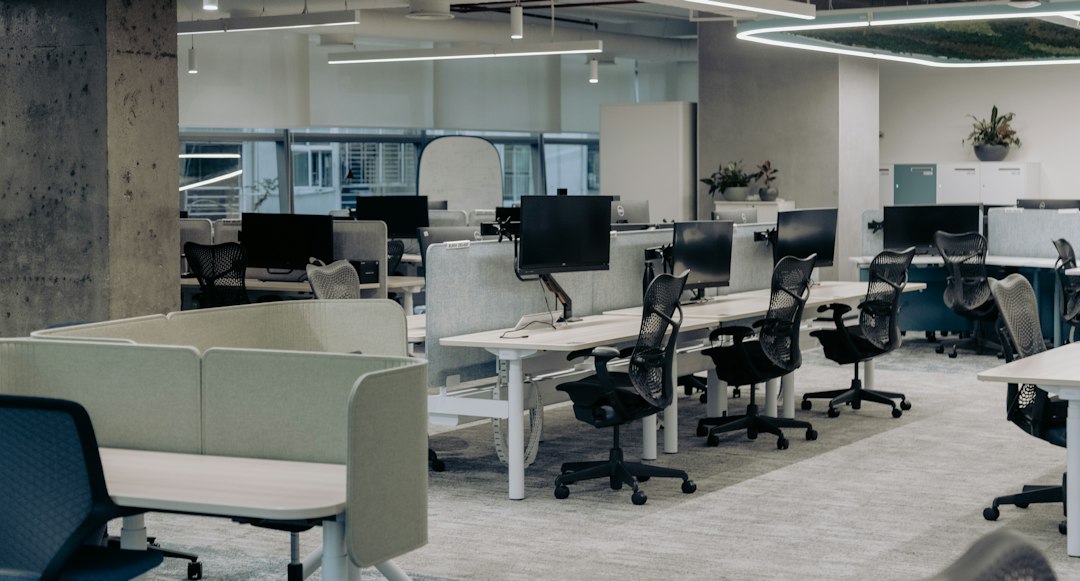
Long shared desks with a common frame, often with power and data running along a central spine. They use floor area efficiently and are easy to reconfigure, which suits hot-desking. The trade-off is less personal space and more visual and acoustic distraction.
Height-adjustable desks
Electric or manual sit-stand desks allow users to change posture through the day. They are most valuable where desks are shared, because the same desk can be set to suit different users. Look at the adjustment range, stability at full height and the speed and noise of the mechanism.
Desk screens and accessories
Desk-mounted screens give a degree of visual privacy and absorb some sound. Monitor arms, cable trays and integrated power modules keep the desk surface clear and let users position screens correctly.
Seating and ergonomics
A task chair is the piece of furniture people use most, and the one most closely linked to comfort. A good modern task chair offers adjustable seat height and depth, back support that can be set to the user, adjustable armrests and a recline that supports movement rather than locking the user upright.
Ergonomics is about the whole setup, not just the chair. The screen should be at a comfortable height and distance, the keyboard and mouse within easy reach, and feet supported on the floor or a footrest. A simple, structured workstation assessment for each user helps employers find and fix problems before they cause discomfort. Training staff to adjust their own furniture is as important as buying adjustable furniture in the first place.
Beyond task seating, modern offices use a wider palette: lounge chairs for informal meetings, stools at high tables, soft seating in breakout areas and stackable chairs for town halls.
Collaboration and focus settings
A large part of modern office furniture serves spaces between the desk and the boardroom.
- Meeting tables in a range of sizes, with integrated power and video-conferencing cabling.
- High tables and stools for short stand-up meetings and touchdown work.
- Booths and pods, freestanding acoustic enclosures for phone calls or one-to-one meetings, which can be added without building walls.
- Soft seating clusters with low tables for informal discussion.
- Mobile whiteboards and screens that let teams define and reconfigure a project space.
In an open-plan office, these elements provide the variety that open desking lacks. Freestanding pods and furniture-based screens can also be a cost-effective alternative to fixed walls, although for full acoustic separation a properly built office partition is usually needed.
Storage, power and acoustics
Storage
With less paper, personal storage has shrunk to lockers and small pedestals. Team storage, for samples, files or equipment, is often consolidated into shared units. High-density mobile shelving systems pack a lot into a small footprint, but they are heavy when full.
Power and data
Furniture must work with the building’s power and data distribution. Raised floors, floor boxes, ceiling drops and furniture-integrated power modules each have implications for layout flexibility. Agreeing the approach early prevents trailing cables and last-minute rewiring.
Acoustics
Furniture influences acoustics significantly. Upholstered seating, fabric screens, acoustic panels on storage units and soft flooring absorb sound, while hard surfaces reflect it. In open offices, combining absorptive furniture with ceiling treatment makes a noticeable difference to speech privacy.
Floor loading: a point engineers watch
Most office floors are designed for a uniformly distributed imposed load suitable for general office use. Some furniture concentrates much more weight than that on a small area: high-density mobile shelving filled with paper, safes, large aquariums, heavy stone reception counters and server cabinets are typical examples.
Before installing such items, check the design imposed load for the floor, which is normally stated in the building’s structural documents or available from the landlord, and compare it with the actual load of the furniture when fully loaded. Where the load is higher, the solution may be relocating the item over a beam or column line, spreading the load, or strengthening the floor. A structural engineer can carry out this check; in Singapore, works that affect the structure require Professional Engineer involvement and approvals.
Choosing durable, sustainable modern office furniture
Commercial furniture works much harder than domestic furniture. Look for commercial-grade construction, replaceable parts such as upholstery and castors, and warranties that reflect heavy use. Neutral, robust finishes age better than fashionable colours.
Sustainability is increasingly part of the brief. Furniture with recycled or certified materials, modular designs that can be reconfigured rather than replaced, and take-back or refurbishment schemes all reduce waste. Reusing existing furniture, refurbished where necessary, is often the most sustainable choice of all.
Finally, test before buying. Sit in the chairs, adjust the desks, open the storage and try the booths with a phone call. Furniture that looks modern in a catalogue may not suit the way your team actually works.
Frequently asked questions
What defines modern office furniture?
Modern office furniture is designed for flexible, varied work: adjustable desks and chairs, shared benching, collaboration tables, acoustic booths and soft seating, with integrated power and data. It emphasises adaptability, ergonomics and a range of settings rather than identical rows of desks.
Are sit-stand desks worth it?
They allow people to change posture through the day and suit shared desks because they adjust to different users. Their value depends on people actually using the adjustment, so pair them with guidance on how to set them correctly.
Do I need to check floor loading for office furniture?
For ordinary desks and chairs, no. For heavy items such as high-density mobile shelving, safes, server racks or stone counters, compare the fully loaded weight with the floor’s design imposed load, and seek a structural engineer’s advice if it may be exceeded.
How can furniture improve office acoustics?
Upholstered seating, fabric desk screens, acoustic panels on storage, freestanding booths and soft flooring absorb sound and reduce distraction. They work best combined with acoustic ceiling treatment and a sensible layout that separates noisy and quiet zones.
Should office furniture be built-in or freestanding?
Freestanding furniture is more flexible and can move with the business, which suits leased premises. Built-in joinery works for reception counters, pantries and storage walls where a fixed, tailored solution adds value.
Related reading
- Bathroom Wall Panels: Types, Installation and Pitfalls
- Interior Designing as a Career in Singapore: A Guide
- Gym Interior Design: Layout, Flooring, Acoustics and Loads
- Hotel Room Design: Layout, Comfort and Accessibility
Planning heavy storage, a server room or a new staircase in your office and need the floor checked? Talk to our consultancy or get in touch.