

Long-Span Structures Explained by an Engineer
A long span structure covers a large clear area without internal columns, creating the open, uninterrupted space needed for sports halls, aircraft hangars, exhibition…
A long span structure covers a large clear area without internal columns, creating the open, uninterrupted space needed for sports halls, aircraft hangars, exhibition…

A tube structure treats the entire perimeter of a tall building as a single hollow cantilever, so the outer skin of columns and beams…

A core wall is the central reinforced-concrete enclosure, usually wrapped around the lift shafts and stairwells, that acts as the structural backbone of a…

A tuned mass damper is a large, carefully tuned mass mounted high in a building or structure that moves out of phase with the…

The outrigger system is one of the most effective and widely used structural arrangements for tall buildings. It solves a basic limitation of a…

As a building grows taller, the engineering challenge shifts. For a low-rise structure, gravity load governs the design and lateral forces are a secondary…

Progressive collapse is one of the most serious failure modes in structural engineering: the situation where the local failure of a single element triggers…

A structural diaphragm is the part of a building most people never think about, yet it does much of the quiet work of keeping…
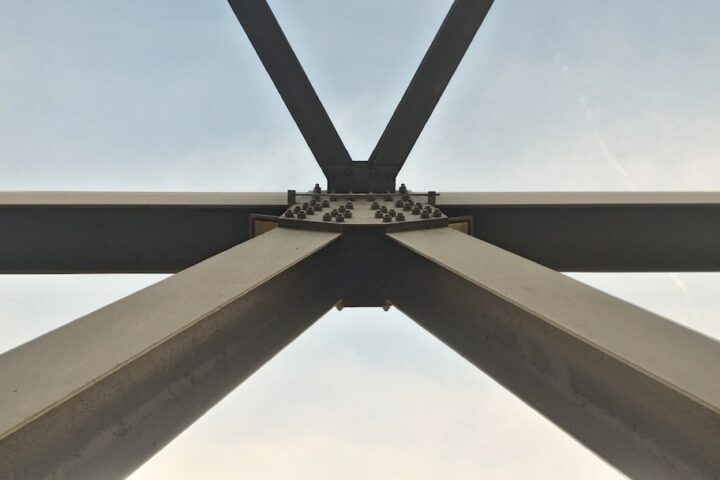
Every building has to resist two broad families of load: the gravity loads that push straight down, and the lateral loads that push sideways.…

Not all steel joints are equal. Some simply hold two members together and let them rotate freely, while others lock them so rigidly that…

Steel and concrete each have a natural strength. Steel is excellent in tension and slender enough to span long distances, while concrete is cheap,…

Concrete is strong in compression but weak in tension, and that single fact shapes almost everything about how we use it. Prestressed concrete is…