
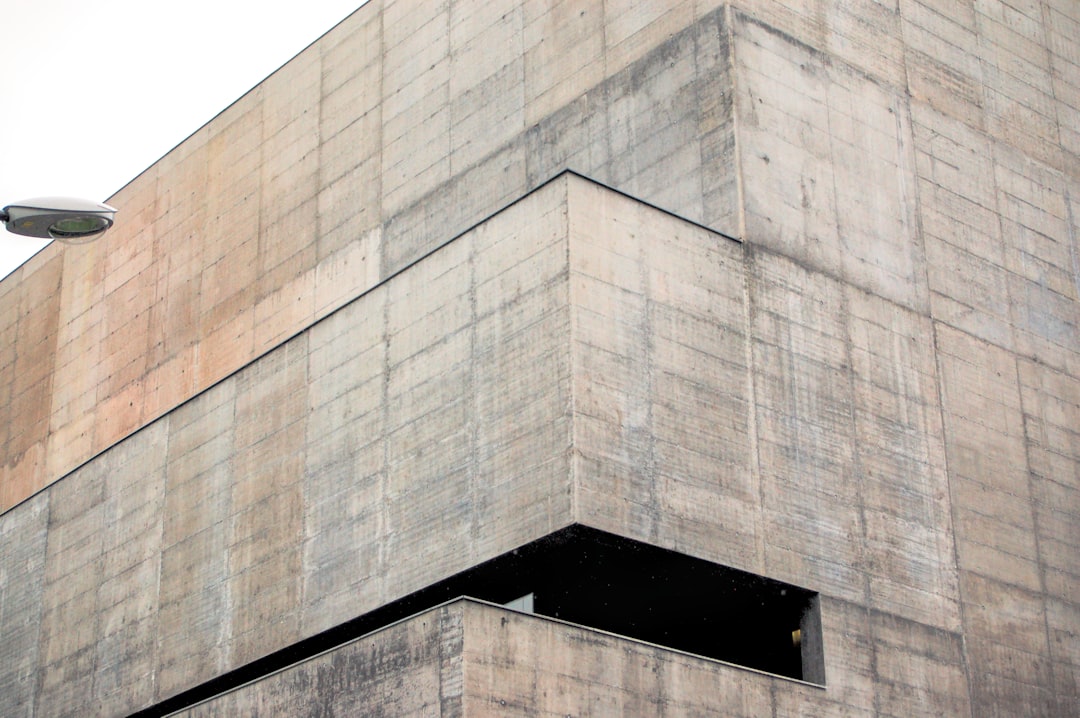
The phrase form follows function is one of the most quoted ideas in modern architecture, and one of the most misunderstood. In its simplest reading it says that the shape of a building, or any object, should be guided primarily by its intended purpose rather than by inherited styles or applied decoration. It became a rallying cry for the early modern movement and still shapes how designers talk about good buildings.
This article explains where form follows function came from, what Louis Sullivan actually meant, how later modernists adopted and stretched the idea, and where the principle helps or falls short in real design. It sits within the wider story told in our guide to architectural styles and principles.
Where the phrase comes from
The words are usually attributed to the American architect Louis Sullivan, often called the father of the skyscraper, who wrote in an 1896 essay that “form ever follows function.” Sullivan was reflecting on how the tall office building should be designed, arguing that its outward shape should grow honestly out of its purpose rather than copy older masonry styles.
Sullivan did not invent the underlying idea from nothing. The sculptor and writer Horatio Greenough had explored similar thinking decades earlier, admiring how the forms of ships, tools and natural organisms followed their use. Sullivan, who had worked closely with the engineer-architect Dankmar Adler, distilled these influences into a memorable phrase that would outlive its original context.
It is worth being precise about Sullivan’s meaning. He saw function as something almost organic, drawn from nature, where the form of a thing expresses its inner life. His own buildings were not bare boxes; many carried rich ornament. The slogan was about honesty of purpose, not the removal of all decoration.
What the principle actually means
At its core, form follows function asks the designer to start from purpose. Before deciding how a building should look, you ask what it is for, who uses it, how people move through it, and what it must do structurally and environmentally. The visible form then emerges from answering those questions well.
In practice this pushes designers toward a few habits.
- Purpose first: the layout, circulation and proportions follow the way the building will really be used.
- Honest expression: structure and services are revealed or clearly expressed rather than hidden behind unrelated decoration.
- Restraint with ornament: decoration, where used, supports the building’s purpose instead of disguising it.
- Fitness for use: a thing is considered beautiful partly because it does its job well.
Understood this way, the principle is less a strict rule and more a discipline. It is a reminder to design from the inside out, so that the result is coherent rather than a shape chosen first and then forced to work.
How the modernists adopted it
The generation of architects who followed Sullivan took the phrase and made it a banner for modernism, often in a stricter, more literal form than he intended. For many of them, ornament was waste, and the clean expression of structure and function became the whole point of architecture.
The Bauhaus school, and figures associated with the International Style, championed simple geometric volumes, flat roofs, ribbon windows and exposed structure. The idea that decoration was dishonest, expressed bluntly by some early modernists, sat comfortably alongside form follows function. Buildings were meant to read as machines for living and working, with every element earning its place.
This is also where the principle connects to engineering. When structure is expressed rather than hidden, the building’s honesty depends on the frame doing real work. Concepts such as how reinforced concrete carries load, or how load-bearing walls differ from framed structures, become part of the architectural expression, not just hidden detail.
Form, function and structure together
For an engineer, form follows function is a natural way to think, because structure already obeys it. A beam is sized by the loads it carries; a foundation by the ground beneath it. The most efficient structures often look the way they do precisely because of what they must resist.
Modern architecture exploited this overlap. Framed construction let designers free the façade from carrying load, so walls could become glass and plans could open up. The visible grid of columns and beams in many twentieth-century buildings is both structural fact and architectural statement, a clear case of form expressing function. Knowing what a structural engineer does helps explain why this honesty is more than a style choice.
The discipline still matters in detailing. A cantilever, a long span or a slender column all have a logic, and expressing that logic well is part of good design. When form and structure are designed together from the start, the building is usually clearer, more efficient and easier to maintain.
The limits of the idea
Form follows function is powerful, but taken literally it has real limits, and critics have pointed them out for a century. Function is rarely simple or fixed. A building must serve many functions at once, and those needs change over time, so a form tuned too tightly to one use can age badly.
There is also the question of meaning. Buildings carry cultural, emotional and symbolic functions that a narrow reading ignores. A place of worship, a memorial or a civic hall may need dignity, beauty or presence that pure utility does not explain. The architect Robert Venturi and others argued that the slogan, applied dogmatically, produced bland and inhuman environments.
Most thoughtful designers now treat the principle as one important voice among several. Function, structure, context, beauty, durability and human feeling all shape good architecture. Form follows function remains a valuable starting discipline, especially when paired with care for how a building will adapt and endure.
Frequently asked questions
What does form follows function mean?
It means that the shape and layout of a building or object should be guided primarily by its intended purpose and how it will be used, rather than by inherited styles or applied decoration, so that the design grows logically from its function.
Who said form follows function?
The phrase is attributed to the American architect Louis Sullivan, who wrote “form ever follows function” in an 1896 essay, though the sculptor Horatio Greenough had explored similar ideas about purpose and natural form decades earlier.
Did Louis Sullivan mean no ornament at all?
No. Sullivan saw function in an almost organic sense and many of his own buildings carried rich ornament, so his point was about honesty of purpose rather than the complete removal of decoration, which later modernists took further than he intended.
How did modernists use the idea?
Modernist architects, including those linked to the Bauhaus and the International Style, used it to justify simple geometric forms, exposed structure and the rejection of ornament, treating clear expression of function as the central aim of architecture.
What are the criticisms of form follows function?
Critics note that function is rarely fixed, that buildings serve many changing purposes, and that they carry cultural and emotional meaning a narrow reading ignores, so applying the slogan too strictly can produce bland or inflexible buildings.
Related reading
- Architectural Scale Models Explained: Types and Uses
- Site Analysis in Architecture: A Practical Guide
- Circulation in Architecture: Movement, Flow and Safety
- Proportion and Scale in Architecture Explained
Designing a building where structure and form work as one? Talk to our consultancy or get in touch for senior structural advice.


