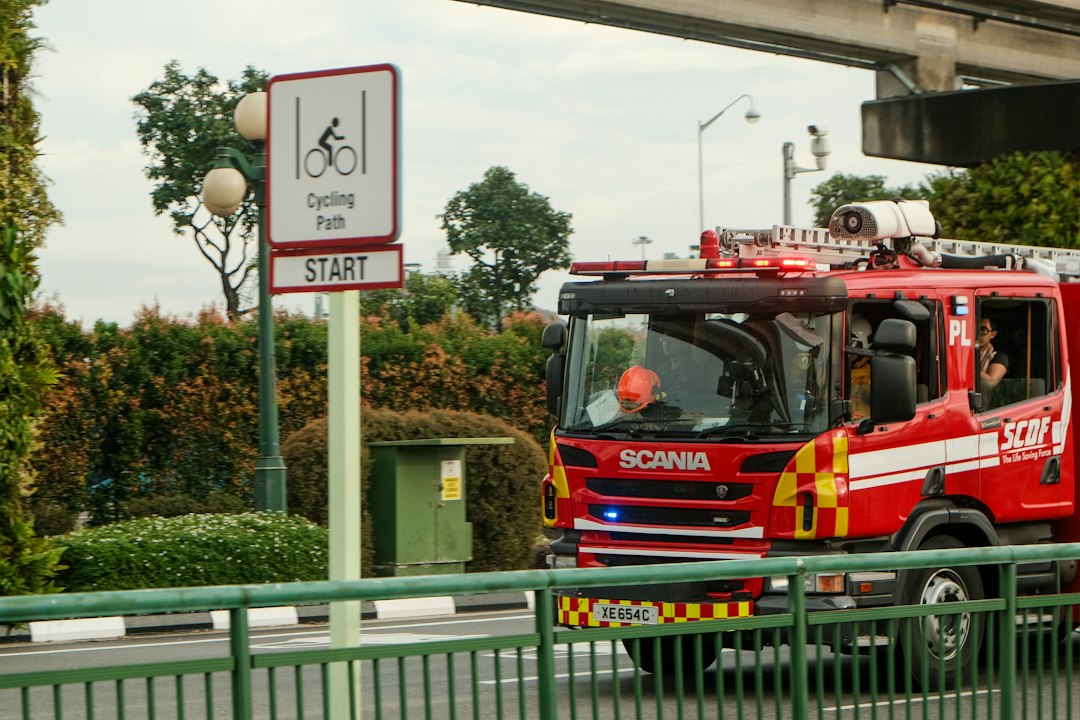
A fire safety certificate in Singapore, usually called the FSC, is the document issued by the Singapore Civil Defence Force confirming that the fire safety works in a building have been completed in accordance with approved plans. Without it, a building, or a part of a building that has undergone fire safety works, cannot lawfully be occupied or used. For owners undertaking new construction, a change of use or significant alteration works, the FSC is one of the final gates before the premises can open.
This guide explains when an FSC is required, who does what in the process, how the Temporary Fire Permit fits in, and what owners of existing buildings need to know when planning renovations. It also touches on how fire safety requirements interact with the structure, which is where a structural engineer’s input often begins.
What a fire safety certificate is
Under the Fire Safety Act, fire safety works in buildings must be carried out in accordance with plans approved by SCDF. Fire safety works cover the provisions that protect occupants and help firefighters: means of escape, compartmentation, fire-rated construction and doors, fire alarm and detection systems, sprinklers, hydrants and hose reels, smoke control, emergency lighting and exit signage, among others. The detailed requirements are set out in SCDF’s Code of Practice for Fire Precautions in Buildings, generally referred to as the Fire Code.
The FSC is issued once all approved fire safety works have been completed and certified. It confirms that the building, as built, complies with the approved fire safety plans. SCDF has made clear that owners must obtain the FSC before occupying or using the premises, and that occupying without it is an offence for which the owner can face court action.
The FSC should not be confused with the Fire Certificate, a separate document that certain larger or higher-risk existing buildings must hold and periodically renew to show that their fire safety installations are being maintained. The FSC relates to the completion of fire safety works; the Fire Certificate relates to ongoing maintenance.
When an FSC is required in Singapore
An FSC is required whenever fire safety works have been carried out under SCDF-approved plans. In practice, that covers three situations.
- New buildings. All new developments subject to plan approval go through fire safety plan submission and must obtain an FSC, or a Temporary Fire Permit, before occupation.
- Change of use. Converting premises from one use to another, for example from office to food and beverage or from industrial to a use with public access, typically changes the fire safety requirements. SCDF’s guidance is that a change of use generally requires plan approval and an FSC.
- Addition and alteration works. A&A works affecting fire safety provisions, such as altering compartment walls, means of escape, sprinkler layouts or fire alarm zones, require plan approval and a new FSC for the affected works.
Some minor works are exempted from plan submission under SCDF’s rules, and the list of exemptions should be checked by the Qualified Person rather than assumed. Internal renovations within a typical home that do not affect fire safety provisions do not usually involve SCDF approval, though fire safety rules still apply, such as not obstructing escape routes or common corridors. Our overview of A&A works in Singapore covers how alteration works are approved more generally.
Who does what: the QP, the Registered Inspector and SCDF
The FSC process relies on three parties, each with a defined role.
The Qualified Person
The owner appoints a Qualified Person, who must be a registered architect or a Professional Engineer, to prepare the fire safety plans in accordance with the Fire Code and submit them to SCDF. The QP is responsible for the design and for supervising its implementation. SCDF selectively audits submitted plans rather than reviewing every detail of every submission, which places significant responsibility on the QP.
The Registered Inspector
Once the fire safety works are complete, the owner engages a Registered Inspector to inspect and certify that the works comply with the approved plans and the Fire Code. The RI’s certification is required before the owner applies for a Temporary Fire Permit or FSC. The independence of this inspection is a key safeguard in the system.
SCDF
SCDF approves the plans, may audit both plans and completed works, and issues the TFP or FSC. Applications are made through the relevant government e-services, and SCDF advises that processing time depends on the size and complexity of the project.
The Temporary Fire Permit
A Temporary Fire Permit allows a building, or a part of it, to be occupied for a limited period before the FSC is issued. SCDF issues a TFP only where the fire safety works have been satisfactorily completed with very minor outstanding issues. It is not a route around incomplete works; it bridges a short gap where the essentials are in place and small items remain.
The FSC itself is issued only after full completion of all fire safety works in the project. Owners planning an opening date should allow for the time needed to close out outstanding items, obtain the RI’s certification and complete SCDF’s process, and should not assume that a TFP will be available.
Fire safety and structure
Fire safety is not only about alarms and sprinklers. Structural elements must retain their load-bearing capacity for the fire resistance period required by the Fire Code, so that occupants can escape and firefighters can operate. Columns, beams, slabs and walls forming compartments all have fire resistance requirements, which affect concrete cover, member sizes, protection to steelwork and the detailing of penetrations.
This matters in alteration works. Creating a new opening in a compartment wall, adding a mezzanine, cutting a slab for a staircase or replacing a fire-rated wall with a lighter partition can affect both structure and fire safety at the same time. A structural change may need BCA approval, and the fire safety implications may need SCDF approval. Coordinating the two early avoids redesign later. Our article on fire protection for structures explains how structural fire resistance is achieved, and our guide on when you need a Professional Engineer covers the structural approval side.
In our consulting work, the most avoidable delays arise when structural and fire safety changes are designed separately and only reconciled on site. If your works touch both, it is worth having them reviewed together; our structural engineering consultancy can advise on the structural side and coordinate with the fire safety QP.
Practical advice for owners and tenants
If you are taking a lease on commercial premises, check the approved use and the FSC status before signing. Fitting out for a use the premises were not approved for may trigger a change of use submission, which takes time and may require works the landlord has not anticipated.
Keep the approved fire safety plans and the FSC with your building records. Future alterations will need them, and an FSC that cannot be located can complicate a sale, lease or insurance claim.
Above all, appoint the QP early. Fire safety requirements can shape layouts, staircases, door positions and structural fire resistance, and they are far easier to accommodate in design than to retrofit.
Frequently asked questions
What is a fire safety certificate in Singapore?
A fire safety certificate in Singapore is the FSC issued by SCDF after all fire safety works in a building have been completed according to approved plans and certified by a Registered Inspector, and it must be obtained before the premises are occupied or used.
Who applies for the FSC?
The owner is responsible for obtaining the FSC, with a Qualified Person preparing and submitting the fire safety plans and a Registered Inspector certifying the completed works before the application is made to SCDF.
Do I need an FSC for renovating my home?
Most internal home renovations that do not affect fire safety provisions do not involve SCDF plan approval or an FSC, but any works that alter fire safety measures, or a change of use, may require approval, so check with a Qualified Person where in doubt.
What is the difference between a TFP and an FSC?
A Temporary Fire Permit allows occupation for a limited period when fire safety works are complete apart from very minor outstanding items, while the FSC is issued only after full completion of all fire safety works.
Is an FSC the same as a Fire Certificate?
No, the FSC confirms completion of fire safety works under approved plans, while the Fire Certificate is a separate certificate that certain existing buildings must hold and periodically renew to show their fire safety installations are maintained.
How long does it take to get a fire safety certificate?
The time to obtain an FSC varies with the size and complexity of the project, from a few weeks for a small fit-out to considerably longer for a large building. It depends on completing all fire safety works, testing and commissioning the systems, the Registered Inspector’s inspection and SCDF’s processing, which may include an audit. Allow time for closing out defects found at inspection, and plan opening dates accordingly.
How much does a fire safety certificate cost?
The overall cost of an FSC depends mainly on professional fees rather than the authority fee. Owners typically pay the Qualified Person for fire safety plans and supervision, a Registered Inspector for certification, and SCDF’s prescribed application fees. For a small unit fit-out these may be modest, while a new building involves much larger fees. Request itemised quotations, as the cost of the fire safety works themselves is separate.
Does the landlord or the tenant apply for a fire safety certificate?
For a tenant’s fit-out, the tenant usually engages the Qualified Person and Registered Inspector and obtains the FSC for their own works, with the landlord’s consent and in line with the building’s fit-out rules. The landlord remains responsible for the base building’s fire safety systems. Lease terms and fit-out manuals set out who pays and who coordinates, so check them before committing to a layout.
Who needs a Fire Certificate and how often is it renewed?
A Fire Certificate is required for certain existing buildings, generally larger or higher-risk premises defined by SCDF by use, height and occupant load, to show their fire safety installations are properly maintained. It is typically renewed annually after inspection by a Registered Inspector. Owners of such buildings must also appoint a Fire Safety Manager in many cases, so check SCDF’s current criteria for your premises.
Related reading
- Temporary Occupation Permit Singapore: How TOP Works
- Cracks in Walls and Ceilings: When to Call an Engineer
- BCA BP Submission: A Step-by-Step Guide to Building Plans
- Qualified Person Singapore: QPs and Accredited Checkers
Planning alteration works that affect both structure and fire safety? Talk to our consultancy or get in touch.