Fiberglass insulation, known in British usage as fibreglass or glass wool, is a mat of fine glass fibres that traps air to slow the flow of heat and sound. Supplied as rolls, batts and boards, it is one of the most widely used insulation materials in the world, found in roofs, ceilings, partitions, ductwork and metal-roofed industrial buildings, including many in Singapore.
This article explains how glass wool works, how it performs thermally and acoustically, how it behaves in fire, what the health evidence says, and, most importantly for a tropical climate, how to install it so that humidity and condensation do not undo its benefits. It takes an engineer’s selection angle and avoids brands and prices.
What glass wool is and how it works
Glass wool is made by melting sand, limestone and a high proportion of recycled glass, then spinning the molten glass into fine fibres. A binder is sprayed on as the fibres are collected, and the mat is cured into rolls, batts or rigid boards of controlled density. Some products are faced with aluminium foil or kraft paper; others are unfaced.
The glass itself conducts heat reasonably well. Insulation comes from the air trapped in the tangle of fibres, which cannot circulate freely and so transfers little heat by convection. That is why thickness matters more than anything else, and why compressing glass wool, squashing it into a cavity too small for it, reduces its performance.
Thermal performance of fiberglass insulation
Insulation materials are compared by thermal conductivity, the lambda value, in watts per metre-kelvin: the lower the figure, the better the insulator. Typical glass wool products fall roughly in the range of 0.030 to 0.044 W/m·K, depending on density and fibre type. The thermal resistance of a layer is its thickness divided by its conductivity, so doubling the thickness doubles the resistance.
In practice, the performance of an insulated roof or wall depends on the whole build-up, not just the insulation. Gaps, compressed areas, thermal bridges through steel framing, and wet insulation can all reduce the real-world result well below the calculated figure. Our guide to U-value explains how the whole build-up is assessed.
In Singapore, the envelope’s thermal performance is regulated through BCA’s envelope thermal transfer requirements for certain building types (ETTV for non-residential and RETV for residential buildings), and through roof thermal transmittance limits. In the tropics, the dominant heat flow is inward through roofs and sun-facing walls, so roof insulation under metal or concrete roofs gives the greatest benefit. Our article on roof insulation compares options.
Acoustic performance
Glass wool is an effective sound absorber. In a partition cavity, it absorbs sound bouncing between the boards, improving sound insulation, often noticeably, for little cost. Under a metal roof, it reduces rain noise. As exposed or faced panels, it absorbs reverberation in rooms, ducts and plant spaces.
The key is to understand its role. Glass wool absorbs sound but does not block it on its own; blocking needs mass and airtightness, such as multiple layers of board. A partition with glass wool in the cavity but gaps at the head or around sockets will still leak sound. Our guide to sound insulation sets out how absorption, mass and decoupling work together.
Fire behaviour
Glass fibres themselves do not burn, and many unfaced glass wool products are declared non-combustible or of the highest reaction-to-fire class (A1 under the European EN 13501-1 system). Facings and binders change this: foil or paper facings may lower the classification, so the declared class of the specific product, including any facing, should be checked.
Glass wool melts at a lower temperature than stone wool, which is why stone (rock) wool is often preferred where insulation must stay in place during a fire, such as in some fire-stopping and fire-rated assemblies. Our guide to rockwool insulation compares the two. In Singapore, insulation used in buildings must satisfy the material requirements of SCDF’s Fire Code for its location and use.
Health and handling
Glass wool fibres can irritate the skin, eyes and throat during handling, which is a mechanical effect of the fibres rather than a toxic one. In 2001, the International Agency for Research on Cancer reclassified insulation glass wool, along with rock and slag wool, from Group 2B (possibly carcinogenic) to Group 3 (not classifiable as to carcinogenicity in humans), based on evidence that modern biosoluble fibres do not persist in the lungs. Certain special-purpose fibres remain in Group 2B.
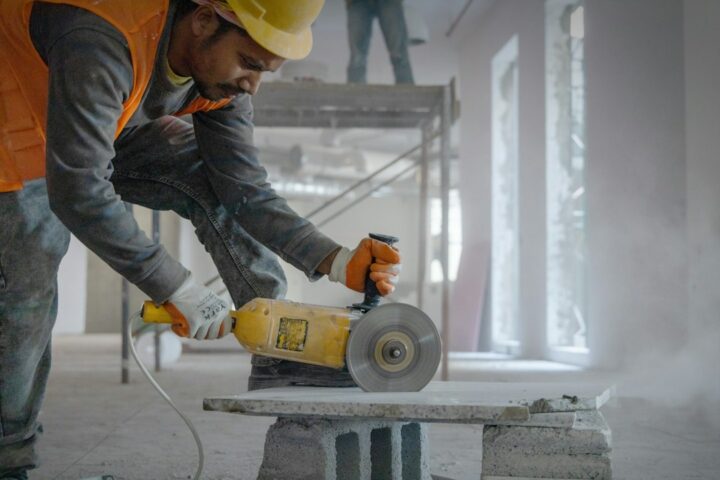
Sensible handling still applies: long sleeves, gloves, eye protection and a suitable dust mask when cutting and installing, and covering or enclosing glass wool in occupied spaces so fibres are not released into the air. In air-handling systems, use products with facings designed for that purpose.
Installing fiberglass insulation in a humid climate
The biggest risk with glass wool in Singapore is moisture. Wet glass wool loses most of its insulating value, sags, and can support mould growth on dust and binders. Moisture arrives in two ways: from leaks and wind-driven rain, and from condensation within the build-up.
Condensation is the subtler problem. In an air-conditioned building, the inside surfaces are cool and the outside air is hot and humid. Water vapour moves from the humid outside towards the cool inside, and if it reaches a surface below its dew point within the build-up, it condenses. In temperate climates, vapour control layers are placed on the warm inside face; in the tropics, the warm, humid side is usually the outside, so the logic is reversed. Getting this wrong traps moisture in the insulation. Our guide to the vapour barrier explains how to place vapour control in hot, humid conditions.
- Keep insulation dry during storage and installation, and fix roof leaks before insulating.
- Use foil-faced products under metal roofs, with joints taped, so the facing acts as a vapour control and radiant barrier.
- Do not compress batts to fit shallow cavities; use a thinner, denser product.
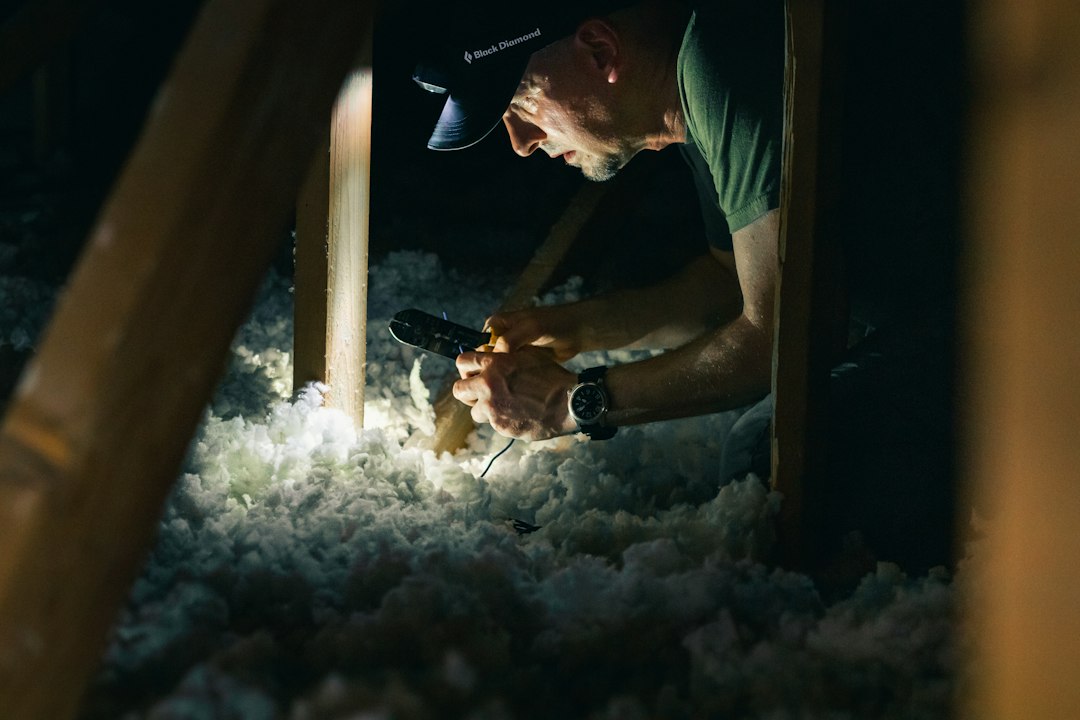
- Fill completely without gaps at edges, studs and services.
- Protect ductwork insulation on chilled-water and air-conditioning lines with a continuous vapour-sealed jacket, as any break will condense.
Frequently asked questions
Is fiberglass insulation safe?
Insulation glass wool was reclassified by IARC in 2001 as not classifiable as to carcinogenicity in humans. It can irritate skin, eyes and airways during handling, so wear protective clothing and a mask when installing, and keep it enclosed in occupied spaces.
Is glass wool the same as fibreglass?
Yes. Glass wool, fibreglass and fiberglass insulation all refer to insulation made from fine spun glass fibres. Fibreglass is also used for glass-reinforced plastic, which is a different material.
Does fiberglass insulation work in hot climates?
Yes. It slows heat entering through roofs and walls, which reduces cooling loads. In humid climates, it must be kept dry and installed with vapour control placed correctly, usually towards the hot, humid outer side.
Is glass wool fireproof?
Unfaced glass wool is typically non-combustible, but facings may lower its classification, and glass wool melts at a lower temperature than stone wool. Check the declared fire class of the specific product.
What is the difference between glass wool and rockwool?
Both are mineral wools. Glass wool is lighter and more compressible, while rock wool is denser, tolerates higher temperatures and is often preferred in fire-resistant assemblies and for acoustic mass.
Related reading
- Aluminium Honeycomb Panel: Structure, Fire and Uses
- Laminated Glass Explained: Interlayers, Safety and Uses
- Sandwich Panel Guide: Cores, Fire Rules and Detailing
- Fibre Cement Board Explained: Uses, Limits and Fixing
Insulating a metal roof or air-conditioned space and worried about condensation in the build-up? Talk to our consultancy or get in touch.