
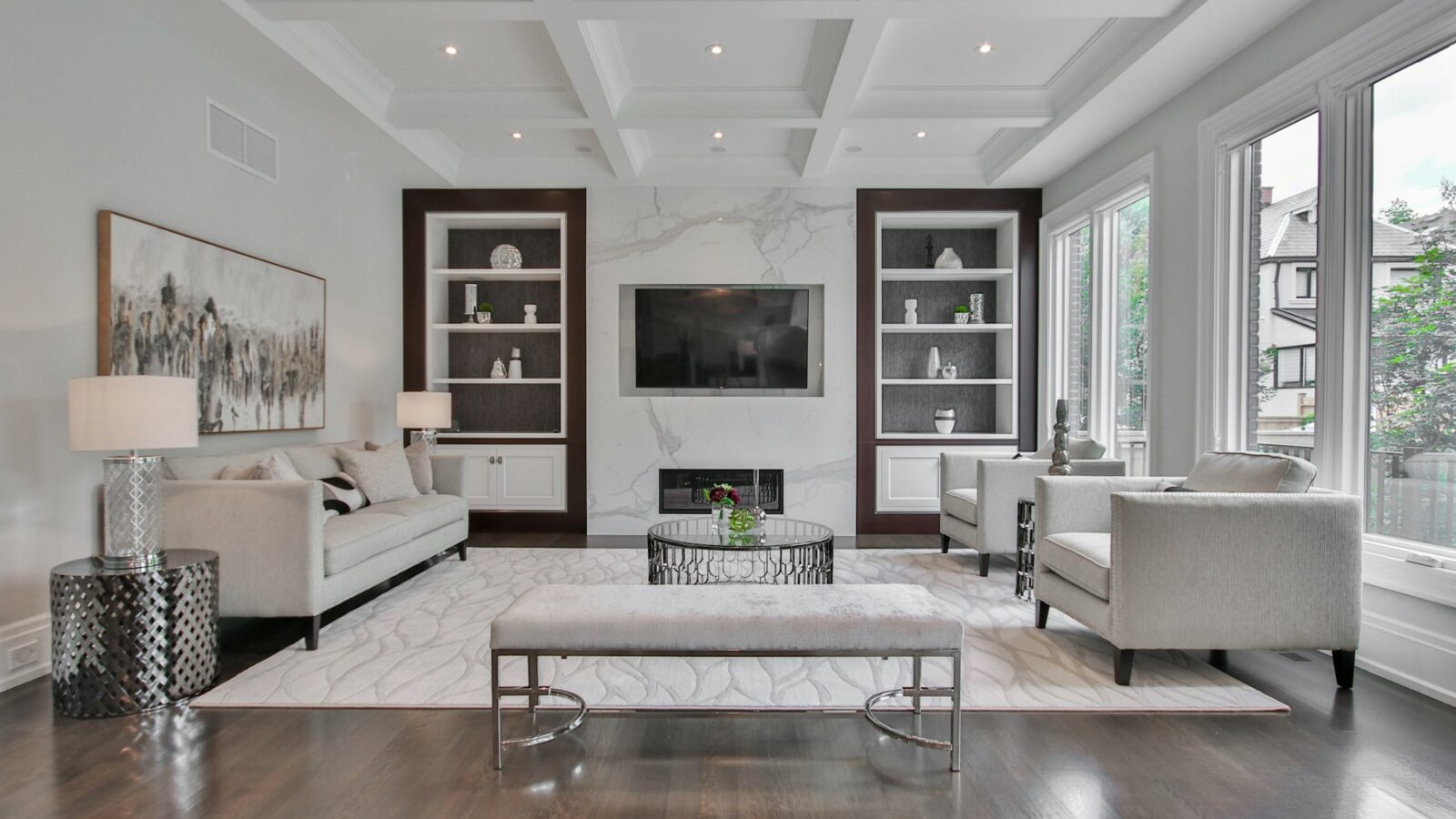
Look up in almost any renovated Singapore home and you will see one: a false ceiling. It is one of the most common renovation features here, and it does far more than look neat. This guide explains what false ceilings are, why they are so popular, the types and costs, and what to weigh before adding one.
General guidance only — confirm any HDB requirements before works.
What is a false ceiling?
A false ceiling — also called a dropped or suspended ceiling — is a second ceiling built a little below the original structural ceiling, usually in plasterboard on a light frame. It creates a hidden gap between the two in which wiring, pipes and air-conditioning trunking can run, and a clean surface below for lighting and a tidy finish. It is non-structural, which is why it can be added and shaped so freely.
Why false ceilings are so popular
- Hiding services — concealing air-conditioning trunking, wiring and pipes for a clean look.
- Lighting — housing recessed downlights and concealed cove lighting.
- A finished, modern look — a crisp, even ceiling line with defined features.
- Defining zones — a dropped section can visually mark out a dining or living area.
- Some acoustic and thermal benefit — the gap can help a little with both.
Hiding the air-conditioning
In Singapore, one of the biggest reasons for a false ceiling is the air-conditioning. The trunking that carries refrigerant pipes and condensate from the indoor units to the outdoor unit is bulky and unattractive on its own. A false ceiling, or a slimmer bulkhead version, hides all of it, leaving only the clean ceiling and the air-con unit visible. For most renovated homes here, concealing the aircon is reason enough on its own.
Types of false ceiling
- Full false ceiling — covers the whole ceiling, lowering it evenly.
- Partial false ceiling or bulkhead — a dropped section only where it is needed, such as along a wall to hide aircon trunking, keeping the rest at full height.
- Cove (L-box) ceiling — a recessed perimeter detail that conceals strip lighting to wash the ceiling with a soft glow.
Cove and concealed lighting
A favourite reason for a false ceiling is the lighting it enables. Recessed downlights sit flush in the surface, and a cove or L-box detail hides LED strips that bounce a soft, indirect glow off the ceiling — warm, ambient light that flatters a room. This concealed lighting is one of the most popular features in Singapore interiors, and it is only possible with the gap a false ceiling provides.
The trade-off: ceiling height
The main downside is height. A false ceiling lowers the ceiling, and in flats where the original height is already modest, dropping it everywhere can make rooms feel lower. This is why partial false ceilings and bulkheads — dropped only where services need hiding, with the rest left high — are so common locally. It is worth balancing the clean look against the headroom you are giving up.
What false ceilings cost
Cost depends on the area covered, whether it is a full ceiling or a partial bulkhead, and the complexity of the lighting and detailing. A simple bulkhead to hide aircon is modest; a full false ceiling with cove lighting throughout costs more. As part of a renovation, it is usually a meaningful but not dominant line item — see our guide to renovation costs for how it fits the bigger picture.
Is a false ceiling worth it?
For most renovated homes, yes — the combination of hidden aircon and services, recessed and cove lighting, and a crisp finished look is hard to achieve any other way. The question is usually how much to drop and where, balancing the clean result against headroom and budget. A partial approach often gets the best of both: tidy where it counts, height where it matters.
Frequently asked questions
What is the purpose of a false ceiling?
To hide air-conditioning trunking, wiring and pipes, to house recessed and concealed cove lighting, and to give a clean, finished, modern ceiling. It can also help define zones and offer minor acoustic and thermal benefits.
Does a false ceiling reduce height too much?
It does lower the ceiling, which matters in flats with modest height. Many homeowners use a partial false ceiling or bulkhead — dropped only where services need hiding — to keep most of the room at full height.
False ceiling, bulkhead or exposed?
There are really three approaches to a ceiling today. A full false ceiling gives the cleanest, most uniform finish but lowers the whole room. A bulkhead drops only where services need hiding, keeping most of the height. And the exposed or industrial look leaves the structure and services on show deliberately, embracing rather than hiding them. The right choice depends on your ceiling height, your style and how much you need to conceal — and many homes mix a bulkhead with full-height living areas.
Access and maintenance
A false ceiling hides services, which is handy until you need to reach them. Good design includes access panels where they matter — near aircon components, junction boxes or anything that may need servicing — so the ceiling does not have to be opened up later. It is an easy detail to overlook during a renovation and an expensive one to fix afterwards, so it is worth raising with your contractor while the ceiling is being planned.
Planning your false ceiling
Plan the ceiling alongside the lighting and air-conditioning, because they are intertwined — the false ceiling exists largely to serve them. Decide early where you want downlights and cove lighting, where the aircon trunking runs, and how low you are willing to drop the ceiling in each area. Getting these coordinated up front avoids a ceiling that fights the lighting plan or eats more headroom than necessary. Like much of renovation, it rewards thinking it through before the work starts.
A bulkhead can be the smart compromise
If you love the clean, finished look but worry about losing height, the bulkhead is often the answer. By dropping the ceiling only along the wall where the aircon trunking runs, and perhaps over the kitchen or a feature zone, you hide the services and gain the lighting opportunities while keeping the main living space at full height. It is the approach many Singapore homes settle on, getting most of the benefit of a false ceiling without the heavy, low feeling a full drop can create.
Related reading
- Interior Design: A Complete Guide
- Drywall Partitions
- Renovation Cost in Singapore
- Vinyl Flooring in Singapore
More in Interior Design. See also renovation costs and vinyl flooring.


