
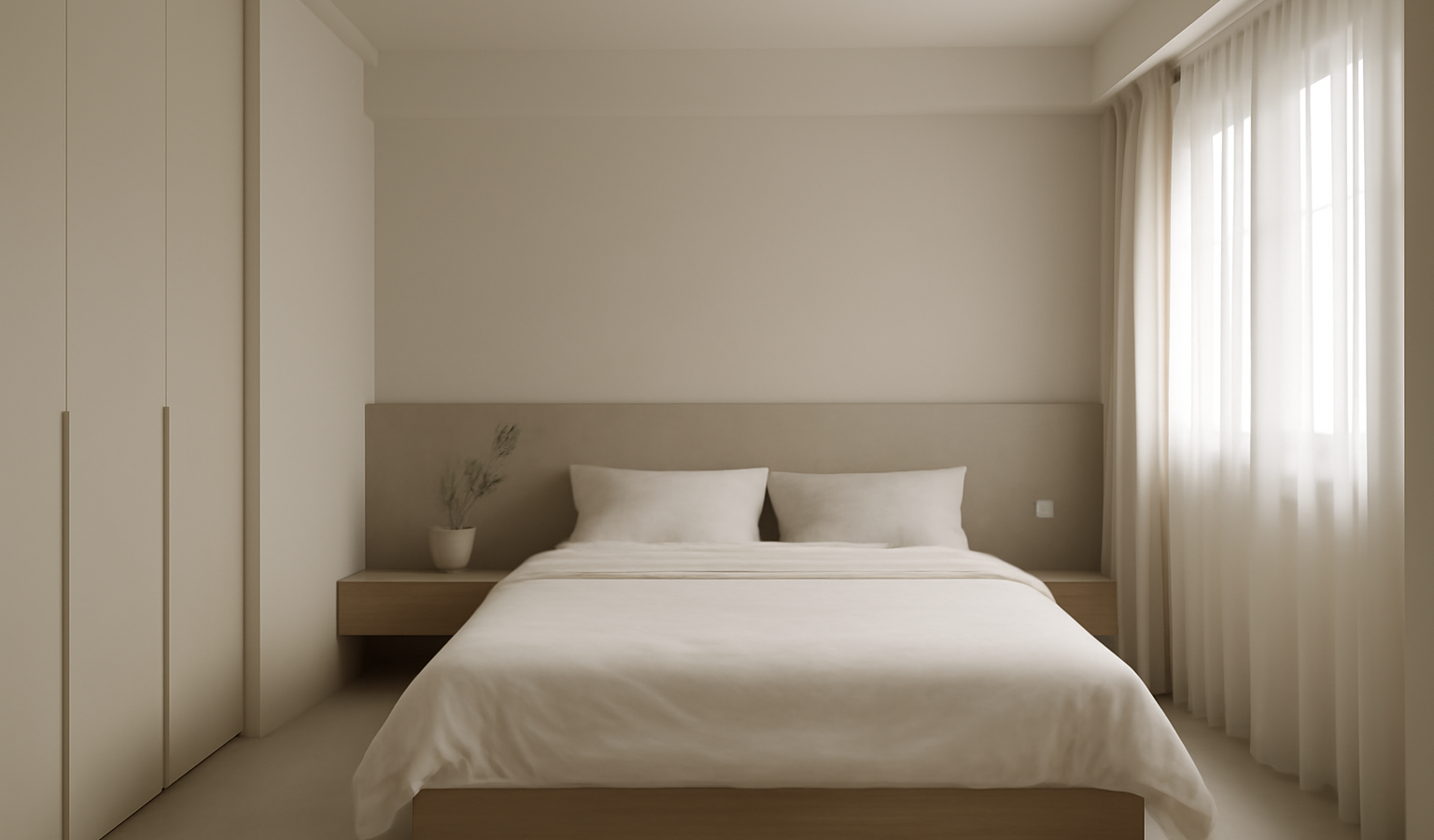
A bedroom renovation is often where homeowners in Singapore find the most personal satisfaction, since the bedroom is the one space designed purely around comfort and rest. Whether you are working with a compact HDB room or a larger master suite, thoughtful planning turns a plain box into a calm, functional retreat.
This guide gathers practical bedroom renovation ideas suited to local flats, from storage solutions and lighting to materials and layout. It also covers the line between cosmetic work and changes that affect the structure of your home, so you renovate with confidence.
Planning the bedroom around how you live
The best bedrooms are designed around real habits rather than magazine images. Before choosing finishes, think about how you use the room. Do you read in bed, work from home occasionally, or need space for a growing child’s belongings? These answers shape everything that follows.
In HDB flats, bedroom sizes vary considerably between 3-room, 4-room and 5-room layouts, and between BTO and resale units. A common-room renovation has different priorities from a master bedroom, which usually includes an attached bathroom and more wardrobe space. Mapping out furniture positions on a floor plan early prevents costly rethinks later.
Smart storage for small spaces
Storage is the constant challenge in Singapore bedrooms. Floor area is limited, so the most effective renovations build storage upward and into otherwise wasted corners.
Storage ideas that work in HDB rooms
- Full-height wardrobes: Carpentry that reaches the ceiling captures storage most off-the-shelf units waste.
- Platform or storage beds: Useful for seasonal items, though they suit those who do not mind lifting the mattress base.
- Built-in headboards with shelving: A tidy way to keep books and essentials within reach.
- Overhead cabinets above the bed: Best kept shallow and well-secured for a balanced look.
Sliding wardrobe doors are popular because they save the swing space that hinged doors demand, which can be the difference between a room that feels open and one that feels cramped.
It also helps to think about what goes inside the wardrobe before fixing its dimensions. The right mix of hanging space, shelves and drawers depends on your wardrobe and habits, and getting this proportion right makes a built-in far more useful than a generic configuration. Where ceiling height allows, a top tier reached with a small step stool turns awkward upper space into valuable storage for luggage and seasonal bedding.
Lighting and atmosphere
Lighting does more to set the mood of a bedroom than almost any other element. A single bright ceiling light rarely flatters a restful space, so layering is key.
Combine ambient lighting for general use, task lighting for reading, and softer accent lighting for evenings. Warm colour temperatures around 2700 to 3000 Kelvin feel more relaxing than cool white. Dimmable fittings and bedside controls add flexibility, and concealed cove lighting can give a room a gentle, hotel-like calm. These choices often sit within a wider interior design scheme that ties the whole home together.
Materials, colour and finishes
Bedrooms benefit from materials that feel warm and quiet. Timber-look laminate or vinyl flooring is widely chosen for its comfort underfoot and easy upkeep in Singapore’s climate, while tiles remain a durable, cooler alternative.
For walls, soft neutral tones make small rooms feel larger and more restful, with a single feature wall adding character without overwhelming the space. Where carpentry is involved, moisture-resistant boards and quality hardware help the work last. Fabrics, curtains and rugs then soften the room and improve acoustics, an underrated benefit in flats where sound carries.
Budgeting your bedroom renovation
Bedroom renovation costs vary with the amount of carpentry, the quality of finishes and whether you are reconfiguring the space. Custom wardrobes and built-in features are usually the largest single expense, followed by flooring and electrical work.
A sensible approach is to prioritise the elements you touch every day, such as the bed, wardrobe and lighting, then scale ornamental details to whatever remains. For a fuller picture of how room works fit into total spending, our guide to renovation costs in Singapore outlines the main factors. Keep a contingency aside, particularly in older resale flats where hidden issues are more common.
Air-conditioning, comfort and the tropical climate
Comfort in a Singapore bedroom owes a great deal to managing heat and humidity. The position of the air-conditioner matters: an indoor unit blowing directly across the bed often disturbs sleep, so aim it along the length of the room rather than straight at the headboard. Concealing trunking within a false ceiling or bulkhead keeps the look clean, but plan this alongside the lighting so the two work together.
West-facing bedrooms take the brunt of the afternoon sun and stay warm into the evening. Block-out curtains, reflective window film and even the choice of lighter finishes all help keep the room cooler. Good cross-ventilation is worth preserving where possible, since natural airflow reduces reliance on air-conditioning and keeps the space fresh.
Humidity also influences material choices. Solid timber can warp over time, which is why moisture-resistant boards and engineered finishes tend to perform better in built-in carpentry. A bedroom designed with the climate in mind simply feels more restful and ages more gracefully.
Creating a restful, personal atmosphere
Beyond the technical decisions, a bedroom should feel like a retreat. A consistent, restrained palette does more for calm than a busy mix of colours and patterns. Layering soft textures through bedding, curtains and a rug warms the room and improves how sound behaves within it.
Personal touches matter, but restraint serves a bedroom well. A single piece of art, a considered bedside arrangement and well-placed lighting create character without clutter. The goal is a space that quietens the mind at the end of the day, and that comes from coherence rather than from filling every surface.
When bedroom changes affect structure
Many bedroom renovations are purely cosmetic, but some homeowners want to combine two rooms, widen a doorway, or open a wall to enlarge a master suite. This is where caution is essential.
Load-bearing and structural walls cannot be hacked under any circumstances. Removing or altering such a wall compromises the safety of the entire building and breaches HDB and BCA rules. Any structural alteration must be assessed and endorsed by a Professional Engineer (PE) and submitted for HDB and BCA approval before work begins. If your plans involve removing a wall between bedrooms, talk to our consultancy first so the wall can be properly evaluated.
Frequently asked questions
How much does a bedroom renovation cost in Singapore?
Costs depend on the extent of carpentry, finishes and any reconfiguration, with custom wardrobes and built-in features typically forming the largest portion of the budget.
Can I combine two bedrooms into one?
Only if the dividing wall is non-structural; load-bearing walls cannot be hacked, and any structural change requires a Professional Engineer to obtain HDB and BCA approval.
What flooring is best for a bedroom in Singapore?
Timber-look vinyl and laminate are popular for their warmth and easy maintenance, while tiles offer a cooler, highly durable alternative suited to the local climate.
How can I make a small HDB bedroom feel larger?
Use full-height storage, sliding wardrobe doors, light neutral colours and layered lighting to free up floor space and create a sense of openness.
Do I need a licensed contractor for bedroom renovation?
Yes, HDB renovations must be done by a contractor listed in HDB’s Directory of Renovation Contractors, who will also apply for any required renovation permits.
Related reading
- Living Room Renovation in Singapore
- Kitchen Renovation in Singapore: A Complete Guide
- Tile Overlay vs Hacking: Which Should You Choose?
- Epoxy Flooring in Singapore: A Practical Guide
Planning works that touch structure? Talk to our consultancy or get in touch.


