
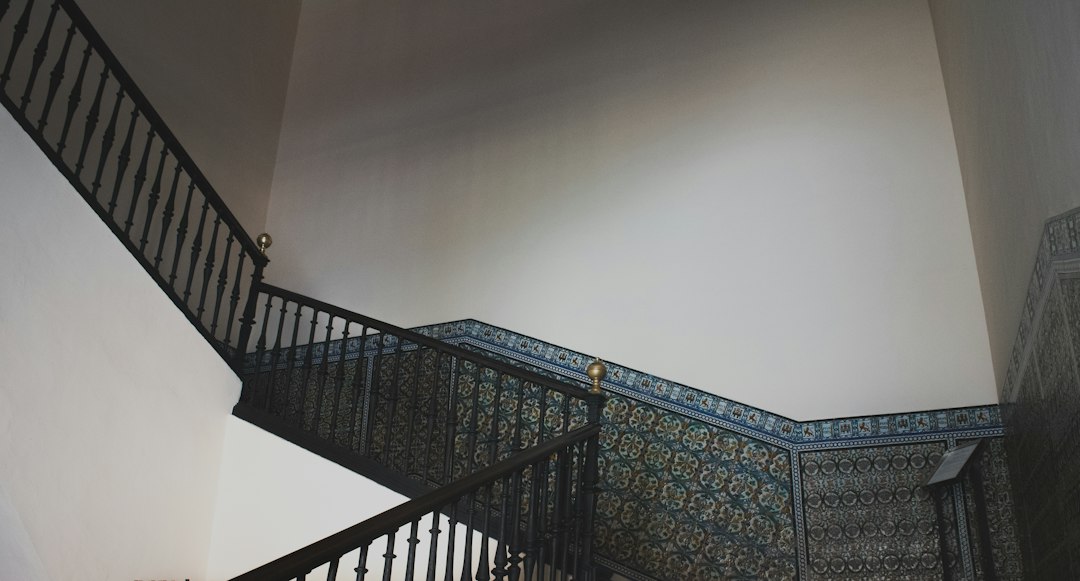
A staircase is the most demanding floor in a building. Every tread is a small edge that people step onto with their full weight, often while carrying something, in poor light or in a hurry. Good stair tiles design therefore has to balance appearance with grip, edge definition, durability and the strict geometry that keeps a flight safe.
This guide covers the choice of tile, nosing details, slip resistance, the dimensional rules that tiling can upset, and the finishing touches that make a tiled stair look intentional. It refers to Singapore’s Approved Document and the Code on Accessibility in the Built Environment 2025 where they apply, and to good practice elsewhere.
Why stairs need their own tiling approach
On a flat floor, a slightly slippery tile or a dark grout line is a matter of taste. On a stair, the same choices affect safety. The leading edge of each tread is where a foot lands and where most slips and trips start, so the edge has to be grippy, robust and clearly visible against the tread below.
Tiles also add thickness. A tile and its adhesive bed raise each tread, and if the top or bottom step is finished differently from the others the risers become uneven. Even small differences in riser height are noticeable to someone walking at speed, which is why building regulations insist on uniformity within a flight. Tiling a stair is therefore partly a setting-out exercise that should be planned with the overall staircase design, not left to the end.
Stair tiles design for treads and risers
Treads and risers have different jobs, and they do not have to use the same tile.
Treads
Treads take wear, impact and the risk of slipping. Through-body porcelain or homogeneous tiles are a common choice because the colour runs through the body, so chips at the edge are less visible. Our homogeneous tiles guide explains their properties. Natural stone also works well when a honed, flamed or textured finish is used; polished stone and high-gloss tiles are generally a poor choice for treads.
Risers
Risers are not walked on, so they can carry a decorative or patterned tile, a contrasting colour or a smoother finish. A different riser colour also helps people distinguish each step when going up.
Size and format
The neatest stairs use a tile, or a purpose-made step tile, sized to the full tread depth so there is no cut strip at the back or front. Where that is not possible, place the cut at the back against the riser, never at the nosing. Large-format slabs can cover a tread in one piece, but they need very flat substrates and full adhesive coverage to avoid hollow spots that crack under heel loads.
- Avoid small mosaics at the leading edge, as grout lines there wear and break down.
- Choose a rectified tile where tight, consistent joints are wanted.
- Specify step or bullnose profiles from the same range so edge and field match.
Nosings: the most important detail
The nosing is the front edge of the tread. It takes the most wear and determines how visible each step is. There are three broad approaches:
- Step tiles with an integral nosing, often with a grooved or textured strip along the edge. These give a single-piece look but depend on the tile range offering them.
- Metal or composite nosing profiles set into the adhesive bed under the tile. They protect the edge and can carry an inserted slip-resistant strip.
- Mitred or bullnosed tile edges, which look refined but leave a vulnerable edge and are best kept to lightly used domestic stairs.
For public and common staircases in Singapore, the Code on Accessibility in the Built Environment 2025 requires all steps to have slip-resistant nosing strips between 50 mm and 75 mm wide, in a colour that contrasts with the steps so the edge of each step is clearly visible. It also requires the stair nosing not to project beyond the face of the riser, and the treads and walls to have contrasting colours. These staircase clauses do not apply within residential units, but they are sensible guidance for any stair, particularly in homes with older occupants.
Slip resistance and finishes
Singapore’s Code on Accessibility defines “slip-resistant” by reference to SS 485, the Singapore Standard for slip resistance classification of pedestrian surface materials. The current edition, SS 485:2022, adopts the Australian standard AS 4586:2013. It classifies surfaces using wet pendulum testing, which gives ratings in a P scale, and an oil-wet inclining platform test, which gives ratings in an R scale.
When comparing tiles, ask the supplier for test results to SS 485 or an equivalent method, and note whether they relate to wet or dry conditions. A tile that performs well dry can be treacherous wet, which matters for external steps, stairs near pools and stairs from wet kitchens or bathrooms. For existing slippery stairs, see the sibling article on anti-slip floor treatment, which explains how treatments and inserts work and their limits.
Texture should be concentrated where it is needed. A fully textured tread is hard to clean; a smooth tread with a well-defined, grippy nosing strip is often the better compromise indoors.
Keeping the geometry right when tiling
Singapore’s Approved Document, issued under the Building Control Regulations, sets the dimensional rules for staircases. In the current version, risers must not exceed 175 mm, minimum tread widths depend on building type, and risers and treads within each flight must be uniform, with a tolerance of 5 mm between consecutive steps. Some of these requirements do not apply to houses built for the owner’s own use, but they remain good practice.
Tiling affects these dimensions in predictable ways:
- Top and bottom risers. If the landing or floor finish is a different thickness from the tread finish, the first and last risers change height. Plan finished levels before the structure is cast, or adjust screeds so every finished riser matches.
- Tread depth. Riser tiles reduce the usable tread depth slightly. On a tight stair, check the finished, not structural, dimension.
- Retiling over old tiles. Overlaying adds thickness to every tread except the top landing, often creating a short top riser. Measure before choosing an overlay approach.
Contrast, lighting and visual design
In stair tiles design, the flight should read clearly from above and below. A light tread with a dark nosing, or a contrasting riser colour, gives that definition. Strong patterns on treads, by contrast, can disguise the edges and make the flight harder to judge, especially for people with low vision.
Lighting completes the design. Step lights in the wall or a recessed strip under each nosing illuminate the tread without glare, and they highlight texture. Avoid placing downlights so that each tread is in the shadow of the one above. The railing, balustrade and wall finish should be considered with the tiles; our sibling guide to staircase railing covers handrail heights and infill.
Frequently asked questions
What is the best tile for stairs?
Through-body porcelain or homogeneous tiles, or honed and textured natural stone, are generally the most practical for treads because they resist wear and hide chips. Pair them with a slip-resistant, contrasting nosing and avoid high-gloss or polished finishes on the walking surface.
Do stair tiles need anti-slip nosing?
For staircases covered by the Code on Accessibility in the Built Environment 2025, such as common and public stairs, slip-resistant contrasting nosing strips between 50 mm and 75 mm wide are required. Inside homes it is not mandated by that Code, but it is strongly recommended.
Can I tile over existing stair tiles?
Often yes, if the existing tiles are sound and well bonded, but every tread gains thickness while the top landing may not. This can leave an uneven top or bottom riser, so measure the finished levels first and adjust the landing finish if needed.
Which slip resistance standard applies in Singapore?
The Code on Accessibility refers to SS 485, the Singapore Standard for slip resistance classification of pedestrian surface materials. The current edition, SS 485:2022, adopts AS 4586:2013 and uses wet pendulum and inclining platform tests.
Should stair treads and risers use the same tile?
Not necessarily. Treads need a durable, slip-resistant tile, while risers can take a decorative or contrasting tile. A contrasting riser often improves visibility of each step as well as appearance.
Related reading
- Bathroom Wall Panels: Types, Installation and Pitfalls
- Room Divider Ideas for Singapore Homes and Offices
- Interior Designing as a Career in Singapore: A Guide
- Gym Interior Design: Layout, Flooring, Acoustics and Loads
Reworking a staircase, adding a new flight or changing finished levels and want the structure and geometry checked? Talk to our consultancy or get in touch.


