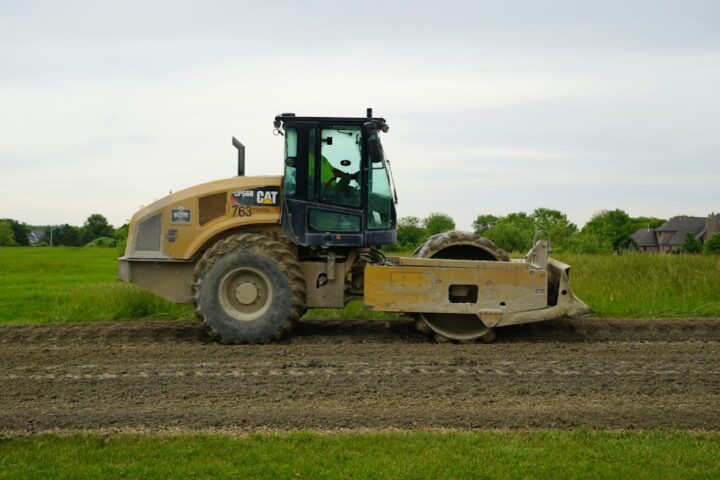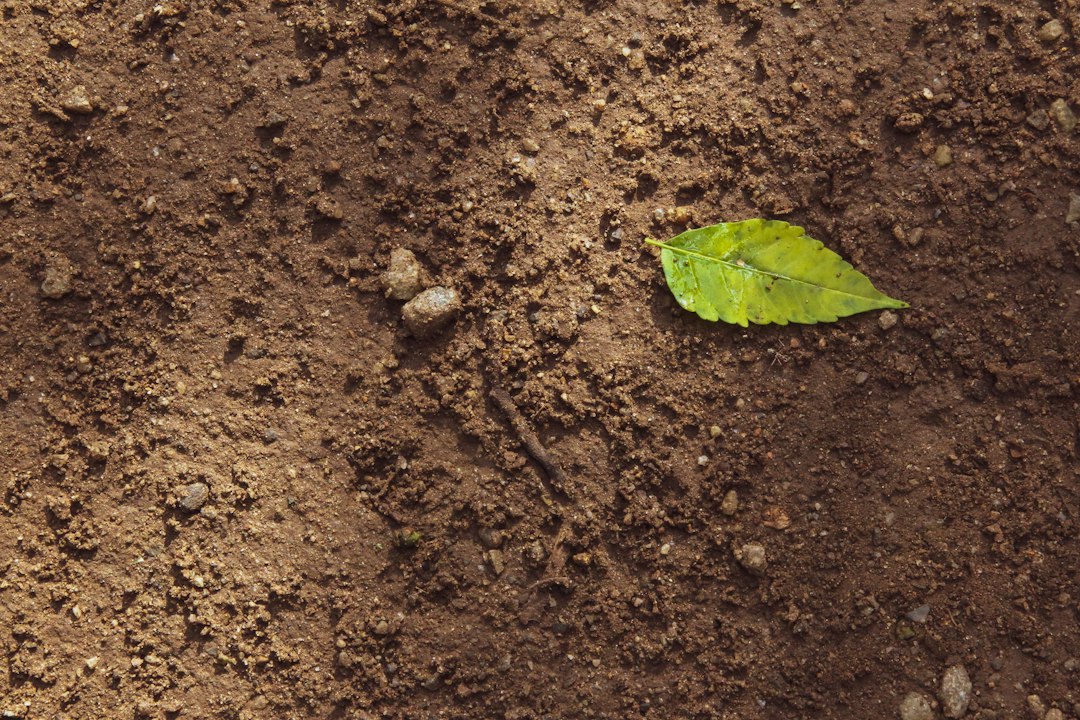
Much of what goes wrong under slabs, pavements and shallow footings starts with fill that was never properly compacted. Loose soil settles under load, softens when wet and leaves voids beneath concrete that crack it from below. Soil compaction is the process of densifying soil by mechanical means, squeezing out air so that the particles pack more closely, and it is one of the most routine yet most frequently mishandled operations on a building site.
This article looks at compaction from the engineer’s side: what it achieves, how soil type governs the choice of method and equipment, why moisture content matters so much, and how the result is specified and tested. Deep ground-improvement techniques are touched on where they overlap, but the focus is on fill and near-surface soils.
What soil compaction does and why it matters
Soil consists of solid particles with voids filled by water and air. Compaction reduces the volume of air in those voids by applying load, vibration or impact. It is different from consolidation, which is the slow squeezing out of water from saturated clays under sustained load. Compaction is quick and done deliberately during construction; consolidation happens over months or years beneath a completed structure.
Properly compacted soil has several advantages:
- Higher strength — closer particle contact increases shear resistance and therefore the load the ground can carry, discussed further in our article on soil bearing capacity.
- Lower settlement — much of the compressibility has been removed before the structure is built.
- Lower permeability — useful for embankments, clay liners and the subgrade below pavements.
- Reduced sensitivity to water — dense soil is less prone to softening or collapse when it gets wet.
Inadequate compaction is a common cause of slab-on-ground cracking, sunken paving next to buildings, and differential movement between a piled structure and the ground around it, issues covered in our guide to foundation settlement.
Soil type drives the method
The single most important factor in choosing a compaction method is the type of soil. Coarse and fine soils respond to energy in fundamentally different ways.
Granular soils: sands and gravels
Clean sands and gravels have little cohesion. Their particles rearrange most effectively under vibration, which momentarily reduces friction between grains and lets them settle into a denser packing. Vibrating plates, vibratory rollers and vibrating tampers are the natural choice. Granular soils are also relatively tolerant of moisture variation and drain quickly, so they can often be worked soon after rain.
Cohesive soils: silts and clays
Clays and silts have cohesion that resists the rearrangement of particles. Vibration alone is far less effective. Instead, they respond to kneading and pressure, applied by sheepsfoot or padfoot rollers, or by rammers that deliver repeated impact. Their behaviour is very sensitive to moisture content: too dry and clods do not break down; too wet and the soil becomes plastic, ruts and cannot be densified.
Mixed soils
Most real fills are mixtures. The engineer judges which behaviour dominates and often specifies a vibrating padfoot roller or a combination of plant. A trial area, compacted with the proposed plant and number of passes and then tested, is the most reliable way to settle the method for a large earthworks package.
Choosing compaction equipment
Equipment selection balances soil type, layer thickness, space and the sensitivity of nearby structures. The selection logic runs broadly as follows:
- Vibrating plate compactors — small areas, trench backfill and granular bedding under slabs.
- Rammers (trench tampers) — confined spaces and cohesive backfill around pipes, pits and foundations.
- Smooth-drum vibratory rollers — larger areas of granular fill and sub-base.
- Padfoot or sheepsfoot rollers — cohesive fill in bulk earthworks.
- Pneumatic-tyred rollers — finishing surfaces and kneading mixed soils.
Vibration travels, and near existing buildings, retaining walls or buried services it can cause damage or nuisance. Heavy vibratory compaction close to a newly built basement wall can also raise lateral pressure on that wall. In these locations, static rolling, lighter plant or thinner layers may be specified.
Layers and moisture: the two variables that matter most
Layer thickness
Compaction energy diminishes with depth. A plate compactor that achieves good density in a thin layer will leave the bottom of a thick layer loose, however many passes it makes. Specifications therefore limit the loose layer thickness for each type of plant, and the most common site failure is placing fill in layers far thicker than the plant can handle, with the surface looking firm while the lower part remains poorly compacted.
Moisture content
For any soil and compaction effort, there is an optimum moisture content at which the greatest dry density is achieved. Below it, friction between particles resists packing; above it, water occupies space that particles could otherwise fill. This relationship is established in the laboratory by the Proctor compaction test, which gives the maximum dry density and optimum moisture content against which site results are judged. On site, fill may need to be wetted or dried, by spreading and aerating, to bring it within the specified moisture range before compaction.
In Singapore’s wet climate, keeping cohesive fill near its optimum is often the hardest part of the job. Protecting compacted layers from rain, sealing the surface at the end of each day and grading for runoff all help prevent softening between layers.
Specifying and testing compaction
Compaction is usually specified in one of two ways. An end-product specification sets a required result, typically a minimum percentage of the laboratory maximum dry density, often called relative compaction, together with a moisture range. A method specification sets the plant, layer thickness and number of passes, relying on trials to show the method works. Many projects combine both.
Field density is checked on each layer or at a set frequency by methods such as:
- Sand replacement test — a hole is excavated, the soil weighed, and the hole’s volume measured by filling it with calibrated sand.
- Nuclear density gauge — a rapid, non-destructive measurement of density and moisture, used under licence.
- Core cutter — suitable for fine-grained soils free of stones.
- Plate load and stiffness tests — measure the response of the compacted layer to load, which can be closer to what the designer actually needs.
The required percentage depends on what the fill supports; fill beneath structures and pavements is usually held to a higher standard than landscaped areas. The designer sets these values with the site investigation in hand, which is why compaction requirements should never be copied from an unrelated project.
When surface compaction is not enough
Conventional compaction treats soil placed in layers or the top metre or so of existing ground. Where loose or soft soils extend much deeper, or where the site is underlain by compressible clay, surface rolling cannot reach the problem. Deeper techniques, such as vibro-compaction, dynamic compaction, preloading with drains, or structural solutions such as piling, are then considered. Our overview of ground improvement compares these options. The choice rests on the ground investigation, not on the equipment available on site.
Frequently asked questions
What is the difference between soil compaction and consolidation?
Compaction is the rapid densification of soil by mechanical effort that expels air from the voids, done deliberately during construction. Consolidation is the gradual reduction in volume of saturated fine-grained soils as water drains out under sustained load, and can continue for years after a building is completed.
How thick should each layer of fill be?
It depends on the plant and the soil. Light plate compactors and rammers need thin layers, while heavy rollers can handle thicker ones; the specification should state the maximum loose layer thickness for the chosen equipment, ideally confirmed by a site trial.
Why does moisture content matter in compaction?
Every soil has an optimum moisture content for a given compaction effort. Too dry and particles resist packing; too wet and water fills the voids and the soil turns plastic. Keeping the fill near optimum is essential to reach the specified density.
How is compaction checked on site?
Field density tests such as sand replacement, core cutter or nuclear gauge readings are compared with the laboratory maximum dry density to give relative compaction. Plate load or stiffness tests may also be used to confirm the layer’s response to load.
Related reading
- FIDIC Contracts: The Rainbow Suite and Singapore Forms
- Jet Grouting: Methods, Design Selection and Testing
- Workplace Safety and Health Management in Construction…
- Solar Tubes: How Tubular Daylighting Works in the Tropics
Building a slab or extension on new fill, or unsure whether existing ground is adequate? Talk to our consultancy or get in touch for an engineer’s assessment.