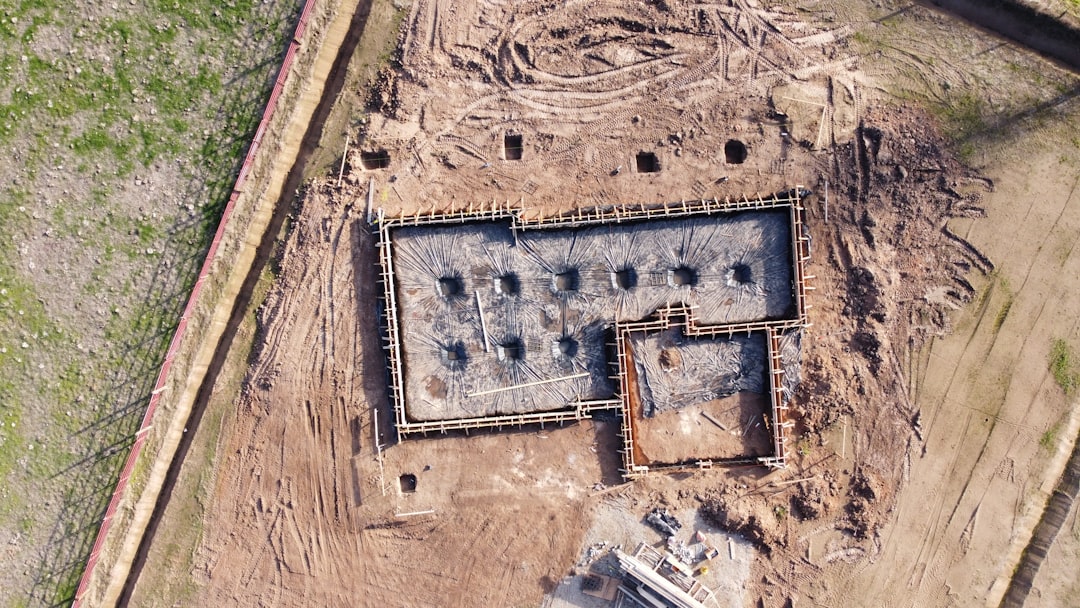
Every building moves downward a little once it is built. The weight of the structure presses on the soil, the soil compresses, and the foundation sinks fractionally into place. This downward movement is foundation settlement, and a certain amount of it is normal and expected. The question that matters is not whether a building settles, but how much, how evenly, and over what period of time.
Settlement turns from a routine phenomenon into a structural concern when it is large, uneven, or continues for years after construction. This article explains what causes foundation settlement, how the ground responds to load, the difference between harmless and harmful settlement, and the signs that warrant a closer look from a qualified engineer.
What foundation settlement actually is
When a foundation transfers the weight of a building into the ground, it imposes a stress on the soil beneath it. Soil is not a solid block; it is a mixture of mineral particles, water and air. Under load, the particles rearrange, the voids between them close up, and water is gradually squeezed out of the pore spaces. The net result is that the soil layer becomes thinner, and the foundation resting on it moves down. That downward displacement is settlement.
Soil behaves quite differently from concrete or steel. It does not respond instantly or in a perfectly predictable way, and its stiffness varies enormously from one site to another. A dense, well-graded sand may compress almost immediately and then stop. A soft clay may keep compressing for years. Understanding the ground is therefore central to controlling settlement, which is why a site investigation is one of the first steps a structural engineer relies on when designing foundations.
The main types of settlement
Engineers usually separate settlement into components, because each behaves on a different timescale and is driven by a different mechanism.
- Immediate settlement happens almost as soon as the load is applied, as the soil deforms elastically. It dominates in granular soils such as sand and gravel.
- Consolidation settlement occurs in saturated fine-grained soils, particularly clays. As load is applied, water is slowly expelled from the pores and the soil compresses over months or years. This is the slow, long-term component that often causes the most trouble.
- Secondary or creep settlement continues even after the excess water has drained, as the soil skeleton gradually adjusts. It is usually small but can be significant in soft organic soils.
The total settlement of a building is the sum of these parts. In a clean sandy site the movement may be over quickly. In soft ground the consolidation component can keep developing long after the building is occupied, which is why timescale matters as much as magnitude.
Uniform settlement versus differential settlement
The single most important distinction is between uniform and differential settlement. If an entire building settles evenly — every column and wall drops by the same amount — surprisingly little harm is done. The structure simply sits slightly lower than designed. Services, drainage gradients and connections to neighbouring buildings may need attention, but the frame itself is largely unstressed.
Differential settlement is the dangerous case. Here, different parts of the building settle by different amounts, so the structure is forced to distort. One column may drop more than its neighbour, tilting beams and racking the frame. This distortion induces stresses the structure was never designed to carry, and it is what produces cracked walls, jammed doors, sloping floors and, in severe cases, structural damage. Most foundation problems that engineers are called to investigate are problems of differential, not uniform, settlement.
Why settlement happens
Settlement is driven by a combination of the load and the ground. The common causes include:
- Soft or compressible soils — clays, silts, peat and made ground compress far more than dense sands or rock.
- Increased loading — adding storeys, heavy finishes or new plant raises the stress on the foundation, a frequent issue in addition and alteration work.
- Changes in groundwater — lowering the water table, for example through nearby dewatering or excavation, can cause soils to consolidate.
- Adjacent construction — deep excavation, piling or tunnelling next to an existing building can disturb the ground and trigger movement.
- Variable ground conditions — where firm and soft soils occur under the same footprint, different parts of the building settle at different rates.
In Singapore this last point is acute. Large parts of the island, especially reclaimed and coastal areas, are underlain by soft marine clay that can be many metres thick. Marine clay is highly compressible and consolidates slowly, so settlement on such sites can be both large and prolonged. This is one of the main reasons deep foundations are so common locally — they bypass the soft layer and transfer load to firmer strata below.
How engineers control and limit settlement
Settlement cannot be eliminated, but it can be predicted and kept within tolerable limits. The work begins with a site investigation: boreholes, soil sampling and laboratory testing establish the soil profile, its strength and its compressibility. From this, the engineer estimates how much the proposed foundation will settle and whether that figure, and especially the differential between supports, is acceptable.
If predicted settlement is too high, several strategies are available. The foundation can be made wider to spread the load and reduce the stress on the soil. The load path can be taken down to a stronger layer using deep foundations such as piles. The ground itself can sometimes be improved by preloading, surcharging or other treatment before building. And the superstructure can be made stiffer, or deliberately articulated with movement joints, so it tolerates the movement that does occur. Choosing among these is a matter of judgement, balancing cost, programme and ground conditions, and it is exactly the kind of decision that benefits from early engineering input.
Recognising the signs of a settlement problem
Differential settlement usually announces itself through visible symptoms. Diagonal cracks in masonry, often running from the corners of windows and doors, are a classic indicator. Other signs include doors and windows that bind or no longer close, floors that slope or feel uneven, gaps opening where walls meet ceilings, and cracks that grow steadily wider over months.
Not every crack is structural — many are caused by thermal movement, shrinkage or normal early-life adjustment, and it takes experience to tell them apart. The pattern, width, location and whether the crack is still moving all matter, a subject covered in more detail in our guide to types of concrete cracks. If cracking is widening, accompanied by tilting or sloping floors, or follows nearby excavation, it should be assessed promptly. A structural engineer can monitor the movement, identify the cause and, where needed, recommend remedial measures such as underpinning. The findings are typically set out in a formal structural engineer’s report.
Frequently asked questions
Is all foundation settlement a problem?
No. A degree of settlement is normal and expected for every building, and uniform settlement where the whole structure drops evenly causes little harm. The concern is differential settlement, where different parts move by different amounts and distort the structure, which is what produces cracking and damage.
How long does settlement continue after construction?
It depends entirely on the soil. On sandy ground most settlement happens almost immediately and then stops. On soft clay, consolidation settlement can carry on for months or years as water is slowly squeezed out of the soil, so the timescale is governed by the ground rather than the building.
Why is settlement such a concern in Singapore?
Large areas of Singapore are underlain by soft marine clay, which is highly compressible and consolidates slowly. Buildings founded on or near this material can experience large, prolonged settlement, which is a major reason deep foundations that bypass the soft layer are so widely used locally.
Can foundation settlement be fixed once it has occurred?
In many cases, yes. Once the cause is understood, remedies range from strengthening or extending the existing foundation to underpinning, which transfers load to deeper, firmer ground. The right approach depends on the soil, the structure and the severity, and should be designed by a qualified engineer.
Do cracks always mean a settlement problem?
No. Many cracks come from thermal movement, drying shrinkage or normal early-life adjustment and are not structural. The pattern, width, location and whether the crack is still growing all help distinguish harmless cracking from settlement-related damage, which is why an informed assessment matters.
How much foundation settlement is acceptable?
Acceptable settlement depends on the structure and ground, but commonly quoted guidance limits total settlement to around 25 mm for isolated footings on sand and around 50 mm for rafts, with differential movement often limited to an angular distortion of about 1 in 500 for framed buildings. Sensitive structures and finishes may need tighter limits. The design limits for a particular building are set by its structural engineer.
What is underpinning?
Underpinning is the strengthening or deepening of an existing building’s foundations so that loads are carried to firmer or deeper ground. Traditional mass concrete underpinning is dug in short sequenced sections beneath the existing footing, while modern methods use mini piles, micropiles or jacked piles connected to the structure. It is used to arrest damaging settlement or prepare for added loads and needs engineering design and approval.
How is building settlement monitored?
Settlement is monitored by fixing survey markers to the building and ground and measuring their levels precisely at regular intervals, comparing readings against a baseline. Tilt meters, crack gauges and inclinometers add detail where needed. On construction sites near existing buildings, readings are checked against alert and work-suspension levels. For a homeowner, simply recording crack widths and dates over several months is a useful first step.
What is negative skin friction on piles?
Negative skin friction is a downward drag on a pile caused when the surrounding soil settles more than the pile itself, typically where soft clay consolidates under new fill or a lowered water table. Instead of supporting the pile, the soil adds load to it, increasing settlement and stress. It is a particular concern in Singapore’s reclaimed and marine clay areas, and engineers allow for it in pile design.
Related reading
- Diaphragm Action in Structures Explained
- Structural Bracing Systems Explained
- Moment Connections in Steel Explained
- Composite Steel-Concrete Construction Guide
Worried about cracking, sloping floors or movement in a building? Talk to our consultancy or get in touch.