
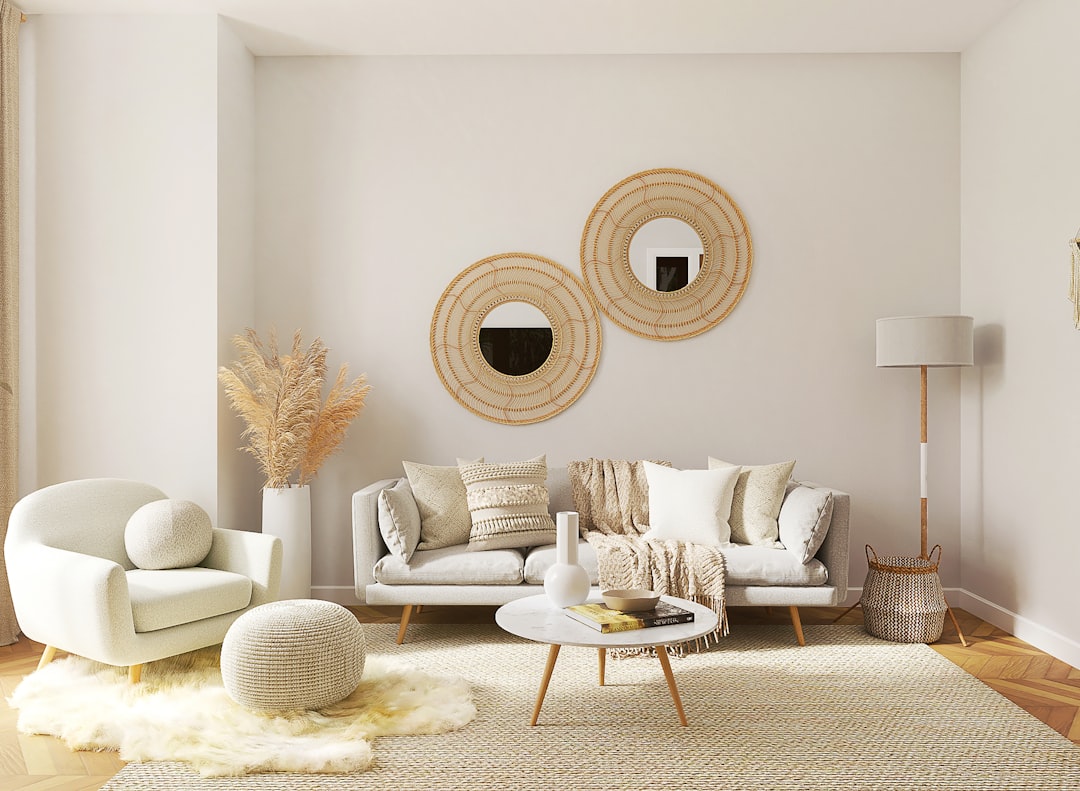
A compact lounge does not have to feel cramped. The best small living room ideas are not about clever gadgets but about discipline: choosing fewer, better-scaled pieces, keeping the floor visible, and letting light move freely through the space. Get those fundamentals right and a modest room can feel calm, open and far larger than its dimensions suggest.
This guide covers the decisions that matter most in a small living room, from how big your sofa should be to where mirrors earn their place. The advice is practical and aimed at real homes, where the room has to host, relax and sometimes work, all within a tight footprint.
Get the scale of furniture right
Oversized furniture is the single most common reason a small room feels tight. A deep, bulky sofa eats floor space and circulation in equal measure. Choosing pieces scaled to the room, a two- or two-and-a-half-seat sofa rather than a large corner unit, instantly frees up the area and makes the room read as intentional rather than crowded.
Measure before you buy and tape out the footprint on the floor. Slimmer arms, a lower back and a tighter seat depth all reclaim space without sacrificing comfort. A few well-proportioned pieces almost always beat a room packed with furniture, a principle that runs through good interior design at every scale.
Lay out the room to maximise floor space
In a small room, the floor you can see is the space you feel. Pushing furniture flat against the walls is the instinct, but a tight, deliberate grouping around a focal point often reads better and leaves clearer circulation. Float the layout so there is a clear path through, rather than forcing people to squeeze between pieces.
If the living room feels boxed in by a partition, it is worth asking whether opening it up would help. Before any wall comes out, confirm whether it is structural; our guide to load-bearing walls explained shows how to check, and any removal needs proper engineering review rather than guesswork.
Leggy and multifunctional furniture
Furniture raised on visible legs lets the eye travel underneath, so the floor appears continuous and the room breathes. Sofas, chairs and consoles with a gap beneath all feel lighter than skirted, floor-hugging equivalents. Multifunctional pieces earn their keep too: a storage ottoman that works as a coffee table and extra seat, a nesting set that tucks away, or a console that doubles as a desk.
Glass and acrylic surfaces also help, since a transparent coffee or side table occupies physical space without visually filling it. The same logic applies to backs: an armchair with an open, slatted back reads as lighter than a solid upholstered one, and a sofa with exposed legs lets light pool on the floor beneath. Every piece you can see past is a piece that does not box the room in.
Light palette and mirrors to expand the room
Colour does a lot of quiet work in a small space. A light, tonal palette, soft whites, warm neutrals and pale woods, reflects daylight and blurs the boundaries of the room, so corners recede rather than close in. Keeping walls, ceiling and larger furniture within a narrow range avoids chopping the space into competing blocks.
Mirrors are the classic move for good reason. A large mirror placed to catch a window bounces daylight deeper into the room and visually doubles the space it reflects. One generous mirror almost always works better than several small ones; for more on placement, our piece on using reflection in a scheme is a helpful companion when planning where a mirror should sit.
Go vertical with storage
When floor space is scarce, build upward. Full-height shelving and tall, slim cabinets store more while occupying a small footprint, and drawing the eye up makes the ceiling feel higher. Wall-mounted units that leave the floor clear beneath them keep the room feeling open even when storage is generous.
Vertical storage that works
- Take shelving to the ceiling and reserve the top for items you rarely reach for.
- Choose wall-hung media units and floating shelves so the floor stays visible.
- Use the wall above a doorway, an often-wasted band, for a slim shelf or cabinet.
- Pick closed storage for clutter and a little open shelving for display, not the reverse.
Rug sizing and lighting layers
A rug that is too small is a frequent error and makes a room feel pinched, like a stamp adrift on the floor. In a small living room, choose a rug large enough that at least the front legs of the main seating sit on it; this anchors the grouping and, counter-intuitively, makes the space feel bigger because it reads as one zone rather than a scatter of islands.
Lighting should be layered rather than relying on a single overhead fixture, which flattens a room and emphasises its limits. A combination of a floor lamp, a table lamp and wall lights creates pools of light that add depth and make the room feel larger after dark. Keep bulbs warm and consistent, and put the main light on a dimmer so the room can soften in the evening.
Declutter and edit
No layout survives clutter. The most effective of all small living room ideas is simply owning less on display. Clear surfaces, a single considered piece of art rather than a crowded gallery, and storage that hides everyday mess all do more for the sense of space than any purchase. Edit ruthlessly and let the room breathe.
Build in a routine for keeping it that way: a basket or ottoman for quick tidying, a home for remotes and chargers, and a rule that surfaces stay mostly clear. A disciplined, restrained room feels both larger and calmer, which is the whole point.
Common mistakes to avoid
A few recurring errors undo small rooms. Buying furniture that is too large, lining everything against the walls, relying on one ceiling light, and using an undersized rug are the most common. Each individually pinches the space; together they make even a reasonable room feel claustrophobic.
Others over-decorate to compensate, adding pattern, colour and objects until the room is busy rather than cosy. Restraint reads as space. When in doubt, remove something rather than add, and the room almost always improves.
Frequently asked questions
How do I make a small living room look bigger?
Use a light tonal palette, furniture scaled to the room and raised on legs, a large mirror to bounce daylight, and layered lighting, while keeping surfaces clear so the floor stays visible.
What size sofa suits a small living room?
Choose a two or two-and-a-half-seat sofa with slim arms and a moderate seat depth rather than a large corner unit; tape out the footprint before buying to check circulation.
What size rug should I use in a small living room?
Go large enough that at least the front legs of the seating rest on it, which anchors the grouping into one zone and makes the space feel bigger, not smaller.
Should I push furniture against the walls?
Not always; a tight, deliberate grouping with a clear path through often reads better and leaves cleaner circulation than lining every piece flat against the walls.
Can I remove a wall to open up a small living room?
Possibly, but first confirm the wall is not load-bearing; structural partitions require professional assessment and engineering sign-off before any removal can proceed safely.
Related reading
- Biophilic Interior Design: Bringing Nature Indoors
- Korean Interior Design Ideas: A Practical Guide
- Muji-Style Japanese Minimal Interiors: A Practical Guide
- Mediterranean Interior Design
Small living room ideas work best when planned together rather than one at a time. Talk to our consultancy or get in touch.


