
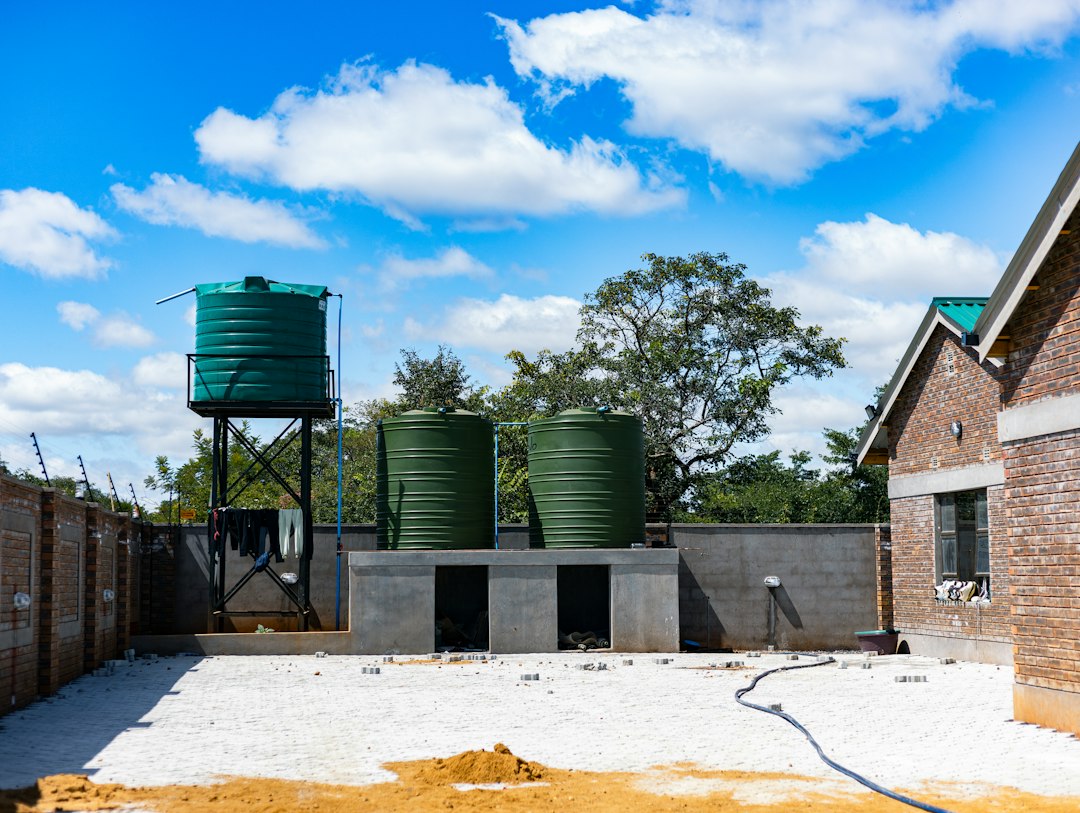
Rainwater harvesting is the collection of rain from roofs and other surfaces, its storage, and its reuse for purposes that do not need drinking-quality water: toilet flushing, irrigation and general washing. In a place as wet as Singapore it seems an obvious thing to do, and many buildings now include it. Yet it is also an area where good intentions meet real constraints of tank space, water quality, structure and regulation.
This article explains the physics of how much water a building can capture, how a system is put together, what PUB requires in Singapore, and where the benefits are strong or weak. It is written from the perspective of the people who have to accommodate tanks and pipes in an actual building.
The basic arithmetic of catchment
The yield of any system starts with a simple product: catchment area multiplied by rainfall multiplied by a runoff coefficient. A hard, smooth roof sheds most of the rain that falls on it; a green roof or gravel surface holds back much more. One millimetre of rain on one square metre of roof is one litre of water, so a modest 100 square metre roof receiving a 20 millimetre storm produces roughly two cubic metres before losses.
Singapore receives well over two metres of rain in a typical year, spread across frequent, intense storms rather than a long wet season followed by drought. That pattern matters. It means a relatively small tank can be refilled many times a year, so the useful yield depends less on giant storage volumes than on matching tank size to daily demand. The limiting factor in a tall building is often the opposite of what people expect: there is plenty of rain but only a small roof relative to the number of toilets beneath it.
Matching supply and demand
Good design compares the expected catchment with the non-potable demand. For a low-rise building with a large roof and extensive landscaping, harvested rain can cover a large share of irrigation and flushing. For a slender residential tower, the roof may only supply a fraction of flushing demand, and the system is best targeted at a specific use such as landscape irrigation or washing of common areas.
How a rainwater harvesting system is put together
Most systems follow the same sequence of components:
- Catchment and gutters — the roof surface and its rainwater goods, kept free of materials that could leach contaminants.
- Leaf screens and first-flush diversion — the first portion of each storm washes dust, bird droppings and debris off the roof and is diverted to drain rather than stored.
- Storage tank — above or below ground, sized to demand and space, with an overflow to the drainage system.
- Treatment — typically filtration and often disinfection such as UV, depending on the end use.
- Pumping and distribution — a separate non-potable pipe network to the points of use, with a controlled potable top-up for dry spells.
Two of these deserve emphasis. The first-flush device is cheap and does much of the work of keeping stored water clean. And the potable top-up must be arranged so that harvested water can never flow back into the mains supply, which is the central public-health concern with any non-potable system.
PUB requirements in Singapore
In Singapore, rainwater harvesting is permitted but regulated. PUB, the national water agency, publishes guidance notes for rainwater harvesting systems, and the construction of a system requires PUB’s approval under the Sewerage and Drainage Act. The guidance has been updated periodically, so designers should always work from the current version on PUB’s website. Key principles in recent guidance include:
- Harvested rainwater is for non-potable use only, such as toilet flushing, landscape irrigation and general washing. It is not to be used for drinking, cooking, bathing, showering or hand washing.
- It may be used within the owner’s own premises and is not to be sold or supplied to others.
- There must be no cross-connection between the potable and non-potable systems. Potable top-up is made through an air gap above the tank, and recent guidance specifies a minimum vertical gap.
- Non-potable pipes and outlets must be clearly identified and labelled so they cannot be mistaken for drinking water.
- Tanks must be designed and maintained to prevent mosquito breeding, in line with NEA requirements.
Larger systems may also attract charges on the volume used, and separate PUB drainage requirements apply to how a development manages stormwater runoff. Because these details change, we treat the current PUB guidance notes as the controlling document rather than relying on memory or older projects.
Harvesting versus detention
It is worth separating two ideas that are often blurred. Harvesting stores water to use it. Detention stores water to release it slowly, reducing peak flows into public drains during heavy storms. PUB has long required larger developments to manage their peak runoff, and a detention tank sits empty most of the time so it is ready for the next storm. A harvesting tank, by contrast, is kept as full as possible.
A single tank cannot easily do both jobs at once, because a full tank has no detention capacity left. Some designs split the volume or combine harvesting with other measures such as green roofs and bioretention landscaping, which slow runoff while also cooling and greening the site. This is where rainwater design becomes part of a broader approach to sustainable architecture rather than a stand-alone add-on.
The structural and building side
Water weighs about one tonne per cubic metre, so a tank of any useful size is a significant load. Roof-level tanks simplify distribution by gravity but must be carried by the structure, often over columns or core walls, and they add mass high in the building. Basement or below-ground tanks avoid that but need pumping and careful waterproofing to keep groundwater out and stored water in.
Tanks also need access for inspection and cleaning, overflows that discharge safely, and protection from sunlight to limit algae. In an existing building, adding a tank to a roof or podium without checking its capacity is a common mistake. A structural engineer should confirm that the slab and supporting members can take the full, not partial, weight of water, along with any plinth, pumps and access platforms.
Is it worth it? An honest view
Singapore’s mains water is reliable and comparatively inexpensive, so rainwater harvesting rarely pays back quickly on water bills alone, particularly for small buildings. The stronger cases are buildings with large roofs and large non-potable demand, such as schools, sports facilities, industrial buildings and developments with extensive landscaping. There, harvested water can reduce mains consumption meaningfully and contribute to Green Mark water-efficiency credits.
The weaker cases are small installations that are poorly maintained. A neglected tank becomes a water-quality and mosquito problem, and an unreliable pump that leaves toilets unflushed quickly leads occupants to bypass the system. The honest summary is that rainwater harvesting works well when it is sized to a real demand, built to the regulations and maintained as a piece of building services, and poorly when it is installed as a gesture.
Frequently asked questions
Is rainwater harvesting legal in Singapore?
Yes. Rainwater harvesting for non-potable use within your own premises is permitted, but building a rainwater harvesting system requires PUB’s approval and must follow PUB’s current guidance notes, including separation from the potable supply, labelling of non-potable pipes and mosquito prevention.
Can harvested rainwater be used for drinking or showering?
Not under PUB’s guidance. Harvested rainwater is limited to non-potable uses such as toilet flushing, landscape irrigation and general washing. Uses involving human contact or consumption, including drinking, cooking, bathing and hand washing, are excluded.
How big should a rainwater tank be?
It depends on roof area, local rainfall and how much non-potable water the building uses each day. Because Singapore’s rain falls frequently, tanks are usually sized to cover a few days of demand rather than months, but the right size also depends on available space and structural capacity.
Can I put a rainwater tank on my roof?
Only after the structure has been checked. Water weighs about a tonne per cubic metre, so even a modest tank imposes a heavy load. A structural engineer should verify the roof slab and supports for the full tank weight, and the installation must still meet PUB requirements.
Related reading
- The Stack Effect in Buildings: How Buoyancy Moves Air
- Indoor Air Quality in Buildings: Causes and Controls
- The Building Envelope Explained: Layers and Functions
- Natural Ventilation and Cross Ventilation in Buildings
Considering a rainwater tank or reuse system and want the structure and layout assessed properly? Talk to our consultancy or get in touch.