The question of hardwood vs softwood sounds as if it should be about how hard a piece of timber is. It is not. The two terms are botanical labels describing the kind of tree the wood came from, and while they correlate loosely with density, there are soft hardwoods and hard softwoods. Knowing what the labels really mean prevents some common specification mistakes.
This article explains the botanical difference, how it shows up in the wood’s cell structure, what that means for strength, durability and workability, and where each group is used in buildings and furniture. For a wider tour of individual species, see our sibling guide to types of wood.
The botanical difference
Hardwoods come from angiosperms: flowering plants whose seeds are enclosed in a fruit or nut. Most are broad-leaved trees such as oak, maple, teak, meranti and rubber trees. In temperate regions many are deciduous; in the tropics most are evergreen.
Softwoods come from gymnosperms, chiefly conifers, whose seeds are borne naked, usually in cones. Pine, spruce, fir, larch, cedar and cypress are softwoods. Most have needle- or scale-like leaves and are evergreen, although larch is a deciduous softwood. Japanese hinoki, celebrated in temple and bath construction, is a softwood too; our article on hinoki wood describes it.
The famous exceptions make the point. Balsa, one of the lightest commercial woods, is a hardwood. Yew, which is dense and tough enough for longbows, is a softwood. The labels tell you about evolution, not hardness.
Cell structure: vessels versus tracheids
The botanical difference is visible under a hand lens. Softwoods are made mostly of long, narrow cells called tracheids, which both conduct water and provide strength. Because the structure is relatively uniform, softwoods tend to have even texture and predictable behaviour. Many also contain resin canals.
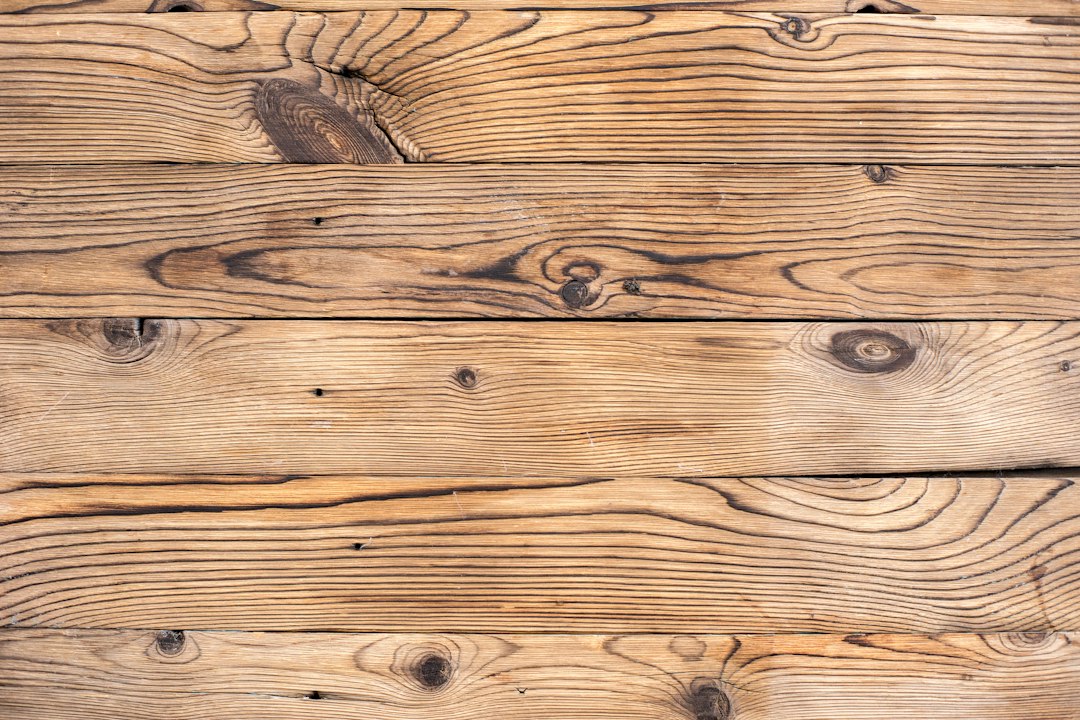
Hardwoods evolved specialised cells. Vessels, which appear as pores on the end grain, carry water; fibres provide strength; and ray and parenchyma cells store nutrients. The size and arrangement of the vessels produce much of a hardwood’s character. Ring-porous woods such as oak and ash have large early-season pores and a pronounced grain. Diffuse-porous woods such as maple, beech and many tropical species have more evenly distributed pores and a finer, more uniform look. This structure explains why oak needs grain filling for a high-gloss finish while maple does not, and why some hardwoods take stain unevenly.
Hardwood vs softwood: density, strength and stiffness
On average, hardwoods are denser than softwoods, and density is the best single predictor of strength, hardness and wear resistance. But the ranges overlap substantially. Light tropical hardwoods can be softer than dense softwoods such as larch or southern pine, and within any species, growth rate and the proportion of latewood change the figures.
For structural design, the hardwood vs softwood label is therefore not used at all. Engineers work with strength classes or groups assigned through visual or machine grading. European practice designates softwood classes with a C prefix and hardwood classes with a D prefix, and Malaysian standards group tropical timbers by strength. A well-graded softwood can carry substantial load, which is why most timber framing, glulam and cross-laminated timber worldwide is made from softwood. Our article on mass timber and CLT explains how those softwood laminations become floors and walls.
Stiffness is often more important than strength in timber design, because floors and beams tend to be governed by deflection and vibration. Here again, denser woods tend to be stiffer, but the grade and the presence of knots matter as much as the species group.
Durability and moisture behaviour
Natural durability, meaning the heartwood’s resistance to decay and insects, varies greatly in both groups. Some tropical hardwoods such as chengal, balau and teak are very durable, while others, such as rubberwood, are perishable unless treated. Among softwoods, the heartwood of cedars and some larches has moderate resistance, but most commercial pine and spruce does not, and is preservative-treated for exterior or damp use.
Treatability is a related but separate property. Many softwoods, especially pine sapwood, absorb preservative readily under pressure. Many dense hardwoods resist penetration, which is one reason durable hardwoods are used untreated and perishable hardwoods are treated with boron compounds or similar systems before use.
All wood shrinks and swells with changing moisture. Movement depends on species and on how the board was sawn. In Singapore’s humid climate this matters for both groups: timber should be dried to suit its final environment, and joints and fixings should allow for seasonal and air-conditioning-related movement. Damp timber of any type is at risk of fungal decay and termite attack, so detailing that keeps wood dry is as important as the species choice.
Where each is used
Typical softwood uses
- Structural framing, roof trusses and rafters
- Glulam beams, cross-laminated timber panels and softwood plywood
- Formwork, temporary works and packaging
- Cladding, where durable or treated species are chosen
- Paper and fibreboard production
Typical hardwood uses
- Furniture, cabinetry and decorative veneers
- Flooring, stair treads and handrails, where wear resistance matters
- Outdoor decking and heavy structures, using dense durable species
- Marine work, bridges and posts in the tropics
- Joinery, doors and windows
Furniture makers favour hardwoods partly for appearance and partly because dense, fine-grained wood holds sharp edges, screws and joints well. Our guide to solid wood furniture covers how those choices play out in practice, and our sibling page on wood joints explains how the pieces are connected.
Sustainability and sourcing
Neither group is inherently more sustainable. Fast-growing plantation softwoods from managed forests underpin most mass-timber construction and can store carbon for the life of a building. Hardwoods range from well-managed temperate forests and plantations to tropical species with significant legality and biodiversity concerns.
The practical safeguards are the same for both: specify the botanical species and origin, ask for forest certification such as FSC or PEFC with valid chain-of-custody evidence, check whether the species is restricted under CITES, and avoid timber from origins under sanctions. Using lower-grade or less familiar species well, rather than demanding a narrow set of premium timbers, also reduces pressure on vulnerable forests.
Frequently asked questions
Is hardwood harder than softwood?
Usually, but not always. The terms describe botany: hardwoods come from flowering trees and softwoods from conifers. Most hardwoods are denser, but balsa is a very soft hardwood and yew is a hard, dense softwood.
Can softwood be used for structural beams?
Yes. Most structural timber worldwide is graded softwood, used as sawn framing or as engineered products such as glulam and cross-laminated timber. What matters is the strength grade and the design, not the botanical group.
Which lasts longer outdoors, hardwood or softwood?
It depends on the species. Durable hardwoods such as teak or balau can last untreated for many years, while perishable hardwoods decay quickly. Most softwoods need preservative treatment outdoors. Good detailing that keeps the wood dry extends the life of either.
Why are softwoods cheaper than hardwoods?
Softwoods generally grow faster and straighter, are harvested from large managed forests and are easier to saw, dry and machine. That makes them economical for construction volumes, while many hardwoods are slower-growing and processed in smaller quantities.
Related reading
- Types of Glass in Buildings: How Each Is Made and Used
- Glass Blocks in Architecture: How They Work and Fail
- Aluminium vs Steel in Buildings: A Structural Comparison
- Metals in Construction: Steel, Aluminium, Copper and More
Considering timber for a structure, a deck or a roof and want the design checked? Talk to our consultancy or get in touch.