
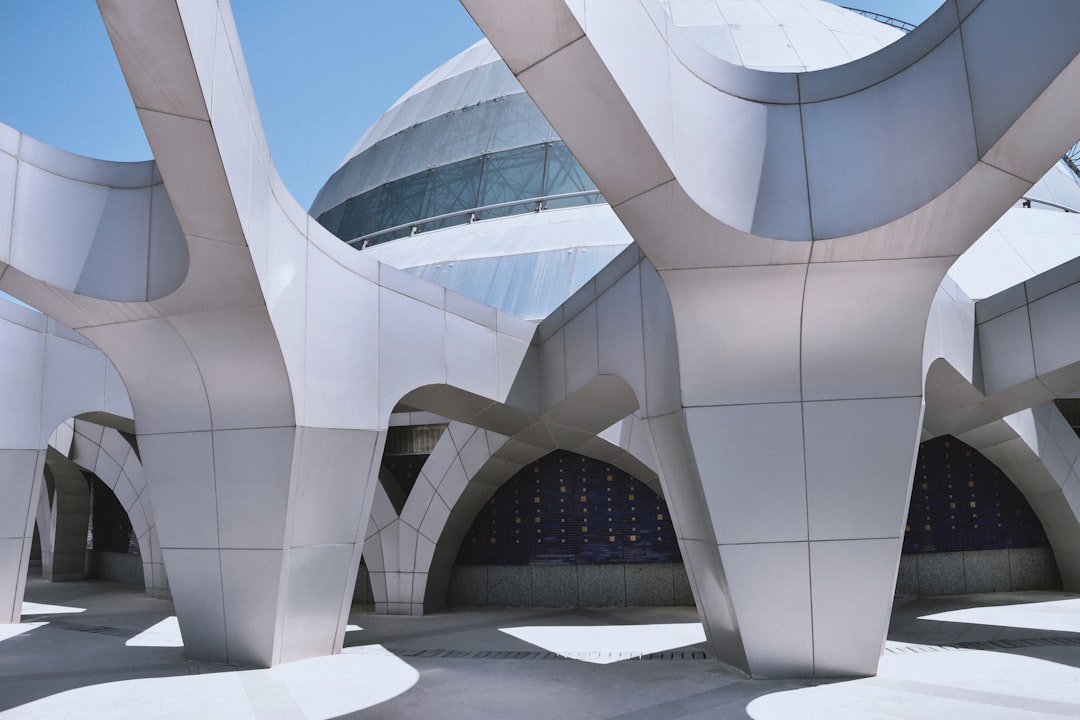
Biomimicry in architecture is the practice of learning from nature to design better buildings. Instead of copying how a leaf or a termite mound looks, it studies how living things solve problems, then applies those strategies to structure, ventilation, materials and energy use. The aim is buildings that are more efficient, more resilient and better suited to their climate.
This article explains what biomimicry architecture really is, how it differs from simply imitating natural shapes, where it has produced real results, and where its limits lie. It sits within the wider story told in our guide to architectural styles and principles.
What biomimicry means
Biomimicry, sometimes called biomimetics, comes from words meaning the imitation of life. As a design discipline it was popularised by the writer Janine Benyus, who framed it as looking to nature as model, measure and mentor. Nature has spent billions of years refining solutions to challenges such as carrying loads, controlling temperature and using materials sparingly.
In architecture, biomimicry usually works on three levels. It can imitate a natural form, such as the shape of a shell. It can imitate a natural process, such as how a structure cools itself. Or it can imitate a whole ecosystem, designing a building or district to function like a living system that recycles its own resources.
The deepest value lies in process and system thinking, not surface appearance. A building shaped like a flower is not biomimetic unless that shape actually does useful work. The discipline asks how nature would solve the problem, then translates the principle into materials and construction that make engineering sense.
Lessons from nature for buildings
Living things offer many strategies that buildings can borrow, and several map neatly onto everyday design problems.
- Passive cooling: termite mounds and other natural structures manage temperature with airflow rather than machinery, suggesting ways to ventilate buildings using less energy.
- Strong, light structure: bones, shells and honeycombs achieve great strength with little material, pointing toward efficient structural forms.
- Material efficiency: spider silk and bamboo show how modest materials can perform far above their weight.
- Self-regulation: skin, leaves and pine cones respond to heat and moisture, inspiring façades that adapt to changing conditions.
- Water management: desert plants and beetles collect and store scarce water in clever ways.
Many of these lessons are about doing more with less. That goal overlaps strongly with structural engineering, where the aim is always to carry loads safely using sensible amounts of material, a balance explored in our note on what a structural engineer does.
Real examples worth knowing
The most cited example of biomimicry architecture is the Eastgate Centre in Harare, Zimbabwe. Its designers studied how termite mounds maintain a stable internal climate, then used a system of natural ventilation and thermal mass so the building stays comfortable while using a fraction of the cooling energy of a conventional building of its size. It is a clear case of imitating a natural process rather than a shape.
Other examples show different levels of borrowing. Some long-span roofs and shells take their efficiency from the geometry of natural structures, achieving wide column-free spaces with thin material. Façade systems inspired by how plants open and close have been used to control solar gain. Materials research, too, draws on nature, studying how mussels stick to surfaces or how lotus leaves shed water and dirt.
What unites the strongest examples is honesty: the natural strategy genuinely improves performance, rather than being a marketing story attached to a conventional building. The Eastgate Centre endures as a reference precisely because its termite-inspired ventilation does real work.
Structure, materials and engineering
For an engineer, biomimicry is appealing because nature is relentlessly efficient. A bone places material exactly where stress demands it; a shell curves so that loads flow as compression rather than bending. Translating these ideas into buildings can produce structures that are both elegant and economical.
Shell and lattice structures are a good illustration. By following curved geometries similar to those in nature, designers can span large distances with thin reinforced concrete or lightweight frames, because the form carries load efficiently. The challenge is that natural forms grow gradually and self-repair, while buildings are assembled from manufactured parts that must be detailed, connected and maintained.
This is where engineering judgement matters. A biomimetic concept still has to satisfy real loads, codes and buildability. The natural principle gives direction; sound analysis, material selection and detailing turn it into something safe and durable that can actually be built and maintained over decades.
Benefits and honest limits
The benefits of biomimicry are real. Buildings that ventilate and cool themselves passively use less energy. Structures that follow efficient natural geometries can use less material. Designs that adapt to sun and weather can be more comfortable. In a warm, humid climate, the appeal of nature-led passive strategies is obvious, and it connects to the wider logic of climate-responsive tropical design.
There are honest limits too. Nature and buildings are not the same. Living systems grow, heal and reproduce; buildings are static assemblies that wear out. A strategy that works for an organism may need heavy adaptation to suit construction, regulations and long service life. Biomimicry can also become a label applied loosely, where a building borrows a natural shape without any real performance gain.
Used well, biomimicry is not a style but a way of asking better questions. It encourages designers to look at how problems are solved in the living world, then test those ideas rigorously against the demands of structure, climate and use. The result, when it works, is architecture that is efficient, comfortable and quietly clever.
Frequently asked questions
What is biomimicry in architecture?
It is the practice of learning from nature to design better buildings, studying how living things solve problems of structure, ventilation, materials and energy, then applying those strategies to make buildings more efficient, resilient and suited to their climate.
How is biomimicry different from copying natural shapes?
True biomimicry borrows the underlying process or system, not just the appearance, so a building is only biomimetic if the natural strategy does real work, such as cooling the building, rather than simply looking like a plant or animal.
What is the best known biomimicry building?
The Eastgate Centre in Harare, Zimbabwe, is the most cited example, using natural ventilation and thermal mass inspired by termite mounds to stay comfortable while using far less cooling energy than a conventional building of similar size.
Does biomimicry save energy?
It can. Strategies such as passive cooling, natural ventilation and efficient structural geometry borrowed from nature often reduce energy and material use, though the savings depend on careful design and a genuine performance benefit rather than a superficial natural look.
What are the limits of biomimicry in buildings?
Buildings are static assemblies that wear out, while living systems grow and self-repair, so natural strategies often need heavy adaptation to meet construction, codes and long service life, and the label can be misused on designs with no real performance gain.
Related reading
- Clerestory Windows Explained
- Brise-Soleil and Architectural Louvers
- What Is a Portico?
- Vaults in Architecture
Exploring a nature-inspired structure that still has to perform and stand up? Talk to our consultancy or get in touch for senior structural advice.


