
The bathroom is the trickiest room in any Singapore renovation. It is small, it is wet, and getting the hidden work wrong leads to the most expensive problem in a flat: water leaking to the unit below. Here is what makes bathroom and toilet renovation different, and why waterproofing matters more than anything you can see.
General guidance only — confirm current HDB and BCA requirements before any work.
Why bathrooms are different
Unlike a bedroom or living room, a bathroom has to manage water every single day, for decades. That changes everything: the floors must drain, the surfaces must shed water, and crucially, a hidden waterproofing layer must stop moisture reaching the structure and the home below. A cosmetic bathroom makeover that ignores this hidden layer is storing up trouble. The visible tiling and fittings are the easy part; the waterproofing beneath them is the part that actually protects you.
Waterproofing: the step that matters most
Beneath the tiles of every bathroom is a waterproofing membrane — a continuous, sealed layer that keeps water from soaking into the floor slab. When it works, you never think about it. When it fails or is done badly, water seeps through to the ceiling of the unit below, causing damp, staining and, over time, contributing to spalling concrete as moisture reaches the reinforcement. Because the membrane is buried under the finishes, doing it properly the first time is everything — redoing it later means hacking out the whole bathroom again.
Hacking, floors and falls
A full bathroom renovation usually means hacking off the old tiles and screed to reach the slab, then rebuilding: applying fresh waterproofing, laying screed to the correct gentle slope (the “fall”) so water runs to the drain, and tiling over it. Getting the fall right matters — too little and water ponds, too much and it looks and feels wrong. This is also where the structure must be respected: in an HDB flat, the floor slab itself and any structural elements cannot be compromised, as covered in what you can and can’t hack.
Permits and HDB rules for toilets
Bathroom and toilet works in an HDB flat come with specific rules. There are restrictions designed to protect the waterproofing — including limits on certain toilet works in the early years of a new flat, since the original waterproofing comes with a warranty period — and permit requirements for the works involved, applied for through your registered contractor. Because these rules change and carry conditions, confirm the current position with HDB before planning a bathroom overhaul. The aim of all of them is the same: protect the waterproofing and the unit below.
Common bathroom renovation mistakes
- Skimping on waterproofing — the costliest mistake, because the leak shows up in someone else’s home.
- Poor falls — water ponding on the floor instead of draining away.
- Tiling over old, failed waterproofing — a quick job that fails fast.
- Inadequate ventilation — trapped moisture leading to mould.
- Ignoring the unit below — not testing for leaks before closing everything up.
Leaks and the ceiling below
When a bathroom leaks, the evidence usually appears as damp patches or staining on the ceiling of the flat below — a frequent source of disputes between neighbours in Singapore. Persistent leaks keep the concrete wet, which over time can drive the corrosion behind ceiling spalling. This is exactly why waterproofing is non-negotiable: a bathroom failure is rarely just your problem, and resolving inter-floor leaks is far more expensive and fraught than getting the waterproofing right at the start.
Finishes, fittings and ventilation
With the hidden work sound, the visible choices follow: tiles, sanitaryware, taps, glass screens and storage. Choose slip-resistant floor tiles, durable fittings, and good ventilation — an extractor or window — to keep the room dry between uses and discourage mould. These decisions shape how the bathroom looks and feels day to day, but they sit on top of the waterproofing, never instead of it.
How long and how much
A bathroom is small but labour-intensive, with several stages that must dry and cure in sequence — hacking, waterproofing, screed, tiling, fitting — so it takes longer than its size suggests. Cost depends on the extent of hacking, the waterproofing system, the finishes and the fittings. It is rarely the place to chase the cheapest quote, because the part you save on is usually the part you cannot see and most need to be done well.
Frequently asked questions
Do I need to redo waterproofing in a bathroom renovation?
If you are hacking the floor, yes — fresh waterproofing is essential, because tiling over old or damaged waterproofing is the most common cause of leaks to the unit below.
Can I renovate my HDB toilet anytime?
There are HDB rules and restrictions around toilet works, including in the early years of a new flat to protect the original waterproofing warranty. Check the current requirements with HDB and your registered contractor first.
Separating wet and dry areas
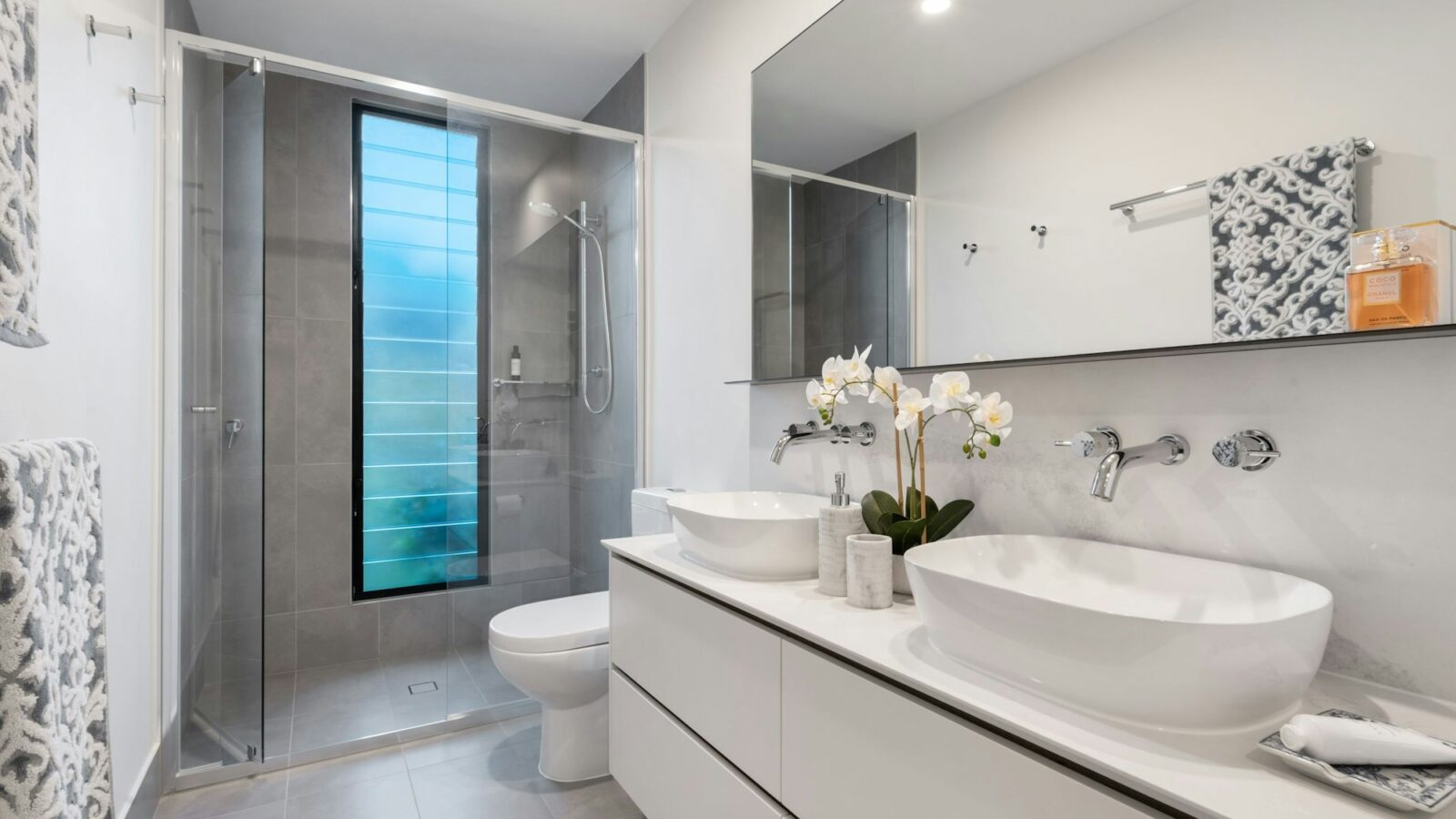
A popular and practical move in Singapore bathrooms is to separate the “wet” zone — the shower — from the “dry” zone with the basin and toilet, using a glass screen or partition. Keeping the shower’s water contained means the rest of the bathroom stays drier and safer underfoot, reduces slipping, and helps the room dry out faster between uses. It is a simple layout idea that makes a small bathroom far more pleasant to use, and it works with the waterproofing rather than against it — containing water where the drainage is rather than letting it spread across the whole floor.
Making the most of a small bathroom
Most HDB and apartment bathrooms are compact, so good design earns its keep. Wall-hung fittings free up floor space and make cleaning easier; large, light tiles make a small room feel bigger; niches built into the wall add storage without stealing space; and good lighting and ventilation keep the room feeling fresh. None of this changes the fundamentals — waterproofing and proper falls come first — but thoughtful choices above that hidden layer turn a tight, purely functional room into one that feels considered and easy to live with every day.
Related reading
See also spalling concrete and HDB renovation permits. More in Structure.


