
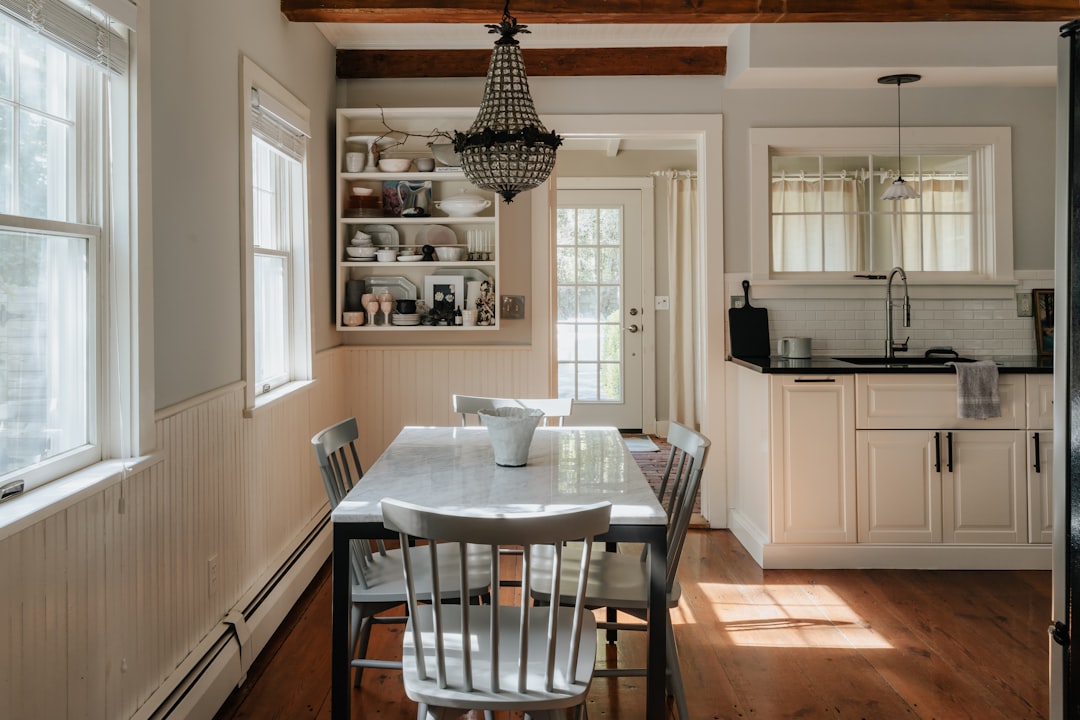
Farmhouse interior design takes the warmth and honesty of rural homes and softens it for modern living. In its current and most popular form — modern farmhouse — it pairs rustic, country elements with clean lines, bright neutrals and contemporary comfort. The result is a look that feels cosy, welcoming and lived-in, yet fresh and uncluttered rather than dark or heavy.
This guide explains where farmhouse style comes from, what defines the modern farmhouse look, and how to achieve its signature blend of rustic and refined in your own home. The balance between the two is the whole point.
From the farmhouse to the modern farmhouse
Traditional farmhouse style grew from working rural homes, where practicality and durability shaped everything: sturdy timber furniture, a large kitchen at the heart of the house, simple fabrics, and hardwearing, honest materials. There was a comfortable, unfussy generosity to these spaces, designed around family and function rather than display.
The modern farmhouse, popularised heavily over the past decade, keeps that warmth and practicality but lightens and refines it. It brightens the palette, cleans up the lines, and introduces a more contemporary sense of space, removing the darkness and clutter that a fully traditional farmhouse can carry. It sits close to rustic style, sharing its love of natural materials, but reads lighter and more current. For the broader family of natural, country-inspired looks, our main interior design hub is a useful companion.
Defining features of farmhouse interior design
Modern farmhouse is recognisable for its blend of cosy rustic character and clean, bright simplicity. A few signatures appear again and again.
- A warm neutral palette. White, cream, greige and soft grey, grounded by natural wood and black accents.
- Natural materials. Timber, especially reclaimed or rustic wood, alongside stone, metal and woven fibres.
- Shiplap and panelling. Horizontal timber cladding on walls is a defining detail.
- Black metal accents. Matte black hardware, lighting and window frames add modern contrast.
- Comfortable, practical furniture. Sturdy timber tables, slipcovered sofas and apron-front sinks.
- Cosy, layered textiles. Linen, cotton, wool and ticking stripe in soft, washable fabrics.
The look balances rustic warmth with crisp, contemporary clarity.
Colour, materials and key details
The modern farmhouse palette is built on warm whites and soft neutrals, which give the style its bright, clean feel. White and cream walls, often with timber and matte-black accents, create a fresh backdrop, while natural wood tones add warmth and a touch of rusticity. Black is the signature accent — in hardware, light fixtures, window frames and metalwork — providing the crisp contrast that distinguishes modern farmhouse from its softer, all-cream relatives.
Materials carry the rural character. Reclaimed and rustic timber, natural stone, galvanised and matte-black metal, and woven fibres such as jute and rattan all feature. Shiplap — horizontal timber wall cladding — is perhaps the most recognisable detail, along with exposed beams, apron-front farmhouse sinks, and barn-style sliding doors. These elements reference the working farmhouse while the bright palette keeps the overall effect contemporary.
Furniture, kitchen and styling
Farmhouse furniture is comfortable, sturdy and practical. A large timber dining table, often paired with mismatched or bench seating, anchors the social heart of the home. Sofas are deep and inviting, frequently slipcovered in washable linen or cotton for a relaxed, family-friendly feel. Storage pieces favour solid timber with simple lines, and a little visible wear only adds to the charm.
The kitchen is the soul of farmhouse design, reflecting its origins as the centre of rural life. Shaker-style cabinetry, an apron-front sink, open timber shelving, and matte-black or aged-brass hardware are classic choices. Styling throughout is cosy but restrained: woven baskets, ceramic crocks, simple greenery, vintage finds and soft layered textiles such as throws and ticking-stripe cushions. The discipline is to stay warm and characterful without crossing into clutter or cliché. For more on planning a hardworking, sociable kitchen and living space, our main interior design hub offers further ideas.
How to achieve the modern farmhouse look
Modern farmhouse is one of the more achievable styles, because so much of it comes down to palette, a few key materials and the right details.
- Brighten the base. Warm whites and soft neutrals on walls give the look its fresh, clean foundation.
- Add black accents. Matte-black hardware, lighting and frames provide the crisp contrast that makes it modern.
- Introduce natural timber. A reclaimed-wood table, open shelving or beams brings the rustic warmth.
- Consider a signature detail. Shiplap, a barn door or an apron sink instantly signals the style.
- Layer soft textiles. Linen, cotton and wool in neutral tones keep the room cosy and inviting.
The key throughout is balance: enough rustic character to feel warm and grounded, enough clean, bright simplicity to feel current. Lean too far into rustic and the room turns dark and heavy; lean too far into modern and it loses its cosy soul. Hold the two in tension and you get the welcoming, timeless quality that has made modern farmhouse so enduringly popular.
Frequently asked questions
What is modern farmhouse interior design?
Modern farmhouse interior design blends the warmth and practicality of traditional rural homes with clean lines and a bright neutral palette. It pairs natural timber, shiplap and cosy textiles with matte-black accents and uncluttered space, creating a welcoming yet fresh look.
How is farmhouse different from rustic style?
Farmhouse and rustic overlap, and farmhouse is often seen as a refined branch of rustic. Rustic leans darker, rougher and more rugged, while modern farmhouse is lighter, cleaner and brighter, balancing rustic materials with crisp neutrals and contemporary simplicity.
What is shiplap, and is it essential?
Shiplap is horizontal timber wall cladding and one of the most recognisable farmhouse details. It is not essential, but it strongly signals the style; beadboard, panelling or simply a warm neutral palette with timber accents can achieve a similar feel.
What colours define modern farmhouse?
Warm whites, creams, greige and soft greys form the base, grounded by natural wood tones and crisp matte-black accents. The bright neutral palette is what gives the modern farmhouse its fresh, clean character compared with darker rustic schemes.
Why is the kitchen so central to farmhouse design?
The kitchen reflects the style’s origins, where the farmhouse kitchen was the working heart of rural family life. Shaker cabinetry, an apron-front sink, open shelving and timber details make it the natural focal point of a farmhouse-style home.
Related reading
- How to Choose an Area Rug: A Practical Guide
- Types of Window Blinds Explained for Every Room
- Types of Curtains and Drapes: A Buyer’s Guide
- Curtains vs Blinds: Which to Choose for Your Home
Planning a warm, family-centred renovation around a hardworking kitchen? Talk to our consultancy or get in touch.


