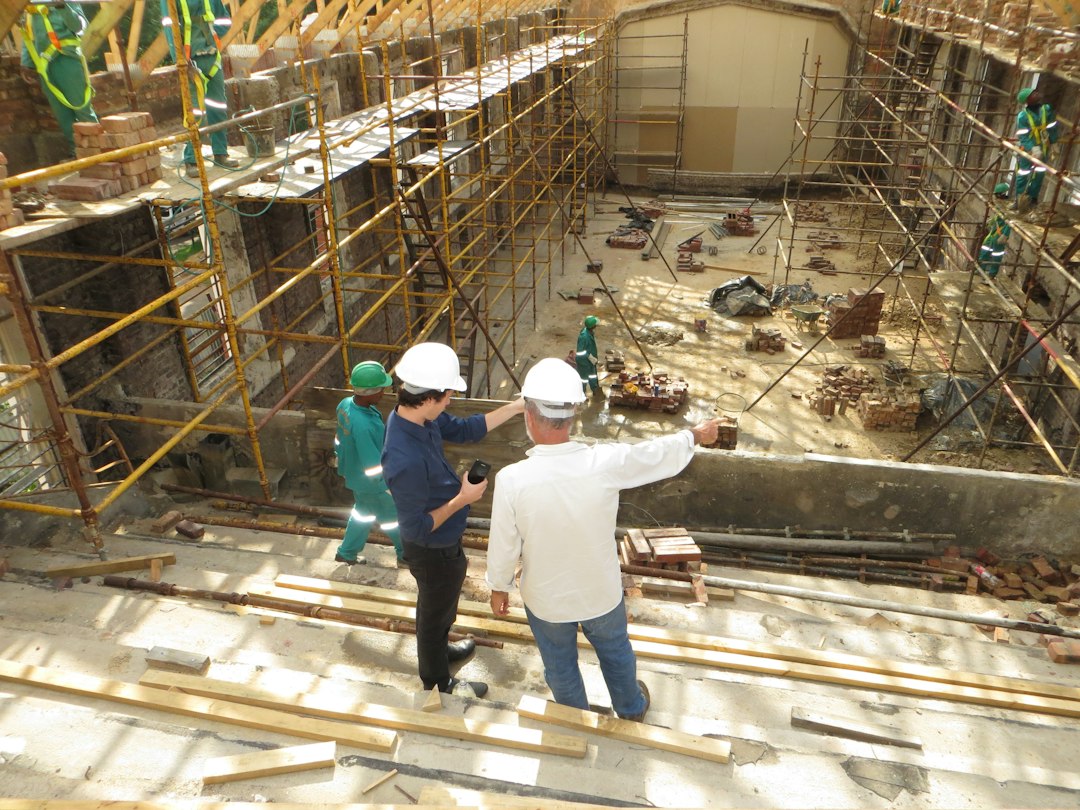
A construction environmental management plan, usually shortened to CEMP, is the document that sets out how a construction project will control its effects on the environment and its neighbours: noise, vibration, dust, silty water, mosquito breeding, waste, and disturbance to drains, trees and roads. It names who is responsible for each control, how it will be monitored, and what happens when something goes wrong. Done well, it is a working tool used on site every week. Done badly, it is a template filed at tender and never opened again.
This article explains what a CEMP contains, how it relates to Singapore’s regulatory requirements, and how to make one useful rather than decorative. One point is worth stating at the outset: in Singapore, the obligations come mainly from specific laws administered by agencies such as NEA and PUB, rather than from a single statute requiring a document called a CEMP. The plan is how a project shows it has those obligations under control.
Is a construction environmental management plan required in Singapore?
There is no single, universal regulation that requires every private construction project in Singapore to produce a document titled “construction environmental management plan”. The requirement usually arises in three ways.
- Client and contract requirements. Public agencies and many private developers write environmental management plans into their contracts. LTA, for example, requires an Environmental Study at the design stage for projects with significant environmental impact, and requires contractors to provide an environmental management plan incorporating the study’s recommendations before work starts. Large public housing projects have also published environmental monitoring and management plans.
- Specific statutory regimes. NEA and PUB each impose obligations — on noise, vector control, pollution and silt discharge — that a contractor must plan for and demonstrate compliance with. A CEMP is the natural place to bring these together.
- Sustainability and management systems. Projects pursuing sustainability certification, and contractors operating certified environmental management systems, generally need documented site environmental controls.
So whether or not a contract explicitly calls for a CEMP, the underlying controls are rarely optional. The plan simply organises them.
The Singapore regulatory controls a CEMP must address
Construction noise (NEA)
Construction noise is regulated by NEA under the Environmental Protection and Management Act, which sets maximum permissible noise levels at affected premises and restricts working hours near noise-sensitive receivers. Under NEA’s current “no-work rule”, unless a permit has been issued, construction sites within 150 metres of residential buildings and noise-sensitive premises such as hospitals and homes for the aged may not carry out construction work from 10pm on Saturday to 7am on Monday, and from 10pm on the eve of a public holiday to 7am on the day after. Sites granted a permit for quieter work on Sundays and public holidays must comply with stringent conditions. A CEMP should identify noise-sensitive receivers, set out the programme of noisy activities, describe mitigation such as barriers, quieter methods and equipment selection, and specify monitoring.
Vector control and the Environmental Control Officer (NEA)
Under the Environmental Public Health Act, occupiers of construction sites must employ an Environmental Control Officer (ECO) depending on the contract sum. According to NEA, sites with a contract sum above $10 million and up to $50 million need a part-time ECO working at least 15 hours a week, and sites above $50 million need a full-time ECO working at least 40 hours a week. The ECO’s role centres on environmental health, particularly preventing mosquito breeding and maintaining site sanitation. Even on smaller sites with no ECO requirement, mosquito control remains the contractor’s responsibility and belongs in the plan.
Silt and earth control measures (PUB)
Silty runoff from exposed earth is a major environmental risk in Singapore’s heavy rain. PUB requires Earth Control Measures (ECM) for construction sites: an ECM plan designed by a Qualified Erosion Control Professional, approved before earthworks begin, and a treatment system to ensure that discharge into public drains does not exceed a total suspended solids limit of 50 mg/l. PUB enforces this actively. Process water from activities such as bored piling and tunnelling is treated separately under pollution control legislation.
Dust, waste and other pollution
Dust from demolition, excavation, cutting and haul roads, oil and chemical spills, and the handling of construction waste are all subject to environmental law and good practice. Our companion article on construction waste management covers the waste side in detail.
What a good CEMP contains
The structure varies, but an effective construction environmental management plan normally includes:
- Project description and site context — location, programme, main activities and the receptors nearby: homes, schools, hospitals, drains, waterways, trees.
- Legal and contractual requirements — a register of the applicable regulations, permits and client conditions.
- Roles and responsibilities — who owns each control, including the project manager, site supervisors, ECO and ECM personnel.
- Aspect-by-aspect controls — noise and vibration, dust, water and silt, vector control, waste, hazardous materials, traffic and road cleanliness, trees and vegetation.
- Monitoring and inspection — what is measured, where, how often and against which limits.
- Incident and complaint response — how spills, exceedances and complaints are recorded, investigated and closed out.
- Training and communication — toolbox talks, induction content and engagement with neighbours.
- Review — how and when the plan is updated as the project moves through its stages.
Noise and vibration: the engineer’s contribution
Many environmental impacts on a building site trace back to engineering decisions made months earlier. The choice between driven, jacked and bored piles, the method of demolition, the type of excavation support and the sequence of works all determine how much noise and vibration a site produces. Selecting low-vibration methods near sensitive neighbours — for example, considering jacked rather than impact-driven piles, as discussed in our article on driven piling — is often more effective than trying to mitigate a noisy method after the fact.
Vibration also has a structural dimension. Old or fragile neighbouring buildings may be sensitive to ground vibration and settlement. Pre-construction condition surveys, vibration and settlement monitoring with agreed trigger levels, and a clear response plan protect both neighbours and the project.
Making the plan work on site
A CEMP is only as good as its use. The plans that work share a few characteristics: they are specific to the site rather than copied from the last project; they are short enough that supervisors actually read them; they assign named responsibilities; and they are linked to the site’s daily routines — inspections, permits-to-work, toolbox briefings and progress meetings.
Environmental management also overlaps closely with safety management. The same supervisors, inspections and site discipline support both, which is why many contractors integrate their environmental and construction safety systems. Regular review is essential: the risks during demolition and piling are very different from those during finishing works, and the plan should evolve with the project. Good site supervision is what turns the document into practice.
Frequently asked questions
Is a CEMP a legal requirement in Singapore?
There is no single regulation requiring every project to produce a document called a CEMP. However, NEA and PUB impose specific statutory obligations on noise, vector control, pollution and silt discharge, and many clients, including agencies such as LTA, require an environmental management plan in the contract. The CEMP is how a project demonstrates control of those obligations.
Who prepares a construction environmental management plan?
The main contractor usually prepares and implements it, with input from the design team, environmental specialists, the Environmental Control Officer where one is required, and the professionals responsible for earth control measures. The client or its consultants typically review it before work starts.
When does a construction site need an Environmental Control Officer?
According to NEA, sites with a contract sum above $10 million and up to $50 million need a part-time ECO, and sites above $50 million need a full-time ECO. Sites at or below $10 million do not need one, although vector control obligations still apply.
What is the silt discharge limit for construction sites in Singapore?
PUB requires discharge from construction sites into public drains not to exceed a total suspended solids concentration of 50 mg/l. Sites must implement earth control measures designed by a Qualified Erosion Control Professional and approved before earthworks start.
Related reading
- Gate Design: An Engineer’s Guide to Safe, Lasting Gates
- Rigid Inclusions Ground Improvement: Selection Guide
- PMC in Construction: The Project Management Consultant
- Spray Foam Roofing in the Tropics: An Engineer’s View
Planning a project near sensitive neighbours and want construction methods chosen with noise, vibration and settlement in mind? Talk to our consultancy or get in touch.